A Parent Perspective: Interview with Janette

I spoke to Janette about being a mother to her son Gregory, who is 35 and supremely sociable. I really appreciated speaking to Janette who is a parent to an adult child, and navigating being a carer for much longer than most would expect to be.

My son, Ben, is 13 and I knew very little about disabled people or being a parent when he was born. Being his mother has been a rapid education in the issues surrounding disability. I find it helpful and interesting to read stories about people with similar lives and I hope you might too!

Jess: Can you tell us a bit about you and your family?

Janette: My son Gregory is 35, and I have a younger son Edmund who is now 31. Gregory’s a very sociable person. He loves being with people, going to people’s houses. We’re active members of a lively church and we’ve got lots of good friends there. He loves live music and musicians. He’s very affectionate. He can read more than most people think. He can walk with walking sticks around our bungalow and with a walking frame for short distances. He likes things in a very particular order. He’ll notice when tiny things in our house aren’t in the place that they’re supposed to be. He loves picture books and coloring books.

He goes shopping once a week and loves using the hand scanner at Tesco. He’s very motivated by anything that’s got a button or a switch. We’ve gone through a lot of televisions and DVD players because he breaks the buttons by pressing them so hard. He likes going swimming, when we can find a support worker who is able to go with him. He loves being out and about and going on walks. He goes to a day center once a week. He loves doing cooking. He’s got a great sense of humor. He loves going to see his dad. We split up when Gregory was about nine. My ex-husband is a lot more patient than I am.

Gregory can speak well sometimes. He’ll tend to use the main words in a sentence. He’s very good at remembering people’s names and what socks they wear! He’s surprising to me and I know him really well.

Jess: At what point did you receive Gregory’s diagnosis?

Janette: He was my first child so to me it was a normal birth, but he had a small head and a low Apgar score. He was with me for an hour, then he was taken up to special care. They kept him in for a week while they monitored everything. I had to keep taking him for head measurements after he was born. Feeding was difficult. His legs were stiff and rigid. I was part of the National Childbirth Trust and one of my friends there was a GP. She said to me, ‘I think you need to go and get him checked out a bit more’. Leading up to being one year old, they did start doing a few more investigations. He wasn’t crawling, he wasn’t sitting very well. He had a big day’s assessment and at the end the paediatrician told me that he had special needs. She wasn’t very specific but just said he would be disabled all his life. I don’t remember her saying cerebral palsy. He then started having lots of physiotherapy and eventually they used the word cerebral palsy. He was such a smiley baby. He always wanted to engage with other people. I’m so thankful for the speech therapists in his life. Gregory started speaking when he was four.

Jess: How were Gregory’s school years?

Janette: He went to a mainstream playgroup until he was five, and then to a special school, mainly for children with physical disabilities. He had amazing physio and speech and language therapy (SLT). We asked for him to go two days a week to the mainstream primary and three days a week to the special school, encouraged by his SLT. We weren’t popular with Exeter council – it was like they’d never heard of that before – but it worked for Gregory. I felt he needed to be surrounded by ordinary chatter. It was a challenge, particularly communication between the two schools. As he was coming to the end of the first school the local authority wanted him to go to a special school full-time. The SLT suggested we see the schools in Taunton, where there was a massive push towards inclusion. We decided to move here because of that. We moved when Gregory was eight and it was like a dream. Our other son could go to the same school and there were other children there with similar disability to Gregory. The knock on effect of him being in a mainstream school is that wherever we go there’s bound to be somebody that recognizes Gregory. The first two years of secondary school were ok. The last three years were very rocky. He got suspended for a week for throwing a glass test tube across the chemistry lesson. They said they had to treat everyone the same, but a lot of it depended on the quality of the one-to-one teaching assistants and some weren’t very good.

It was very hard to know if I made the right decision. When he was 14 I went to see a residential special school because things were not good at school. They had communication devices, physio, hydrotherapy. I thought I might be able to go back to work, and then the school decided they wouldn’t have him. I was gutted. I think they felt his learning disability was the more dominant thing in his life than his physical disability but I see them all as part of him. Then he went to college at 16 and it was a breath of fresh air. They were all very embracing. He was at college for five years. He did gardening, pet care, cooking. They went on trips. He doesn’t do as much now as he did at college.

Jess: How do you think things have changed over the course of Gregory’s life?

Janette: I’ve come across a shift in attitude, particularly in social work departments. Social workers and other professionals working with children with disabilities occasionally have an attitude of, ‘You get a break when they’re at school.’ But all children are entitled to an education. They’re not called respite centres, or holiday camps. they’re called schools. If your child has a medical appointment, an orthotics appointment they’re continually missing bits of school. The pressure on services and funding is having a profound impact. I can look back 15-20 years ago and see that things weren’t as squeezed as they are now.

Jess: What support do you and Greg have?

Janette: I fought really hard. One social worker helped me a lot when Gregory was transitioning to adult services. I wanted to go back to college and do some studying. They awarded us 75 hours a week, and I went to college. The 75 hours is still in place, but it hasn’t happened since March 2020. There was absolutely nothing in the early days of March, April and May 2020 and even now the care company are finding it really hard to recruit because they don’t pay enough money, because the government doesn’t give enough money to local authorities to pay for these things. The care company can’t provide the support that they’re contracted to. This is one of the worst things. I might receive a rota on a Wednesday for the following week. Sometimes I only get two days notice until it starts. I can’t plan anything. I have not been able to work for 35 years, and I do feel quite resentful. I had to stop studying for my degree. When a carer goes off sick, there’s nobody to cover them. Often he should have a carer all day, but the care company can only get someone for 5 hours, or not at all.

I’m often having to pivot as the circumstances change and I’ve got to not fall over. I’ve found it less stressful to think I’m not letting an employer down, but I’m 60 now and I want to go to work.

It’s stressful having new carers in the house. Our bungalow’s quite small. People adjusting to you and you adjusting to them. We’ve had some amazing carers, people that you don’t want to ever leave you because they’re so good and they enhance all of our lives. But we’ve also had some shocking carers. Somebody decided that they were going to borrow some of Gregory’s money. Another drove Gregory 30 miles away because he needed a new tyre on his personal car and didn’t tell me. He didn’t know you have to put child locks on the door because Gregory will open the door as you’re driving along.

The relationship between support workers and our children is so important. Are they really interested in making their lives fun and interesting as well as safe and healthy? Does Gregory laugh? Does he go out and do interesting things with them? Are they sitting there at my dining room table on their phone for an hour while Gregory’s in his bedroom reading a book? Good people are intuitive as support workers. They know what Gregory is about.

Jess: How did you find the transition from children to adult services?

Janette: It’s like dropping off the edge of a cliff. The lack of physiotherapy as he gets older is quite worrying when all the physiotherapists I’ve met have said prevention is better than cure. We try to keep the stretches up, make sure he’s active, that he goes swimming and horse riding. They are not just activities, there are health benefits as well.

They closed the day center that the local authority was running. They outsourced to different private companies who do daycare. But if you’re an adult with a learning disability and a physical disability, then you become a minority of a minority. The setting that he goes to on a Friday said he couldn’t go on a trip because there wasn’t enough room for the bags and his wheelchair. I have learned that I can come across quite critical sometimes, but you would have thought an organisation that was supporting disabled people would have thought about it. I’m in the process of applying for deputyship from the court of protection. I haven’t had any problems since Gregory turned 18 about anything medical. Nobody’s ever questioned that I’m acting in his best interests.

Jess: How has being Gregory’s mother made you think differently about politics?

Janette: Care is the most important thing. There isn’t proper recognition of the hard work that carers do and they’re ignored by society. We need a career structure for carers in social care. The system is broken. Our MP is uninterested to the point of it being rude. I protested a year ago at the local elections and I got hounded by the Conservative councillors. I held up a big placard that said, ‘Don’t Vote Conservative’. A councillor came right up to my face and said, ‘You are a stupid woman’. We got into conversation and I was telling him about my son, and he said, ‘So what did you do to cause your son’s disability?’ I said nothing, and justice was served because he got voted out. I’ve never done anything like that before, but I just felt a wave of bravery come over me.

Jess: What would your advice to parents of younger disabled children be?

Janette: I remember never thinking about it when Gregory was growing up, but I wish I’d thought about the future. I think it’s important to think about what you would like Ben’s future to look like, and more importantly what he would like. Talk to your social worker about what older disabled people do, where they live.

Sometimes I think that nobody else can look after Gregory as well as I can. It’s not true, because I’ve seen other support workers be brilliant. My vision is for Gregory to live in a shared house with support workers. Greg thrives in a more social environment, not on his own. Social workers have told me the hurdle is housing, because the amount of suitable housing is negligible. The local authority here have become reliant on parents looking after their adult children because it’s so much cheaper for them. Most authorities don’t have a plan for people with complex disabilities, their health, their housing and their wellbeing. I want carers that we can really rely on, housing that’s suitable, and for Greg to not to be too far away. I want to be able to visit him and then come away secure in the knowledge that he is happy, that he’s safe, that he’s doing interesting things, that his needs are being met. Wanting your child to have a life of their own, outside of their parents, is a normal thing.

Precarious

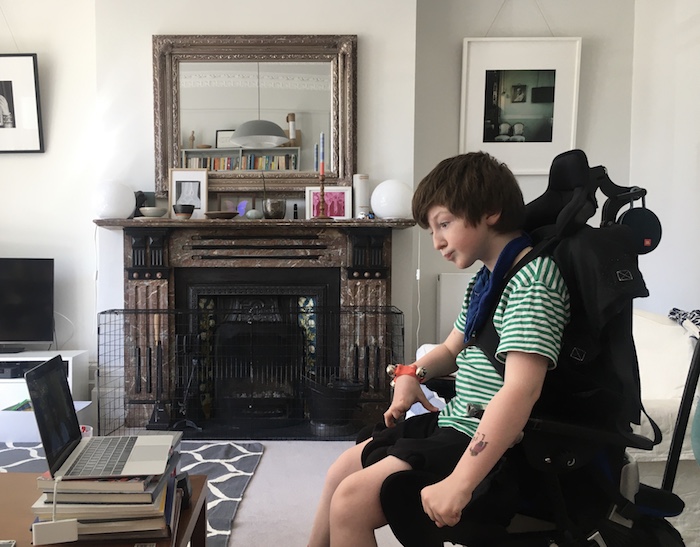
Earlier this week I looked after Ben on my own for the first time in three months. While James was out with Molly and Max, for just over an hour, it was just me and Ben. We did some schoolwork, then I got him changed and back into his chair, started his dinner and we read a chapter of our latest book. It was an entirely routine afternoon, only made remarkable by the fact that I haven’t been able to look after him like that since the beginning of March before I broke my ankle.

It has been strange that lockdown has coincided so neatly with my ankle recovering from being pieced back together by surgeons. In some ways it has been convenient – I haven’t had to work out how to take the kids to school on crutches, or reject invitations to meetings, because there has been nowhere to go and no-one to see. On the other hand it has been difficult because we have had three children at home and I haven’t been able to look after them in the way I usually would – most markedly for Ben. Max and Molly don’t need much physical help – in fact they have often been helping me – but Ben relies on the physically ability of others to be moved, fed and changed, and I haven’t been able to do that.

It has been deeply frustrating. Luckily with James and visiting carers (with the attendant hand hygiene, new protocols and PPE) we have made it work. Ben has been okay, but I don’t like it. I want to be a hands-on parent taking care of him and helping him do the things he enjoys but the ways in which I want to use my hands are, I have discovered, highly dependent on the stability of my ankle and my ability to walk and stand. I could read Ben books thoughout, sit next to him and keep tabs on whether he was being fed or not, but it wasn’t the same. It hasn’t felt like enough.

WhatsApp Image 2020-06-07 at 14.51.22

It’s made me realise how precarious my physical ability to look after Ben is, and that has been set against the precariousness of Ben’s normal life in general. I knew something about the fragility of my body – I have recovered from two caesarean sections and lower back problems which have each meant periods where I couldn’t look after Ben on my own – but I had settled into a naïve belief that the support that surrounded Ben was secure. Until it was all stripped away by the ramifications of Covid 19. At the exact point that my ability to care for Ben was reduced, everything else also stopped and James and I needed to not only be his parents but also his teachers, therapists, friends and carers.

IMG_1999

I know that everything has tumbled for everyone – we had all built lives that were dependent on friends, colleagues and professionals – but Ben’s more than most. Some support can be substituted remotely, but it’s not the same. Ben has learnt to zoom call his teachers, and we have sent photos to his therapists so they can review his position. He’s having music via videolink, and we send photos of completed work to school. Many of his carers have been able to keep coming, and we have been gratefully dependent on their help to not only care for him but also to attempt to educate him, but none of it is a substitute for him being at school. Max and Molly are also missing all of the benefits of formal education but we can more easily compensate. There are losses, of course, but they don’t feel as acute to me.

IMG_2315

And yet with a realisation of the precariousness of it all, comes an appreciation for all of these people who prop up our lives and the stability we enjoy. My naivety was a luxury – I hadn’t realised how delicate Ben’s normal, day to day, life was because he is usually so well supported and I had forgotten the physical demands of caring for Ben because I had had the benefits of my body allowing me to do it effortlessly.

IMG_2286

IMG_1673

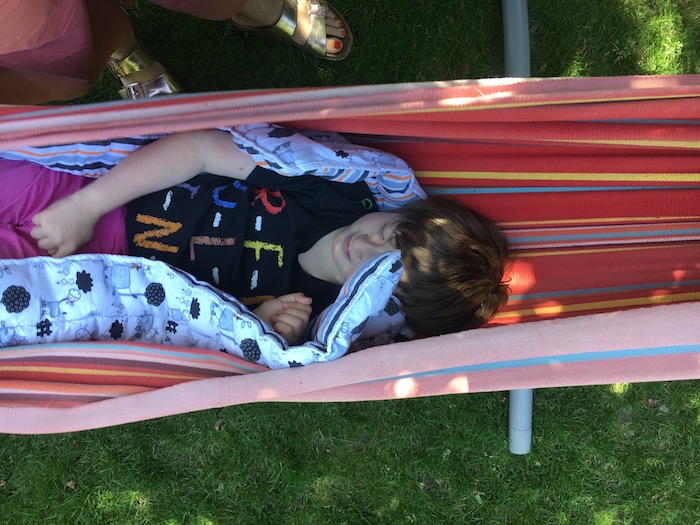
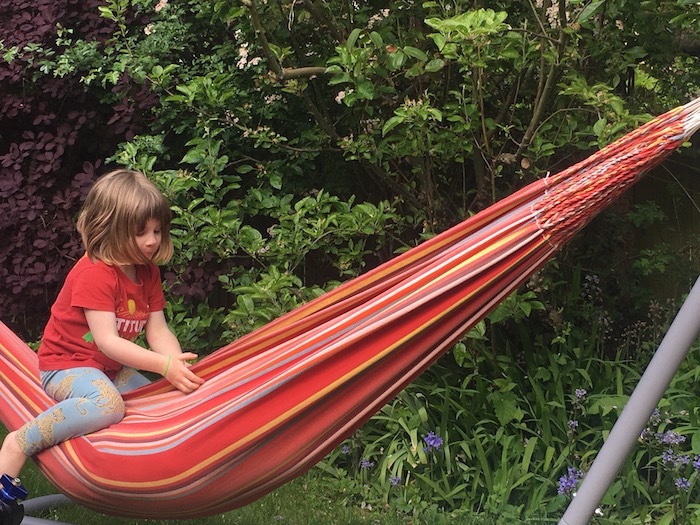
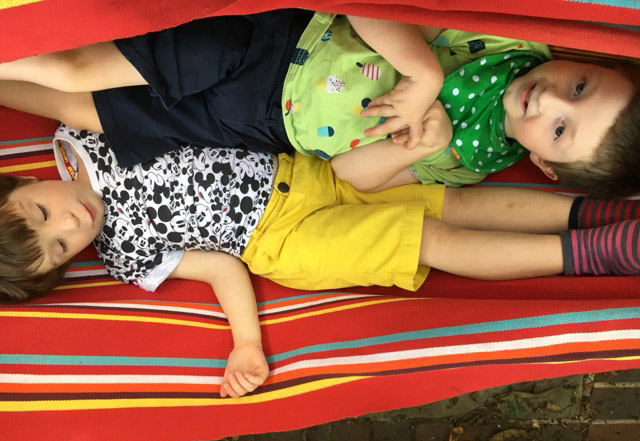
It’s not all bad. In these last three months, Ben has never spent so much time in the hammock, or been read so many books, or been hugged and kissed so consistently by his sister (our fears about ruining their relationship forever by forbidding her from touching him when she was ill unfounded). He now knows significantly more about Thunderbirds than he did, and he is sleeping better than ever. So pros and cons. I suspect our children will remember this period fondly once they are reunited with their friends, family, teachers and therapists (or actually anyone that isn’t me and James). They probably won’t remember this period as a loss (though Max will take a while to recover from not being allowed to see his friends). As we rebuild all of the connections and relationship that are the foundation of Ben’s normal life, I will notice how valuable all of those people are and hope that we never notice just how precarious our dependence is again.

IMG_1501

Limping through lockdown

It has now been over four and a half weeks of us being at home – at first in self-isolation because Molly was ill, then in the typical lockdown that everyone is doing. It has been over five weeks since I slipped on a small hill in a kids’ playground and broke three bones in my ankle. Tomorrow will mark exactly five weeks since I was wheeled into surgery, telling James I would see him in two hours, only to return five hours later with three metal plates and ten screws in my very swollen ankle.

I was discharged from hospital two days before Molly got ill and so our lockdown is inextricably linked with my ankle injury and my often clumsy attempts to manoeuvre myself around on crutches, bearing no weight on my left leg. Having a leg in a cast was not ideal preparation for having three children at home, all the time. Yet, when I was first in hospital the thing that upset me the most was being separated from my family. I was so lonely and all I wanted was to be in my own house with my children. So in some ways all my dreams came true!

Once I could leave my bed, my inability to move, carry or help has been difficult and it has felt like the worst timing because what we could do with now, more than anything, is two adults who can both look after our children. My incapacity meant James doing everything, for all of us, for weeks and it was a lot for him. More than once when I tried to be helpful and independent, I fell over. I have found it incredibly frustrating. I am unused to dependency and have found it hard to rely on nurses, my husband and my children for the most basic of my needs.

But in some ways I injured myself at the best possible moment. We had bumped into a friend in the playground just before I fell and so she distracted Max and Molly while I worked out how to get myself to A&E. I had delivered a massive work project the day before I injured myself so it has been okay that I haven’t worked for a month. James had returned from a work trip to Canada two days before I was admitted to hospital. I was discharged from hospital just before the pandemic took full hold, and my limited mobility is less of an issue since I’m barely allowed to leave my house.

We have bought me a one-legged scooter and so I can now prop my healing leg on it and potter around the house. I can cook, and carry things from one place to another without needing to pack them into my rucksack. I have made it out to the garden and have played an extremely amateur, ridiculous, game of seated volleyball with Max. I have been reaping all of the benefits of a house without steps, with doorways wide enough for a scooter, and a lift that takes me to my bedroom. I have been so grateful for the mobility aids that have allowed me to move around and increasingly parent my children. And yet I am so resentful that I can’t use my legs like I am used to. It’s been a surprise to find myself dependent on crutches and a scooter and I struggle to reconcile my long-standing belief that mobility aids are freeing, not confining, with feeling incredibly constrained, all of the time. I hope this is more a process of change management in my own mind than latent prejudice against disability, but it’s hard to fathom my own thoughts when I have only left the house twice in a month and we’re in the midst of a pandemic.

Because obviously the pandemic weighs heavily. When Molly was ill, we attempted to self-isolate her and Max from Ben, so after years of encouraging our children to touch, kiss and cuddle each other we had to stop Molly going near Ben in the house. It felt necessarily but wrong. Max stopped sleeping in the same room as Ben. We still had some carers coming to spend time with Ben, and we had to tell Molly and Max not to go downstairs when they were here. After years of encouraging an ease around Ben and his carers, we had to police everyone’s exposure to each other, spraying cleaning fluid in their wake. It was heart-breaking. I’m not sure how long it will take for us to undo our policing of touch.

As Molly entered her second full week of illness, it seemed like Ben was in a vulnerable category and we tried to work out what we would do if he got ill. We spoke to Ben’s lead consultant and he suggested a plan which made us feel reassured, but we were on tenterhooks every time Ben coughed or grimaced. Somehow he has so far remained unaffected, and now we are all healthy, touch wood. It now seems like Ben no longer officially counts as vulnerable, though who knows, and there is only so much we can do to keep him safe. We remain vigilant, nervous and concerned.

In the midst of all of this, I scoured the internet for guidance about how we should manage carers coming into the house. Not having carers was not an option given my inability to look after Ben and James needing to look after all five of us. I cannot push Ben’s wheelchair or move him between his chair and his bed. I can barely change him without wobbling perilously and can’t get to him in the night in any kind of timely fashion. So we came up with our own version of guidelines for how we would manage the risk, long before the government produced anything helpful.

I noticed news reports that told us, with a tone of reassurance, that many of the people who died had underlying health conditions. I knew that is how Ben would be described. I was relieved that children did not seem to be among the worst affected, but then there were reports of child deaths, and plenty of other people to still be worried about. When NICE published guidance setting out how access to critical care would be managed, I noticed that it was on the basis of frailty, and that according to their criteria Ben would be frail. I realised these criteria didn’t apply to children, and I was both relieved and still stricken, because Ben will one day be a disabled (apparently frail) adult, and we have friends who are disabled adults. I am still shocked that a formal, public document set out the ways in which a disabled person’s access to life-saving treatment would be considered rather than assumed. It was later edited to say the guidance should not be used with younger disabled people, but why did it take outrage to prompt that clarification? Of the many things I never imagined before COVID-19 appeared, I didn’t think I would ever worry whether my child would have to compete for medical attention and whether his disability would count against him if he did. 

I’ve barely articulated any of these thoughts because I am mainly aware of our luck. We are currently healthy, in a large house with a garden where we have time to appreciate the tulips. We have offers of supplies and the money to buy them. I have a husband to help, and subscriptions to streaming services. We have as much hope as anyone else does of home-schooling our children, albeit with the colossal pressure of being not only Ben’s teacher but also his physiotherapist, occupational therapist, speech and language therapist and support system. 

We could be in a much more difficult situation, and I know many are. We are okay – letting our kids watch marginally inappropriate films, making and eating too many cakes and wondering how to get any work done. We are more fortunate than many, yet each morning I remember that this crisis has laid bare an assumption that Ben’s life might be, if not now then in the future, a little bit less valuable than someone else’s and I just hope that we are going to weather this storm and then come out fighting, with strong ankles perhaps.

What to expect from grown-ups

I recently took Ben to a new place, for a new thing, which involved us swimming in a pool. It was a brilliant morning – the kind of pinch-me event that makes me so grateful that Ben has these opportunities, that I get to do this stuff with him.

IMG_8440

But accompanying the #blessed vibe, there was the cold, hard reality of needing to get Ben and me into our swimming costumes. We were at an unfamiliar school and there was a teaching assistant on hand to help get Ben and another child ready. As I got Ben onto the changing plinth, she said she would get Ben undressed while I got changed. This seemed sensible since I couldn’t really get naked in room full of strangers, so I left her to take Ben’s jumper and tshirt off while I popped next door. When I came back, I took over and continued to undress Ben. As I was putting some of his clothing in our bag, she started to undress Ben’s bottom half. I said I would do it but as I did, she continued to help. I repeated that I could do it.

She was being helpful. But it felt uncomfortable. I was there and happy to do all of it. We didn’t need help. Ben didn’t know her, and there is an intimacy to undressing which feels odd with someone who he has just met, who he had been cursorily introduced to, and who he is now expected to be on intimate, but unequal, terms.

Ben will always require assistance, he will need people (mostly able-bodied) to help him access the world. There is likely to be an imbalance in power and a dynamic in these relationships where Ben is more dependent, and this be interpreted as weakness. The solution isn’t for me or James to do everything for him, and for us to reduce his dependence on other people by increasing his dependence on us as parents. I am thinking about how to frame these interactions in an age-appropriate way – all children are dependent on adults in some way, but for Ben that means help to be changed and fed as well as taught and entertained.

Some of this is basic – it’s reasonable for Ben to expect people to introduce themselves and explain or ask him about what’s going to happen next before they start to undress him. Some of it is more nuanced. There are people whom Ben immediately likes and trusts, but we can’t expect that this magical energy will materialise in every interaction. Maybe sometimes Ben’s immediate need to be changed, fed, moved or assisted overrides his lack of immediate warmth to the person doing the changing, feeding or moving. Children don’t get to choose all of the adults who they interact with, but I think they should have a sense of what is okay and what is not, and should always feel safe and respected.

Last year we had a carer at home who was mainly assisting and entertaining Ben with us at the weekend. We weren’t convinced she was hugely enriching Ben’s life but with a full family life including two other kids, she helped ensure Ben had what he needed and was read some books. I felt guilty that he was spending time with her (albeit only a few hours), but that’s the bread and butter of being a mother to three kids.

IMG_0639

One afternoon I went upstairs to see how Ben was getting on and as I walked into his room she was hoisting him out of his chair in a way that was wrong, despite having been shown how we do this to make sure Ben is safe and comfortable. I then realised that she hadn’t moved him all afternoon and he was wet and uncomfortable from being in the same chair for hours. I was shocked and explained to her why all of this was unacceptable in front of Ben before asking her to leave the room and having a further chat with her on our landing. I felt protective, like a lioness who needed to corral her cubs and keep them close forever, and I asked her to leave. I bathed Ben carefully and put him in dry, clean clothes and we all watched TV together.

I had reacted in the moment. We generally try to have conversations with Ben’s carers away from the children as we don’t want our house to be a constant management exercise witnessed by them, and they need to have relationships with the carers we employ independently of us. But as I calmed down, I thought it was totally fine for Ben to have witnessed my shock and to know that I thought it was unacceptable.

It is not right for Ben to feel unsafe in his own house. It is not okay for him to be dependent on others for his personal care and for those people to not give it the thought and attention that they should. He shouldn’t have to put up with mediocre communication and monosyllabic conversation. He needs to be able to trust people with intimate moments of access.

I think it’s appropriate for him to see us calling out moments where people do this wrong. We need to make explicit what our expectations are, and to hopefully build in him a sense of what he can expect from adults, how much he has to put up with and when he’s allowed to protest. Later that night Molly, then age two, asked what the carer had done that was ‘naughty’ because she had heard my conversation with her on the landing and had (correctly) interpreted it as a telling off. I told her that the carer had done something wrong to Ben and she had gone home.

IMG_8916

As I put Ben to bed, I explained that it wasn’t okay for the carer to have moved him in a way that was risky, to have left him in his wheelchair for so long. I don’t know for sure how much of this he understood, but I hope Ben – and Max and Molly – know that he has a right to feel safe and comfortable, and grown-ups aren’t always right.

All that really matters

When I write this blog, I hope that it is read by people who may find themselves saying things to me like ‘I could never do what you do’, or ‘I’m so sorry’ with their head tilted slightly to the side and a tone of pity in their voice. When I tell people I have a beautiful, thriving son who is eight years old and is also disabled, I don’t want people to react with pity or sadness because it is unnecessary and ignorant. And with those people in mind I write blog posts about triking! And fun playschemes! And ziplining! I write about why we are lucky, and why wheelchairs are enabling (not disabling). I have a feeling that negative portrayals about disability are so ubiquitous that I’ll try and write about disabled children who are well, having fun, happy.

IMG_7376

Then suddenly I realised that maybe I have become some version of all those irritating people on social media who have apparently perfect lives, whose children are never dirty and always engaged in constructive activities. Perhaps I am one of the people that I would unfollow because there’s only so many pictures of Mediterranean holidays and accomplished crafting in tidy houses I can take before feeling a bit shit that my kids are all currently watching Kids YouTube in mismatched clothes surrounded by junk.

IMG_7603

What ends up on the internet isn’t an accurate portrayal of everything going on in a person’s life, and I don’t believe it has to be. But as a species we inevitably compare ourselves to others and I would hate other parents of disabled children to think they are doing badly because they are looking at me with my family and our apparently nonstop wholesome adventures.

All of the adventures we do have are facilitated by me having an enthusiastic husband, a hugely supportive extended family, and a lot of paid help. For all my hatred of the pity faces, and even with all these people helping us, there are aspects of our lives which are tough. We have too many children with differing needs. Ben has specific needs and access requirements and that means we can’t do everything we would like to as a family. Our family is like an oil tanker that takes a long time to get going and has a huge turning circle. We need to be shovelling coal daily (though presumably that isn’t how oil tankers are fuelled these days) to keep the show on the road. The days that have been successes have been carefully organised and James and I will have been put considerable work in for the kids (and us!) to get fun out.

IMG_8286

The majority of days aren’t special days, they are bog standard normal days when the boys are at school, then at home and everyone needs to be fed and cleaned. We have just had two months of not having anyone to help me in the daytime on weekdays and I have to set my expectations accordingly. A good afternoon/evening is one in which I haven’t shouted that much, when the kids haven’t watched TV from the moment they got in the house to the moment they go to bed, when everyone has had some of the food they should and not too much of the food they shouldn’t.

IMG_8341

Some weekends we are taking Ben to a planetarium or an outdoor education centre, other weekends when we have no help and we are tired or have things to do, Ben might watch hours of TV. He’s happy, and he’s learning almost nothing from the second hour of Strictly Come Dancing but we’re enjoying a family chuckle at Bruno. We can go a whole weekend with no physio, ignoring the standing frame, forgetting to practice with the electric wheelchair, not having time to get the trike out, and Ben watching up to four films.

IMG_7231

I’m not particularly proud of those weekends, but I really resent the idea that parents of disabled children are held to a higher standard (by professionals, by themselves) because they have to work that much harder to support their child’s development. And I hate the idea (which I am 100% guilty of) that we look at other parents and feel crap because we’re not teaching our kids phonics, stretching their hamstrings and working on their fine motor skills all the time, every day.

It should be enough to spend time just keeping our kids alive and happy, enjoying their company, or getting done the stuff (and man, there is always a mountain of stuff) that we need to. The bureaucratic load of having a disabled child is tedious but ever present. It takes extra time to feed, bathe and change a child who can’t help with these things. There are extra pressures, more appointments, difficult conversations with professionals. All of this takes physical and mental energy. There is little benefit to a child of doing all the physio someone recommended but having a mother who is losing her mind.

Sometimes you have to just batten down the hatches, recognise your capacity at that point, and accept that you’re doing your best right now. If someone asks how Ben is and I can reply ‘fine’, then we’re doing well. So your kid hasn’t done their exercises, but you’ll probably never know if they would have made any difference, and meanwhile they are clean, fed, apparently happy (or not actively unhappy) and, most of all, loved. You might even have read them a book. That’s all that really matters.

A House for Ben

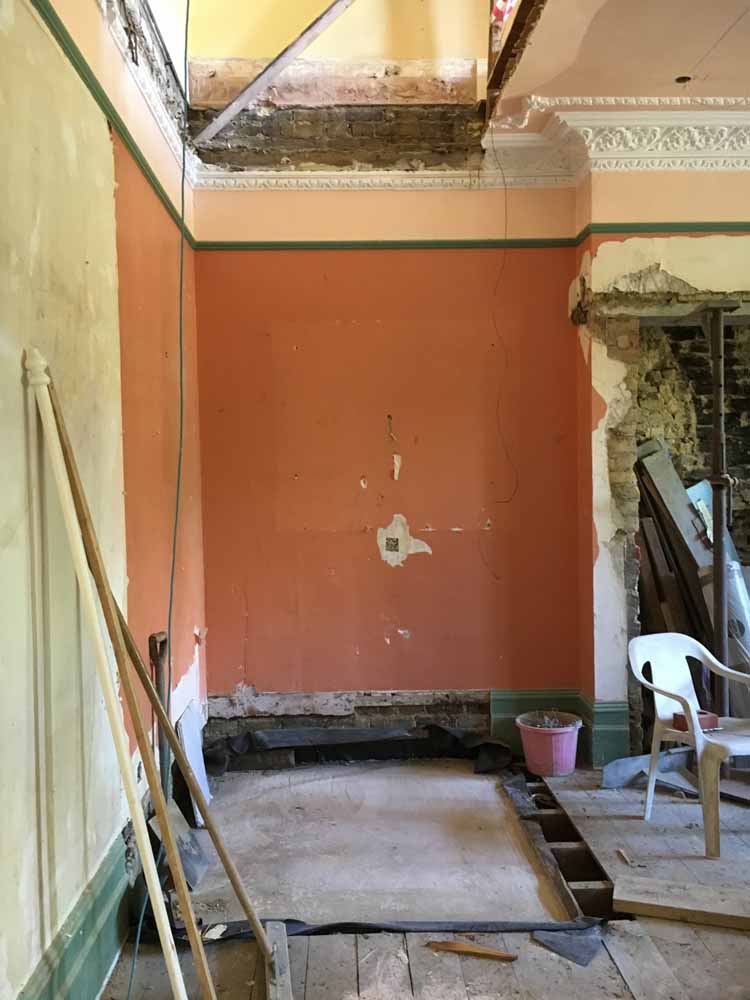
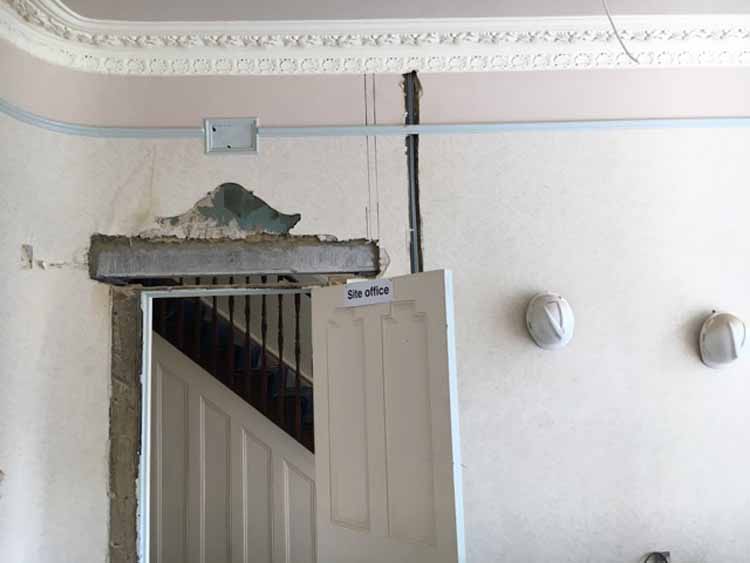
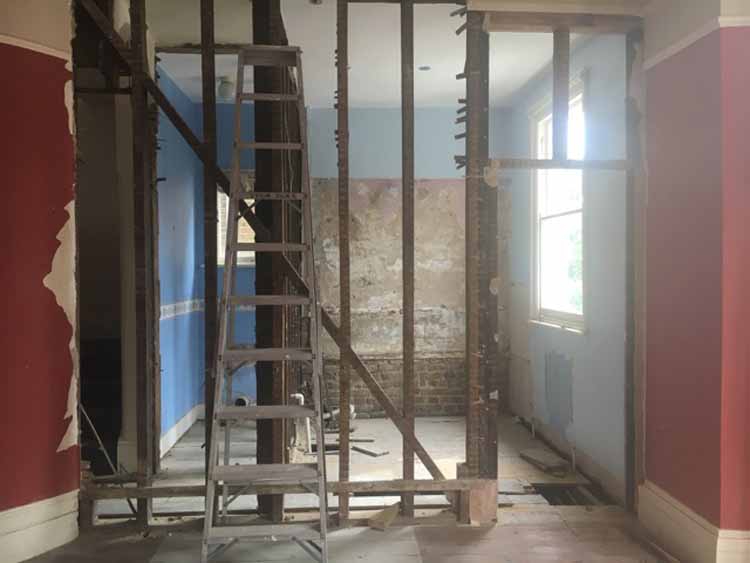
We are adapting our house to make sure it works for Ben. We have moved out and have so far paid builders thousands of pounds to rip things apart and make a perfectly good house look like it’s been hit by a natural disaster.

playroom-3

(Photo – what will be the lift, lift lobby and therapy/play room)

It’s a big, disruptive, expensive construction project of the kind we (hopefully) will only do once. We plan to move back in to the house next year and then never move again. Or at least not until the house doesn’t suit Ben any more, which we hope won’t be for an extremely long time.

This kind of project throws up a host of issues on every level from extremely detailed (what kind of sockets?) to big questions about the way we want to live our lives. Decisions about designing your family house go to the core of who you are and how you live (or want to live). I’m an architect and these are the issues that first drew me to architecture: how do buildings reflect who we are as people, what we care about and what we do day-to-day. This stuff is deeply personal and others in the same situation would make different decisions. We are extremely privileged to be in a position to be able to craft our house so carefully.

(Photo – hole for the lift in what was the kitchen)

Most buildings in the world are inaccessible to Ben but we can create a little island of utopian level access, where he can go (almost) everywhere and everything is designed to make all of our lives as easy as possible.

But how do you adapt a house for a disabled person who is currently six years old but will hopefully still be living there when they are twenty six?

How to you make a house perfect for the disabled child, whilst not compromising the personality of the property and making it a house for our whole family?

Should we compromise on the kind of house we want to live in to make it disability-friendly? Is it possible to have have a house that works perfectly for a wheelchair user but that isn’t the first thing you notice?

There are two principles that we have had from the beginning: the house needs to feel like a family house, specifically OUR family house with all of the characteristics it would have had if Ben wasn’t disabled; and the house needs to work perfectly for Ben and enable social connections for him – between family and with visitors. We are currently hyper-aware of some of the downsides of being in a house that hasn’t been specifically adapted. It’s getting harder to give Ben a bath, and even small changes in level get harder to get his wheelchair over as he gets heavier. Because it’s less easy to carry him, Ben rarely comes upstairs to our bedroom or to Max’s room.

If you go to as many adapted or accessible properties as I do, you’ll realise that ‘experts’ are often expert in how to make a house work for a wheelchair user and that isn’t the same thing as making a home for all of the members of the family in it. The cheapest and easiest way to adapt houses is often to tack an extension on to the back. This makes lots of sense, except it often involves siblings and parents sleeping upstairs and the disabled child never going to their bedrooms. If, like Ben, the child has carers then you can end up with unofficial zones within the house where the disabled person and carers spend most time in particular parts of the house and there’s not enough crossover with other members of the family.

sitting-room

(Photo – widened doorway)

Ben will be at the centre of our house, literally. There are three floors, and his bedroom will remain on the first floor. We will all pop in and out, or wander past, his room all the time. It also means we, as parents, remain totally involved in every aspect of his life. Even if there are days when carers are spending most time with him, we are there in the background interfering and suggesting, as is the prerogative of a parent. This will be facilitated by a through-floor lift that will take Ben up to his bedroom, but also further up to our bedroom and Max and Molly’s.

sam-bed

(Photo – Ben’s bedroom)

Downstairs we will have normal reception rooms (one for family-only since we so often have carers in our house now) with wide doorways, a lift lobby big enough to turn a massive wheelchair and level (or near level) floor finishes. Not a single step on the ground floor. One should not underestimate what a feat this will be involving much chat about thresholds, demolishing a conservatory and building a new dining room. We will have a patio on the same level as the kitchen and dining room, which will ramp down to the garden. Ben will use the same doors as all of us and it should be a mere matter of pushing him where he wants to go, without bumping over ledges and going through alternative doors. The rooms are big enough that when Ben is in even bigger wheelchairs we will still be able to get round him. There will be enough room around the dining table that he should be able to sit anywhere, not just in the one spot that means we can still walk past.

extension-1

(Photos – demolished conservatory, building new dining room)

The house will have pieces of specialist equipment, at vast expense, though actually these aren’t as numerous as I anticipated. You don’t need that much stuff if the whole design of the house is built around the idea of a wheelchair being able to get everywhere. The lift is a massive thing (physically and in expense) but a simple idea. There will be track hoists mounted on the ceilings of four rooms (which will mean Ben can be lifted in a sling between wheelchair and bed, for example, rather than being lifted by us). There will be changing facilities on two floors. And there will be a bath.

sam-bath

(Photo – what will be Ben’s bathroom)

The bath has the subject of much conversation. It is, apparently, easier to shower people in wheelchairs. Easier for carers that is. But we generally operate on the basis of what Ben likes and needs, rather than what suits others. The boy loves baths, so we need a bath. And if that’s a whacking great big thing that goes up and down, needs the floor to be strengthened and a new heating system to produce sufficient hot water, so be it. It will be in a bathroom with two doors – one straight in to Ben’s room so he can go bath-to-bed in one carer-friendly straight line, and one on to the landing that leads to his brothers and sisters bedroom. Because the bath is essentially just a really expensive bath and so it will be the bathroom for all the kids.

We are lucky to be able to ask ourselves how we want our family to work, and therefore how we want our house to facilitate that, and to have the opportunity to alter the fabric of the building accordingly. It is all very exciting but it feels like a huge responsibility – like all construction projects, we’ll only get to do this once and we need to get it right.

(Photo – looking up three stories of the house through the hole made for the lift)

A friend of mine joked that once we have adapted our houses our kids will be able to visit each other, if not anywhere else. It’s not really a joke – as Ben gets bigger and his wheelchair gets heavier it is becoming harder for us to go to other people’s houses with him and we can’t visit places that don’t have disabled access. So the political becomes personal – we want to compensate for the world remaining inaccessible by making our house a truly welcoming place for Ben and his friends.

Having a break – the guilt of ‘respite’

IMG_6399

img_6401

For any parent of a disabled child, the subject of respite is a bit fraught. Often because accessing any is difficult, and will have involved tricky conversations/numerous phone calls with various professionals. Partly because the logistics of organising it and physically getting the child there with everything they require are onerous.

But mainly because it’s a double-edged sword. On the one hand we would really like a break. On the other hand we feel guilty for wanting a break. We are on the knife-edge of knowing that the respite place we have carefully considered is able to take care of our child, but also thinking that no-one is going to be able to take care of them properly.

Almost two years after we were first referred for respite provision, Ben has just had his first overnight stay without us. The somewhat casual timescale allowed us time to get used to the idea, due mainly to the first hospice refusing to feed Ben pureed food so us (and yes, I mean us, social services having still not managed to assess Ben) having to find a different place. We agreed to the new referral, then went for a visit, then spent a couple of hours going through aspects of Ben’s care plan, and then stayed there with him for a weekend, then the time came for him to stay there himself.

It’s a nice place. It’s run by nurses, so feels quite medical, but that means they are totally on top of medication and not at all intimidated by disability. It’s purpose-built building with lots of space, bedrooms opening on to gardens, a huge room for craft, fun and reading. Loads of books and friendly people floating around doing interesting things. There are other kids and their siblings, volunteers making bugs and Gruffalos.

To give some context, I am generally quite relaxed about being separated from my children. We are lucky enough to have lots of family in London who are willing to look after our kids. For the first three years or so of Ben’s life he spent one night a week with my mum, he’s spent loads of weekend with his other grandparents. Max has had ‘sleepovers’ of up to five days with grandparents and my sister and her partner. Molly is somewhat testing the model by being more dedicated to breastfeeding than I would ideally like, but at some point we’ll manage to offload her too. But of course, these people are all in our family. And as Ben has got longer and heavier, and the kit he needs has got larger, it’s got trickier for him to stay anywhere that isn’t our home.

We have therefore shifted the model so James and I (perhaps with a child or two) can go away, leaving Ben in our house with various permutations of carers and family. We realise how fortunate we are to be able to do this.

What the respite hospice offers is an opportunity for us to stay at home and for Ben to stay elsewhere, allowing us to be one child down (which with three of them is a welcome release of intensity), spend more time with the other two, and perhaps get some of the stuff done that we have been planning to do for months but never have time to (e.g. unpack boxes from our house move 2.5 months ago, or actually tidy up our tip of a house). I am keen on this idea.

Except that it also involves Ben staying somewhere else without us or any other family, which makes me feel guilty and nervous.

On the morning of Ben’s solo stay we packed up everything he needed (a full car of stuff) and James and a carer set off. I used Molly as a convenient excuse to not be the one to do the drop off. I called the hospice to say they were on the way, and it transpired that there had been some administrative confusion that meant they weren’t expecting Ben until that afternoon. The idea that Ben was about to arrive for his first stay without us, and they weren’t expecting him, that they weren’t all standing around anticipating the arrival of Ben, made me feel so sad and unsure. Should I call James and get them to turn back? The journey can take up to an hour so that would mean spending most of the day faffing around which would be the exact opposite of respite. As I burst into tears, the nurse said no, they would make it work.

When James got there it was actually okay, and Ben seemed alright, and by the time James and our carer left he was happily entertained and content. We spent the weekend with Max and Molly, and realised that looking after two kids is much easier that looking after three but still pretty relentless which was quite a helpful distraction. Max burst into tears on three separate occasions because Ben wasn’t there.

IMG_6387

Then we went out for supper to celebrate our 11th wedding anniversary, and appreciated that organising babysitting for two non-disabled kids is really straightforward. We ate delicious food, drank too many drinks, faded far too early, and came home to Molly screaming in the babysitters’ face. We had called the hospice and they said Ben was okay.

The following day we woke up to a house that only had our kids in it and us. Ben sleeps badly, and we’re lucky to have nightcarers who get up with him during the night and help us in the morning. We also have day carers almost every day which makes our family life possible. But the flipside of having a lot of help is that there is almost always someone in our house. It is a luxury to wake up and potter around in a dressing gown with only Weetabix for kids to think about.

We went for lunch, where we were just about able to have actual conversations with other adults, at tables with benches that wouldn’t accommodate wheelchairs easily. I had fun. But we were with family, and I felt bad that Ben wasn’t there. Even though we probably wouldn’t have gone for the lunch at all if Ben had been, partly because of the wheelchair, partly because trying to go for lunch with all three of our kids and actually expecting to talk to anyone is an absolutely ridiculous idea. We called again and Ben was apparently happy.

When James went to collect Ben that afternoon everything was okay. He seemed relaxed. There hadn’t been any disasters. When Ben got back home and saw me, Max and Molly he was totally thrilled. Max was so happy to have Ben back, equilibrium had been restored. Max was even content to not be able to watch his TV programmes because Ben doesn’t like them.

It was, by all measures, a success. Ben did fun stuff that he wouldn’t have done at home. Max and Molly got more of our attention, James and I had a bit of a break (it’s all relative).

So why do I feel so guilty about it? It reminds me a bit of Ben’s first week at nursery, when he was almost one. I dropped him off and called James on the way out in tears, saying I would never be able to go back to work because we couldn’t possibly leave Ben at nursery… Am I just further along the continuum of internal conflict that starts at angsting about whether kids should go to nursery or have a nanny (or any childcare at all), and ends at going away for a week with no kids? Or am I just trying to justify something that’s not fair on Ben?

I don’t think there’s a right answer, but for now I’m shattered and have a to-do list that stretches over two A4 pages and Ben was happy during this last stay, so we’ll crack on (as Max would say) and hope we’re doing the right thing.

Or at least not doing the wrong thing.