Advice

advice 2

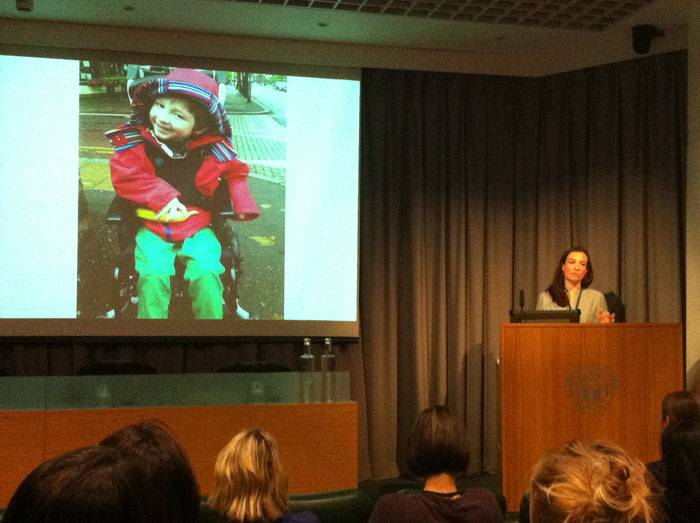
Late last year I gave a talk about Ben and myself to about eighty paediatricians taking part in a training day at the Royal Society of Medicine. I had twenty minutes to give ‘A Parent’s Perspective’. The main challenge was to edit sufficiently to fit within time – given the opportunity there is much I can think of to say. If I were allowed to do Mastermind with Ben as my specialist subject, I would blitz it.

They were a receptive audience and gasped (‘Ben had 157 appointments last year’) and laughed (niche jokes about junior surgeons’ lack of interpersonal skills) at the appropriate points. I was asked a number of very perceptive questions at the end, but I was really struck by one:

“What do you wish you had known, or had been told, when Ben was born – and what would you advise someone just starting out on a similar kind of life to yours?”

I didn’t immediately know how to answer this, but after a momentary panic in front of a large audience, I thought of something and here I will expand on it.

When Ben was in hospital just after he had been born I was expressing breastmilk for him, something I was finding relentless and dispiriting. A breastfeeding support worker put me in touch with a woman I will call E, who had expressed for over six months because her child had difficulty feeding.

Once Ben came home from hospital I couldn’t keep up with a brutal regime of pumping, bottle-feeding, tube feeding and sleep deprivation, so I stopped expressing milk. But by that time I was in touch with E anyway, and she came round for a cup of tea. She told me she thought I was doing brilliantly which was incredibly encouraging.

Meeting her in the first few months of Ben’s life was hugely important. Her son was very different from mine, with a totally different condition, but there were similarities between our lives – not least the shock of realising things are not (and probably won’t ever be) as you expected.

Most importantly, she was heavily pregnant with her second child. The idea that she had been able to accommodate all of the difficulties of her first child sufficiently to decide to have another one gave me hope. Not just that it might be possible to have another child, but that our lives might one day be as optimistic.

I stayed in touch with E and we met periodically, through my emergence from the fug of the aftermath of Ben’s birth, and the births of my second and her third child. It was comforting and fun.

This kind of camaraderie is not unique to parenting a disabled child – much of the success of NCT is because new parents need solidarity and someone who understands the challenges and joys of a brand new baby. But finding yourself talking to a parent of a disabled child is a bit more niche and therefore perhaps a bit more special. There is huge solidarity and comfort in talking to people who have experienced similar difficulties to you, who you don’t have to explain everything to. It is most uplifting if those people are thriving, but actually any contacts will do.

I have since met many other mothers of children who are disabled, complicated or simply non-typical. I tend to find these conversations are accelerated – with no need to do as much explaining, we will very quickly be discussing private feelings and traumatic experiences. We recognise the similarity of our lives, and our subject matter touches on all of the most intimate and important aspects of being human: what your priorities are, who you were and who you have become, how and who you love.

Or sometimes I’ve just had a chat about purely practical matters. No deep connection, but getting the number of a good physio is valuable. Sometimes having a disabled child in common is not enough, and someone is just not my kind of person, but that’s fine. Sometimes things are not going very well and I just need to hunker down and get through it, not talk to anyone.

Over the years these acquaintances have come in many guises – friends of friends, women from the supermarket, bloggers, parents accompanying their children to sessions at Small Steps or fellow students on a course. I have valued these connections hugely.

So if I met myself five years ago, I would say find some friends who have been in a similar position. Either online or in your city. There are people who have survived a life like yours, and many who have thrived. You are not alone.

(You could always send me an email)

P.S. These photos were taken by my brother-in-law, a paediatrician, who attended the conference. People thought he was really weird and a bit obsessed with me and Ben until they realised he was related to us.

P.P.S. I think of my approach to make-up as quite restrained. These photos would appear to show otherwise.

‘I feel sick’

I am having an incredibly boring couple of days. Ben has vomiting and diarrhoea. It has unfortunately coincided with the days when we do not have help from nannies/carers and Max ‘settling in’ to a new nursery. Obviously Ben can’t go to school. It’s not really possible to look after both kids so James had to take yesterday off work. As always, my work gets pushed aside.

Any parent is familiar with the curious mix of boredom and worry that accompanies having a sick child. Max’s developing speech means he can now tell you a lot of what he thinks or feels, so when he woke up vomiting on Saturday night he could scream ‘I sick!’. Over the next few days he could tell us that he felt sick, that he needed a cuddle, that we needed to be gentle when we changed his nappy. It’s not fun seeing him ill, but amazing that he can be so eloquent about it.

That’s the first time we’ve nursed a speaking child though an illness – we are much more used to a child who is unable to say how they feel or what they want. Ben is often sick; when he vomits we have to wait and see whether it’s a sign of illness or just another bit of reflux. It became clear yesterday that he was ill and couldn’t go to school. So ill that we stopped all food and he had small amounts of dioralyte (though his gastrostomy tube) while watching hours and hours of TV. Today he woke pale and quiet and withdrawn. By mid-afternoon today he’d had half a banana (whizzed up in the blender and pushed through his feeding tube) and was complaining that Bob the Builder was unsatisfactory entertainment so hopefully he’s on the mend.

James and I know Ben so well we can generally tell by his movements, facial expressions and noises whether he is happy or not, whether he’s in pain or content. But we never know what’s coming – he can’t tell us he feels sick before the inevitable puke. He can’t tell us he’s hungry to indicate his tummy is ready for some food. So we just have to guess, and sometimes that means what goes in comes right back out again. So. Much. Wiping. And entirely homebound.

Earlier this week Ben had a general anaesthetic in order to have some tests. Other people can have this scan without sedation but Ben would move too much. It meant a whole day in hospital while we prepared for and then he recovered from the anaesthetic. Ben’s five weeks in hospital after he was born has left us with a strong distaste for the artificial light, overheated rooms and lack of control of a stay on a ward. It never gets any easier leaving Ben after he’s been anaesthetised (he’s had two operations related to his gastrostomy), sitting around eating M&S sandwiches while wondering what’s going on, worrying that he’ll wake up and won’t know where he is. It’s horrible when they do say you can go and see him because he’s confused and upset, and looks tiny in the massive hospital bed.

One of the questions his assigned nurse had asked in the morning was whether Ben could talk. We said no, but that he understood speech. Throughout the day we told him who each new person he met was and explained what was going to happen. Ben hates any kind of fiddling (he cries when he is weighed, even though this only means being held by me while I stand on some scales) but after 45 minutes of ‘magic’ cream on his hands and a lot of warning, he was surprisingly okay about the cannula being put it. They took blood at the same time as preparing for giving him the anaesthetic. Ben has a yearly blood test to check he is getting all of the necessary nutrition, something he finds traumatic. At least this reduced the number of times he’ll need to be pierced with a needle.

In the afternoon, as he recovered and waved his bandaged arm around, he started complaining that the entertainment was not up to scratch. A sure sign that he was on the up. He then whinged when the nurse came near him with a pulse/sats monitor. His nurse understood what he was trying to say, ‘You said he couldn’t talk, but I’m in no doubt what he means.’ Indeed.

Holiday?

DSC_0673

The summer holidays have really derailed my commitment to writing blogs. Despite Ben still going to nursery for two days a week though the school holidays a combination of my husband being away in June, our nanny being away for most of July, me trying to do some work, then us going on holiday for two weeks meant I was struggling to keep on top of basic tasks. And my house was a tip.

I had good intentions of writing when we were on holiday – wouldn’t it be the perfect opportunity, with all that spare time? But Ben developed a fever on Day 1 of our stay in Devon and spent a considerable amount of time vomiting (in a carpeted holiday home, hard to tell sometimes whether I was more stressed about Ben or the soft furnishings). Then his gastrostomy site got infected so he was really sore. Then we went on to Cornwall where we stayed with good friends and loads of kids so I was too busy sipping Aperol Spritz in the hot tub to be writing.

Talking of which, if Ben could talk I’m certain he would tell us the hot tub was the highlight of his holiday. He is at his calmest, stillest, most relaxed in the very hot water. I spent 45 minutes in there with him one morning. He would happily have stayed longer but I was concerned about whether he was actually being cooked and whether his fingertips would ever rehydrate.

I had purposefully reduced the amount of Ben-admin I did on holiday – which meant I spent only one morning making calls and answering emails. On our return to London, I caught up with everything and we had embarked upon all the appointments we had postponed while we were away…

We returned to London on Friday and then (these are only the Ben-based bits):

Saturday – 1hr physio at home

Sunday – 1hr physio at home

Monday – 1hr physio at home and checking fit of a new chair. Cooked, blended and froze a week’s worth of food for Ben (approx 1.5 hrs). Confirmed Ben can attend a hospital appointment for some tests. Rearranged Ben’s specialist dentist appointment so he can go to a picnic with friends from nursery later in the week. Ordered repeat prescriptions from pharmacy.

Tuesday – Opthalmology appointment at hospital. Waited in for collection of Wheelchair Accessible Vehicle we had borrowed for holiday. 1hr physio at home. Tracked down spare part for Ben’s chair which had been delivered to the wrong house.

Wednesday – new chair for Ben delivered. Met with Assistive Technology team to start loan of eyegaze computer which wouldn’t work. Met with council transport co-ordinator to complete application for Ben to get the bus to school. Packed bags and made food so Ben could stay with my parents overnight. Dropped Ben off, then deliver medications that I forgot to pack originally. Called company to arrange fitting of spare part to Ben’s chair.

Thursday – picnic at Ben’s nursery to say goodbye to other kids/parents on his penultimate day. Spoke to community nurses about Ben’s sore gastrostomy site. Rearranged some hospital tests. Caught up with Ben’s speech and language therapist and arranged to meet next week. Met with Assistive Technology team to get eyegaze computer.

Friday – Ben’s last day at nursery. Traded voicemails with Community Dietician. Collected medicines from pharmacy.

IMG_7691

We are constantly trying to think about the balance between Ben being a small boy and being a disabled child. Other 4 year olds get to spend summer holidays playing in parks, going swimming, making cakes. Ben rarely has a day without an appointment. In this instance, he had just had two weeks of illness/recuperation/relaxation, and most of these appointments were important to ensure his ongoing comfort, development and nutrition, so I think it was okay. But it’s not fair. As his parents we have to keep reviewing whether the things we make Ben do are right, and that he isn’t missing out on too much of the fun stuff.

I often talk with friends/acquaintances about why I am not working as an architect, why I’m not employed on a permanent basis; weeks like this are why I’m based at home for now.

(P.S. In that last photo of Ben doing physio exercises, he’s watching a video on the iPad to encourage him to keep his head up. His favourite thing at the moment is an old BBC Jackanory film of Rik Mayall reading Charlie and the Chocolate Factory by Roald Dahl. He has watched it tens of times and thinks it is HILARIOUS.)

Care/Trust

I met a woman recently who has two small children, one of whom has cerebral palsy. She would like to return to her skilled job but can’t find suitable childcare for her disabled child. A therapist recently asked her whether she thought it was right for her to go to work, didn’t she think she should stay at home with her disabled child who really needed her? I suspect no-one ever said such things to me because they somehow knew I might do something regrettable to them. Only someone who has no experience of looking after a disabled child would think it was a good idea for their mother to have no respite.

I went back to work when Ben was 10 months old. It was a bit more complicated than that sounds because ‘back’ meant to an employer who had last employed me three years previously and the job I had gone on maternity leave from was in Qatar.  But ‘back’ I went, for two days a week.

We obviously needed some childcare. I had no real understanding of how it works in London and so had half-heartedly put Ben’s name down for the two nurseries I walked past each day – one a small private nursery who were perfectly friendly but didn’t seem optimistic about us making it to the top of their waiting list any time soon, and an Early Years Centre run by our local council.

I visited a potential childminder and sat in her sitting room as an evangelical Christian TV channel was put on mute. I explained Ben’s needs (being fed through his gastrostomy tube, medications, needing to be entertained, held, helped to sleep). She was happy with all this but she was recently qualified and had no particular experience of a child like Ben. Then she talked about how she would have up to four children with her. I left and phoned my husband, James, to tell him there was no way that woman could look after Ben; that she had no understanding of how relentless a job it would be.

We decided that if Ben was going to be in any kind of childcare it should be a nursery, where staff could take turns if he was miserable for hours and there would be more going on around him. So I called the Early Years Centre to check our progress on the inevitable waiting list and, in a moment of extraordinary luck, the manager answered. She listened to me describe Ben and called back that week to offer us a place for two days a week, starting in a few months.

Leaving Ben at the nursery was very hard. The first time I took him, I called James to weep – convinced that I couldn’t possibly leave Ben, that he wouldn’t be okay, that I could never return to work. It takes an incredible amount of trust to leave any child in someone else’s care – particularly a child who staff have very little experience of, when they have only just been taught how to feed him, when he occasionally chokes and turns blue with no warning.  A child whose care involves liaising with physiotherapists, occupational therapists, speech and language therapists, community nurses, dieticians and who will vomit on you at least once a week.

At the same time it was very easy. All I had to do was go to work, stay there all day and pick him up. It meant leaving the house at 6.30am in the dark and crossing London but it was so incredibly liberating. I could walk up any flights of stairs I liked with no buggy, I read books for the first time in almost a year. I felt a bit duplicitous that people might think I was an average 30 year old woman and not realise I was Ben’s mother. At work, people talked to me about all sorts of things that weren’t related to babies or cerebral palsy or mothering. I could pee whenever I liked, and think about what sandwich I might have for lunch. It was restorative and important to remember I was competent.

James was very supportive but inevitably late for work having dropped Ben and a mountain of bags off at nursery. They had generally been up most of the night anyway – Ben’s sleeping was appalling and we had a deal where James got up with him before I worked. And he had a big job at the time so was normally coming home from work at about 7pm to help me get Ben to sleep, having supper, then working on his laptop until after midnight. It was brutal.

Going to work was absolutely the right thing to do, and only possible because I had a very supportive employer.

One of the challenges for a parent of a disabled child is that your child is highly dependent on you, but you need for your own sake and theirs to find a way to have a break. By the nature of Ben’s difficulty in independently eating/drinking/moving/playing, he needs adults around all of the time and they need to be people he and we trust. We feel we should have him with us all the time. But because his needs are so high, because he can’t entertain or occupy himself, because he can’t sleep through the night, we need to have a break and must learn to let others take care of him.

Ben’s keyworker at nursery was a Sierra Leonean woman (let’s call her A) with only one setting when she talked and that was LOUD. Ben had (still has) a startle reflex so he jumped at loud noises and often found this upsetting. He was totally confused by A but over time he accommodated the noise and the enthusiastic physical affection. A, meanwhile, became one of Ben’s fiercest defenders. She was just the first of a number of keyworkers that took it upon themselves to care for Ben, teach him to look and laugh, buy his favourite books out of their own money. Heaven help anyone who didn’t appreciate him (leading to a succession of agency 1:1 assistants who were deemed unsatisfactory and dismissed).

The nursery story isn’t all sweetness and light and I’m sure I’ll come on to the trickier moments (when I actually withdrew Ben for a bit), but at its heart Ben’s nursery is a place that is totally okay with the idea of difference. It has middle class kids living in the surrounding Georgian houses and working-class kids from the estate down the road, social service referrals and children who are there five days a week while their parents work in media, kids from all countries and permutations of families. It’s often a shambles, but as a lesson to kids that everyone should be included it’s doing pretty well and we were all very lucky to find it.

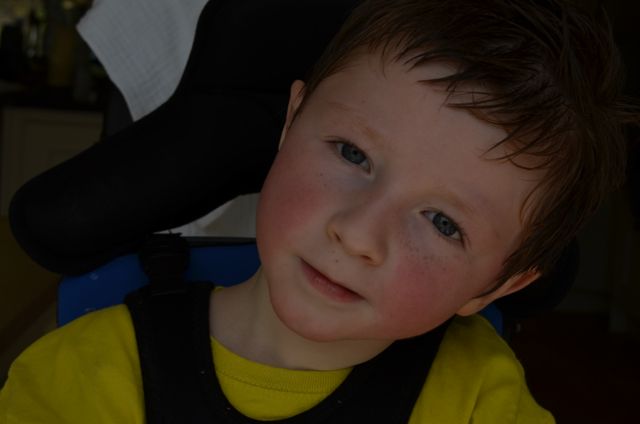
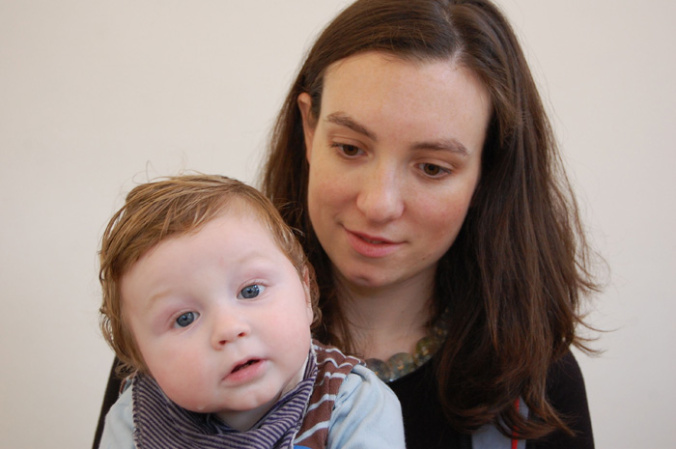
(Photos are of Ben at 10-12 months old, when he started at nursery)

Hearts and minds

There are unique challenges to parenting a disabled child. One of them is that your role as a parent is blurred with so many others: physiotherapist, occupational therapist, speech and language therapist, nurse, teacher, advocate interpreter; so many things to consider and activities that the simple mothering can get buried under the tasks you feel should be doing but would actually be done better by someone who had actually trained as a physiotherapist/teacher.

The other complication is that there are so many people involved, all in slightly different ways, so our lives are full of us explaining Ben to different professionals with slightly different emphases. This is true through from the apparently simple (what should we be feeding Ben?) through to the specialist (what drugs should he be on?), and with varying degrees of medicalisation. It’s one of the reasons why we would rather wait longer to see our usual Consultant rather than a new doctor.

Ben was in hospital for the first five weeks of his life. To begin with we could do almost nothing for him except sit close and stroke his hand – his care was in the hands of incredibly specialist nurses and doctors. As he got better and bigger the intensity of medical intervention decreased and we did more for him. I recall someone describing this period when their own child was in NICU, saying they realised that their parenting and nurturing would start when they were the best person to meet their child’s needs, but in the meantime their child needed medical professionals more than they needed a mother. It could have been Martha Wainwright, who I shared a breast-pumping room with at University College London Hospital. There’s nothing like pumping milk to force intimacy with strangers.

Once that initial, horrific, period was over Ben still required medical input but what he really, really needed was loving parents and James and I have tried our best to do that well but it’s not always easy.

Ben is seen by 19 different professionals or clinics (e.g. therapists, various hospital consultants, community doctor, nurses, dietician, social worker). Some of them we see annually or every six months (hospital clinics), some he sees weekly (therapists), so over the course of 2013 he had over 150 separate appointments. Many were at home or nursery, but I was there for the vast majority of them. I try hard to cull any appointments that we don’t need, and many of them are with lovely people who we enjoy seeing, but still that’s a lot of time each week which isn’t spent just hanging out with Ben, doing things he enjoys, being a mother.

We live a life where people say things you would prefer not to hear (‘we don’t have the luxury of being able to take children as disabled as Ben’s) and many things involve protracted, energy sapping bureaucratic ordeals (getting a Statement of Special Educational Need), all of which I handle better if I’ve had some sleep, and unfortunately this is one of the things Ben finds difficult. So on any given day it’s likely that I’ve been up during the night and that has inevitable effects on the quality of my parenting and my ability to cope. Unfortunately the likelihood of me bursting in to tears increased exponentially when I was pregnant with Ben and is now directly proportional to how tired I am. So there’s a fair amount of weeping some weeks, along with a lack of tolerance for people not helping us when they could. It also might lead to me sitting on a chair crying with Ben in my arms, and a Consultant sitting on the floor in front of me, wiping my tears.

Some of the appointments involve reviewing every aspect of Ben’s life, so our choices as parents are laid bare and discussed. This is often helpful, and with people who we trust and value their opinion, but not always. And we sometimes have to stand up for what we think is right despite their views. Which means Ben doesn’t need to have a blood test now (which he hates) just to check something which no-one’s that worried about.

One of the implications of this scrutiny, and of the complexity of Ben’s condition, is that aspects which aren’t particularly medical become medicalised in all of our minds. We were worried about Ben’s weight last year and had numerous conversations with people because his feeding is difficult, but it eventually became clear that we just weren’t feeding him enough. And that was because we were thinking of his feeding routine like a medicine chart, rather than what a 4 year old boy might eat. When we started putting Petit Filous down his gastrostomy tube, he got fatter. It’s not rocket science, but it is difficult to see the wood when you’re surrounded by trees and feeding tubes.

Christine Burke, who led a training session I attended earlier this year, said that the key thing for professionals involved in the lives of disabled people is that they come to work with their head and their heart. The best people we see (and there are many) are very skilled at what they do, but they also understand something of what our lives are actually like, and respect our views as parents. They explain options to us and leave us to make choices. They don’t call other professionals about Ben without talking to us first – both because that might be seen as rude, and because if they actually asked me I would be able to answer their question immediately. There also happens to be a direct correlation between how good people are at their jobs and how much they ask about Max – because they appreciate that Ben is part of a family, and we are parents to two children.

The worst thing anyone can do is come to work with only their head and see some aspect of their interaction with us as merely a task in their day. I am Ben’s mother and I will fight for what is right for him, and I may be exhausted (I may start sobbing) but you had better appreciate how special he is.