Choosing what kind of mother to be

Note: This is more about me than Ben – low on anecdotes about a seven year old, high on analysis of my life choices.

IMG_2320

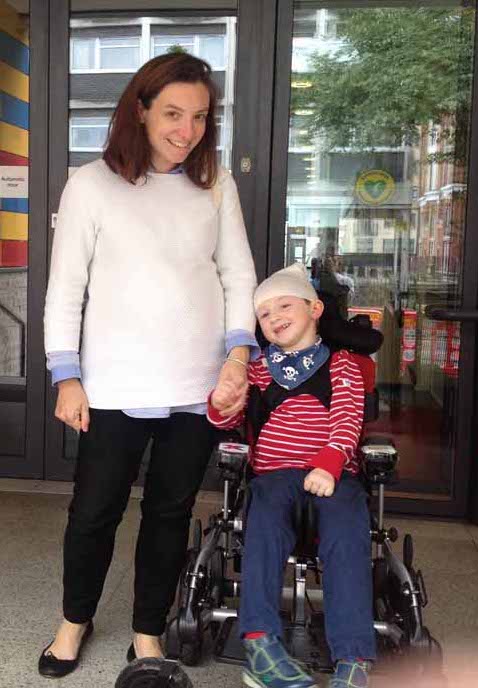
(Marginally deranged photo of us at Legoland)

I’ve never been someone who planned my life. I never really thought about my wedding day until I got engaged, I never had a particular career plan beyond qualifying as an architect, I sort of knew I wanted kids but didn’t give much thought to what kind of mother I would be. Then I married someone who also isn’t particularly a planner, and so we pottered along planning what we would do next but not much beyond that.

The one thing we did plan was that we would live abroad. And through James’s job, in 2006 we were planning to move to Damascus. At some point during the preparations I was talking to a good friend who, encouraged by it being late and us both being a bit drunk, said he was really surprised that I was following my husband to another country, that of all the people to do that he didn’t think it would be me.

It really pulled me up short. Was he right? I thought of myself as a slightly bolshy feminist – had I succumbed to being a Good Wife? No, as I explained inarticulately. We had discussed James’s job applications and I had agreed to all of the destinations. I would qualify as an architect while we were in Syria, and anyway we were going to get to live in Damascus which was the opportunity of a lifetime. So no, I hadn’t compromised anything, I was choosing to do this with my eyes wide open.

I am currently a stay-at-home mother to three kids. What’s good about my approach to life is that having had no real plan for who I would be means I can’t compare expectations with reality. But I’m pretty sure I thought I would be working. And I definitely thought we would be living abroad with kids. And travelling a lot.

Some of those things I feel a bit sad about – it is tricky to travel with Ben and he hasn’t seen nearly as much of the world as I would have liked him to. Others make me feel a bit uncomfortable, and I recall the drunken 2006 conversation – have I drifted into being a Good Mother? Have I abandoned bolshy-feminist Jess for a life of wiping and school runs?

I have been thinking about this lately because it’s been a while since I did any paid work. Sometimes I wonder to myself why I’m not working – surely it would be possible to organise enough help to make that happen, surely someone would employ me? Maybe I’m being a bit pathetic and all of my reasons for being at home are actually excuses…

And then I do my annual lecture to some MSc students where I am asked to set out what being a parent of a severely disabled child is like. And amidst the descriptions of a typical day and complaints about social services, I count up all of the appointments Ben has had in the previous year to produce our very own stats which show that in 2016 Ben had 116 appointments. This is down from over 150 in 2015.

Cue: small gasp! The majority of those are therapy appointments (physio, OT, speech and language) and most of those are at home. At least sixteen appointments were to see doctors, dentists or hospital-based clinics. Others were to do with Ben’s wheelchair, or about equipment, or xrays, or community nurses, or school meetings. These aren’t unnecessary appointments – they are useful, constructive discussions with doctors, or crucial tests, or important reviews. We weed out and cancel the very few things that we think are superfluous, to avoid Ben missing school unnecessarily.

Some of these appointments, particularly home-based physio, can be done with a carer rather than me but only if we have a carer here after school which we haven’t for the last two months. Others need to be with James or me.

And that’s why I’m not at work. Because if you work part-time and your son has on average two appointments every week, your working week is going to be massively disrupted. Because the care of your son can only be delegated if you can find the right carer, a carer who will inevitably be challenging to replace when they leave. Because while the 22 different professionals Ben sees are in theory talking to each other, the reality is that Ben gets more out of all of them if I am talking to them all and making sure they are coordinated.

Add to all of this a large construction project while we adapt our house, three house moves within two years, and two other kids keeping me busy and I realise why I don’t feel like I spend as much time sitting around, or writing blogs, as I would like. I do, however, have time to take Max to the adventure playground after school sometimes.

It’s an individual choice – I know mothers of disabled children who work and their children are no worse off for it. But for us, the juggle of doing all that these three kids require plus us both working would be too much. I have decided that will be me for now (there’s no inherent reason it couldn’t be James) and we are in a position for it to be possible. So I am choosing to work (and I mean work, anyone who thinks a paid job is harder than being at home with my three kids has not spent a week with said kids) at home. I shall not feel bad about it, I will feel proud (and less anxious than if I was trying to do a responsible job in addition to the other demands on my time). This is the right thing for me and my kids right now.

Right, better go, Ben’s got another appointment to get to…

Looking for Alice

I love art and have, for a long time, spent as much of my time as possible visiting galleries, looking at sculpture, paintings, photographs. These days I am as likely to use my Tate membership to take a small child to the members café as I am to appreciate an exhibition, but recently I discovered a new (to me) photographer. I had that thrill of connecting with her pictures in a way that made me feel like today had been a good day, that the time I had spent looking at those pictures had improved the quality of my life.

IMG_2792

That photographer is Sian Davey and the book I discovered is ‘Looking for Alice’, a collection of photographs of her daughter. Alice was born with Down’s Syndrome and Davey’s project has been to photograph her daughter as she accommodated the shock of a baby who was different to her other children, and fell in love. Alice is the same age as Ben.

These photographs are beautiful. If you knew nothing of the intent of the photographer, did not know that a mother was holding the camera and that the girl was her daughter, you would find them to be stunning images. They are part of a photographic tradition of focussing on the domestic, of examining what is in front of you.

IMG_2796

If, like me, you read Davey’s essay accompanying the photographs, you would hear her voice:

‘This is a story about love and what gets in the way. This concerns all of us, my daughter’s diagnosis is only one aspect of it. The rest is about yours and mine and indeed society’s relationship with ‘difference’ of all kinds – this is what Alice is inviting us to reflect on.’

IMG_2794

I can’t help but believe the personal to be political. I don’t think you can be the mother (or indeed parent) of a child who is ‘different’ and not politicise the way you see the world around you – from the way people are treated, included or not, to the effects of social policy, education and healthcare. I have come to realise that much of the prejudice and problems experienced by disabled children and adults come from fear and ignorance of individuals, society and the state. It is easy to think of some people as different if they look different (or behave differently) to how you perceive a child or adult should look and be. This inevitably leads to thinking it is okay to treat them differently.

IMG_2797

Davey is explicit about the fear and uncertainty she felt after Alice was born, and how these feelings dissipated as her love grew. I can’t believe that anyone could look at the photographs of Alice and not see that she is a girl who, as her mother describes, has the same needs and feelings as any other child. It is also blindingly clear that she is a loved member of her family, not least because one cannot ignore the fond gaze of the camera.

Sometimes I feel like a member of an invisible club – one of parents diligently and quietly learning from their ‘different’, often disabled, children and using their children to try and change the world in ways big and small. It is an unashamedly domestic beginning for a political movement, and I am only one of the latest in a long line of mothers and fathers trying to make the world a better place for their children. Because surely our society is only as good as the way we treat those without advantage and privilege.

IMG_2799

Families are messy, imperfect things, constantly shifting and adapting yet consistent and supportive. For us, and many others, our family is where disability is the norm rather than the exception and is just part of the mix. How wonderful it would be if we felt that was the case beyond our front door.

As Davey writes

‘(Alice) is now in the middle of everything that we do as a family, and is loved unconditionally, as it should be. I can’t help but wonder how it might be for Alice to be always valued everywhere, without distinction, without exception, without a second glance.’

There’s nothing to be afraid of. Alice, and Ben, are just (small) people. There is much to value.

Different kids, different kinds of walking

If, like us, you take the view that your child’s disability is part of him and try your hardest not to be negative about it in front of him, how far do you take it?

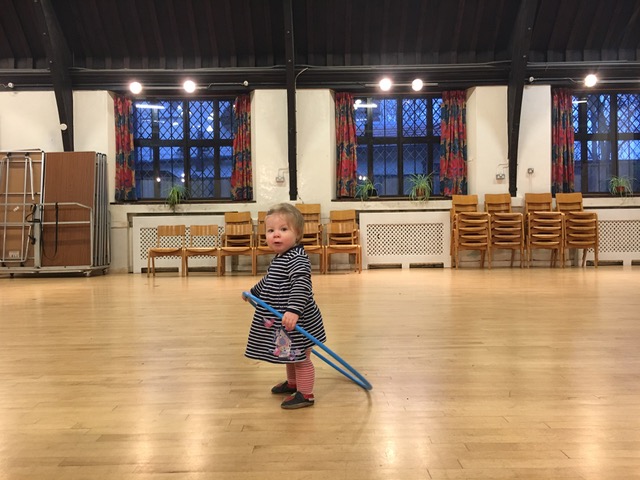
Molly has just started walking. She’s 13 months and since working out how to take a few steps two weeks ago, she has been practising at every opportunity. She has the typical waddle of a baby and is totally unfazed by dropping to her bum every so often. It’s utterly joyful to watch. If you’re feeling at all depressed by the state of the world, I would recommend spending some time watching a sweet one-year-old walk around like a very tiny drunk.

It feels like a privilege to watch a baby develop these skills and like a small miracle when they keep their balance and toddle off. We, more than most, appreciate the wonder of a baby learning to walk.

And because we are all so amazed we have spent a lot of time talking about it. Visitors comment on it. It can all be a bit of a Molly love-in.

I started to feel a bit uncomfortable about it. How does Ben feel about Molly learning to walk on her own? Is he sad that she is doing something he can’t? When we congratulate Molly does he hear an implicit criticism of him not walking? Was he not really thinking about it much until we all stood around going on and on about how brilliant she was?

I spent a day or two trying not to talk too much about Molly’s walking. Acting as if it was no big deal. Then Max asked me if I was better at maths than him, and I wondered for a moment if I should soften the blow. But then I decided to tell him yes, I was. And I said I’m definitely better at maths than James. I do have an A Level in maths after all and neither of them do.

It struck me that we can’t spend the rest of our lives not being honest about who is good at what, and what one of us can do that the other can’t do as well. Some of our kids will be good at remembering obscure cricketers (James’s genes), some will be good at chemistry (my genes). Pretty unlikely one of them will be talented at everything – so they will all have to experience that irritating feeling of knowing your sibling is better than you at something. In Ben’s case, the nature of his disability is such that he will do lots of amazing things, but some physical skills will constantly elude him. Max and Molly will do things that he can’t.

Obviously, accepting that fact doesn’t mean we need to ask questions like, ‘Isn’t it a shame that Ben can’t walk along walls like Max can?’ (this did actually happen, achieving nothing except drawing everyone’s attention to the disadvantages of being disabled and tainting an otherwise pleasant walk).

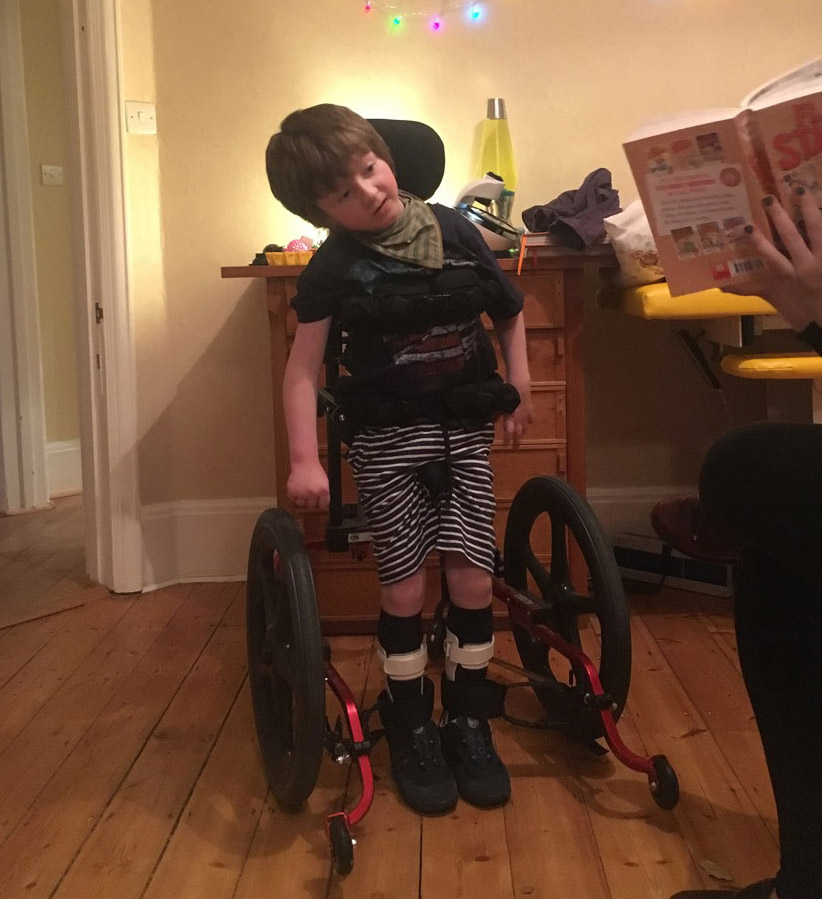
I think we have to avoid this kind of direct comparison with all of our children (tricky with Max’s constant questions comparing me to James, James to Superman, Superman to Spiderman, etc etc). Ben won’t walk unaided, but his school annual review lists ‘walking’ (with a supportive frame) under the list of What Ben Likes. Each child is on their own track and we should only compare them against their progress on that track.

Ultimately, I need to chill out and enjoy watching a small child negotiate going downstairs backwards and a four-year-old learn to write. These gross and fine motor skills are easy for parents to take for granted. Do not. See them for the incredible feats of co-ordination that they are. Hold them dear and cherish each milestone.

As a postscript that demonstrates that being an ally to my disabled child is still very much a work in progress, I should mention that I suddenly realised I had written this whole post without asking Ben what he actually thought. So I sat down with him and his eyegaze computer, and modelled what I thought:

‘Molly – walk – great’

I asked him what he thought. He chose:

‘I don’t want to do it’ … ‘Good’

He then got frustrated that I was delaying him listening to The Faraway Tree.

Fair response. Jog on, Mummy, stop asking me stupid questions about my sister walking…

Ben is 7!

Ben is seven! We celebrated with, amongst other things, an egg-free chocolate cake that I whizzed up in our blender and gave to Ben through his feeding tube.

With every passing year I sound a bit more like my mum: “I can’t believe you’re seven years old! I remember when you were just a baby!” But it’s true – I am genuinely surprised that we have been parents for seven years and that Ben is so big and tall.

As with all recent birthdays, James made a Ben-themed video of the past year and we watched it with our family, projected on to the wall. I would recommend this as a way not so much of celebrating the child’s birthday, though Ben and Max enjoy seeing themselves, but more as a way of congratulating oneself on another year of parenting. It is heartening to see how much children have changed and grown over the year, how much you have done with them, and ultimately how justified you are in feeling so tired.

The other thing that we realise when we (James) make these videos is that there is always way too much material. We have done too much fun stuff and taken too many photos and videos to fit into one short film. It makes obvious that Ben is living a full life, with variety and fun, surrounded by loving family.

Just after Ben’s birthday he had an appointment at our local rehabilitation centre where wheelchair services, assistive technology and other helpful services are based. There are always all sorts of disabled people coming in and out for appointments. I was sitting in reception with Ben and Molly, waiting to be called. Molly was a bit grumpy because she hadn’t yet had her morning bottle of milk, Ben was happy watching a screen showing footage from four security cameras. A lady in a wheelchair was pushed close to us (and I have written that in the passive deliberately, because the person pushing didn’t ask her where she wanted to wait). She was an older lady, I would guess in her seventies, immaculately dressed and made up. She smiled at us and after a few moments said (as is common):

“You’ve got your hands full!”

I smiled and we had a brief chat about how old the kids were, how cute Molly was, how much she liked milk. Then the lady asked, as she looked at Ben:

“Is he able to go to school?”

“Of course,” I said. “He goes to a brilliant school which he loves, don’t you Ben. We’re just here for an appointment.”

I could see the pity-look appearing so I was even more positive than normal about both Ben and his school. But as she was leaving she said:

“It’s so hard for these handicapped children. So hard for their families. I feel so sorry for them.”

It was one of those times when I felt like I didn’t have the words to be able to explain to her what our world is like, what Ben’s life is like, how we (try to) treat him. I have no idea how or why she uses a wheelchair, or how old she was when she first used it, but clearly she has lived a different experience.

It’s impossible in passing conversations like this to say all I want to, but later I felt so sad that she assumed Ben didn’t go to school, that his life is somehow unbearably hard, that it’s okay to talk about him like that right in front of him. Clearly being disabled in some way doesn’t automatically educate you in how to treat disabled kids in 2016 (or 2017).

I don’t want to minimise Ben’s challenges – loads of things are tough for him, almost nothing comes easily, and much is really unfair. And as a family we sometimes struggle when Ben’s disability makes things more complicated for all of us. But right now, as a seven year old boy, Ben is having a good life most of the time (and really, which child is having a good life all of the time? I mean every kid has to tidy up or eat Brussels sprouts or go home some of the time). He has loads of fun. He laughs most days. He is loved. He is learning. He is thriving.

By way of illustration, between his sixth and seventh birthdays Ben:

  • Had a baby sister: tolerated Molly’s wailing, put up with a third of our attention rather than half, learnt to deal with her grabbing onto his legs and pulling his hair. And then got a new baby cousin, Ralph, who also sometimes likes a bit of a wail.

  • Learnt to cycle his trike on his own: whizzed round in circles, racing Max and being unbelievably pleased with himself. He is still working on learning how to steer.
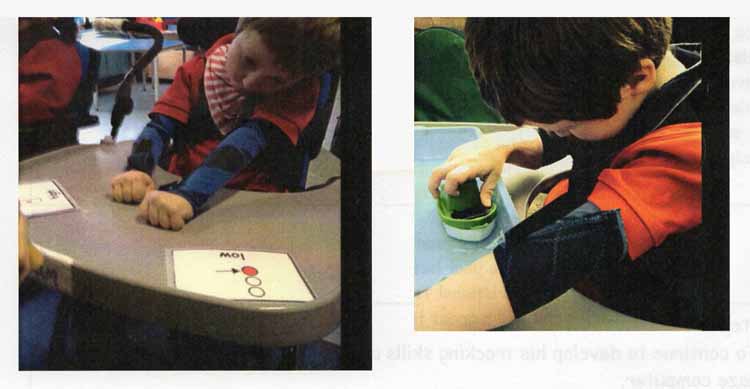
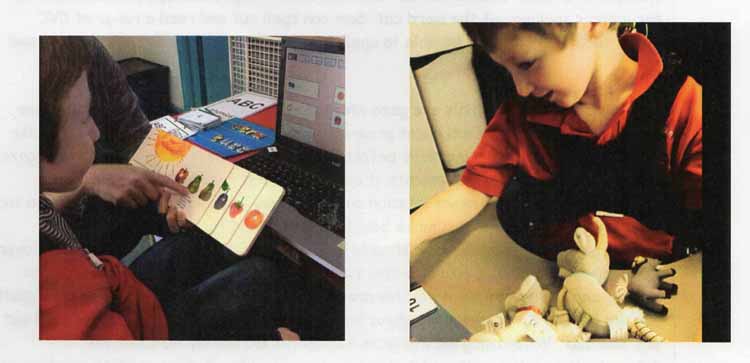
  • Made really noticeable progress with communication: starting to eyepoint using his communication book to tell us things, more reliably telling us yes and no.
  • Made huge progress on using his eyegaze computer: using it almost every day, knowing exactly what he wants to do, reliably choosing stories and then navigating through them like a pro, using communication software to create messages that were totally appropriate to the moment.
  • Went on holiday to Cornwall and France: first flight for three years, loads of swimming and beach time, hanging out with family and friends, getting tanned (and on one unfortunate occasion burned), getting a new passport.

IMG_0751

  • So many jokes with Max. So many lovely moments between these two boys.

  • Started staying at a children’s hospice for the occasional night, didn’t seem to be traumatised.
  • Moved house, again. Visited the building site to review progress and try out his new lift. Before he is eight he should have managed yet another move, his sixth since he was born.

img_9047

  • Began to be hoisted (rather than manually lifted) for most transfers between chairs and beds: coped much better with this than his mum.
  • Listened to lots and lots of audiobooks: his bluetooth speaker and ipod have become essentials wherever Ben goes, and there’s therefore been less screen time, developed a love for the books of David Walliams (except the highly emotional ending of Gangsta Granny) and late in the year Harry Potter.
  • Finished his first year at a new school: totally smashed it, participated in a whole school play in his walker, another year of loving learning, fascinated by the Great Fire of London.

img_9857

  • Was increasingly contented: Ben has spent the last year less fractious and generally happier. We spend less time flicking though films to find the one he is happy to watch, less energy trying to entertain him in public places so we can finish our lunch. This is probably connected to us having more (paid) help, and Ben getting older and more mature, helped – we think – by his surgery in 2015. As long as we explain what’s what is going on or is about to happen, Ben is noticeably more able to deal with unfamiliar or demanding environments. Long may it continue.

As we celebrate another year of Ben being our son, I am so very proud of this boy (and still so very sad that seven years ago he was still in hospital). He is such a joy to us all, so filled with patience and humour and determination. Happy New Year everyone – let’s all hope we come across more Bens, less pity and more positivity in 2017.

img_1708

A space rocket for Ben

In December Max and I went to Ben’s Christmas play at school. It wasn’t what you would call a traditional nativity play – each class did a segment around a theme and Ben’s bit was mainly based on the story of the three pigs and the big bad wolf! This is the second school Christmas play I have been to and they are always a triumph of logistics and imagination.

One of the older classes did a performance based on space, and were dressed as astronauts while singing ‘All About that Space’ to the tune of the Meghan Trainor song. This happens to be one of Max’s favourite songs and he was outraged, ‘It’s All About That BASS, not SPACE!’

Then, as we watched the kids Max said loudly, ‘Astronauts are not disabled.’

‘Um, right, don’t they look great?’ I said.

‘Astronauts cannot be in wheelchairs’, he said.

Luckily for me the next stage of the play involved chocolate coins being tossed in to the audience, so Max was distracted and I didn’t have to deal with the inclusion-disability-space conundrum immediately. But it stayed with me.

Max is as accepting of difference as you could hope a three year old to be. He’s a kid and they deal mainly in black and white and are hugely influenced by what they see around them. So in the same way that they might think women can’t be sea adventurers because there’s only one poxy female Octonaut on the TV programme, they think astronauts can’t be disabled because they haven’t seen one.

And of course they’re sort of right. It’s unlikely there will be a wheelchair-user visiting the International Space Station any time soon. But it’s also pretty unlikely that any of the children we know will grow up to be astronauts despite their aspirations but we don’t therefore tell them it’s impossible. Right now, they can pretend to be whoever they want to be.

The whole point of childhood is to have dreams and imagination, and the role of parents is to make the landscape of their aspirations as wide and ambitious as possible. That’s why we read fictional books. So in the same way that I don’t tell Max that he might not meet the stringent selection criteria for space travel, we also don’t tell Ben that he can’t be an astronaut because he’s disabled. In light of Max’s comments at the play, we spend quite a lot of time talking about how Max AND Ben can be astronauts. And Molly, come to that (depressingly lack of female astronaut portrayal also).

Part of this issue is about representation – kids needs to see disabled people (and girls, and women, and non-white people, etc etc) in their books and on TV, doing the same things that the able-bodied, white boy characters get to do. That’s what the Toy Like Me campaign is all about – calling on the toy industry to better represent disabled kids. There’s a lovely story about their campaign here

While we wait for the rest of the world to catch up with inclusion, I seized the opportunity for action provided by a massive pile of cardboard following delivery of a new sofa from Ikea and…

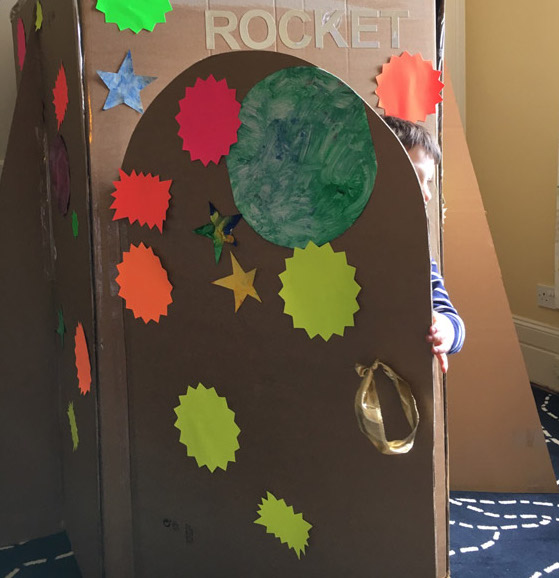
I now present to you: THE WHEELCHAIR-ACCESSIBLE ROCKET!

IMG_0644

My eight years of architectural education have not been wasted. It’s big enough for Ben to get in in his chair and still have room for his brother. Max has decorated it with stars and planets, it has a door to shut out the adults, and interior lighting courtesy of the pound shop. It’s a bit crude, not photogenic and an apostrophe has dropped off but the kids love it.

IMG_0526

IMG_0547

James, Max and Ben have between them created an elaborate bedtime routine which involves turning all the lights off, Max climbing in to Ben’s bed, and then them playing with various light toys. For slightly obscure reasons, this is called a disco (though it involves no music). Therapists would call it Sensory Play.

We recently bought Ben a Buzz Lightyear toy to reward him for all his incredibly hard work using the eyegaze computer and along with the glow-in-the-dark stars and planets and watching clips of Tim Peake in space, the whole thing has become a bit space-themed. Now, the disco often starts with a little trip in to the rocket and a pretend voyage to the moon before the boys get in to bed.

IMG_0655

If the world won’t provide the imaginative horizons my kids need, we’ll have to create them ourselves.

‘To infinity, and beyond!’

Brothers and sisters

All kids look up to those older than them, and Max is no different. Ben is almost 6, Max is 3 and Max wants to do all of the things Ben does: go to school, go swimming, watch Dennis the Menace.

Max knows Ben is disabled and because chronology is tricky when you are 3, Max wonders whether he will become disabled when he is older. He doesn’t see this as a particularly negative potential development. He wants to know whether he’ll get a wheelchair like Ben’s, or go to the same school when he’s disabled.

There is something bittersweet about our able-bodied son climbing in to Ben’s wheelchair when Ben isn’t using it, about demanding to sit in Ben’s specialist supportive chair to have his snack. I hope it continues like this – Max’s relaxed attitude to disability is how we would all be if we came across more disabled people at school and work.

Over the summer we went to the Liberty Festival at the Olympic Park . It was on one of those British summer days when the rain was relentless and so I can’t say we stayed that long, but they had curated a selection of cultural and sporting events which deserved sunshine and crowds.

One of the activities was a racing track, and a basketball court, with loads of sports wheelchairs for people to use. What an incredibly simple idea, but have you come across it before? Giving people the opportunity to just sit in a wheelchair? There were loads of kids trying to play wheelchair basketball and race along the track. Max was super keen even though the chairs were way too big for him, and off he and Ben went to race (with James pushing Ben). He still talks about it – remembering the time that he got to go in a cool wheelchair and raced against his brother.

I am mindful of this whole business of how you raise siblings of your disabled child. I am pregnant and we expect (fingers crossed, which didn’t go that well with Ben’s birth) another, female, mini-Jess in December. We have thought carefully about this. There are disadvantages to Ben of his parents being spread between other kids, just in terms of time and attention if nothing else – there is less time to model a PODD communication book if another child needs a wee or is in the midst of a meltdown. And there are ever present risks of a sibling feeling like Ben gets the lions share of our attention, of everyone’s attention. Ben’s needs dictate our holidays, mean there are constantly carers in our house, that our lives are disrupted by hospital stays.

Max is also seeing various things I wish he wouldn’t. He recently asked me to teach him how to click with his fingers. When I asked where he’d seen clicking, he recounted in painfully accurate detail an incident a few weeks ago when a lady (who was in a position of responsibility and should have known better) was clicking in Ben’s face as an apparent attempt to distract or entertain him. When James asked her not to, and suggested she speak to Ben rather than click her fingers directly in front of his nose, she got very defensive and we all ended up having an argument. Max was with us and was confused by it all, ‘You and Daddy were very cross, and the lady was shouting, and Ben is in our family’. He thinks people shouldn’t click in Ben’s face, but he likes the general idea of clicking.

We hope all of these potential stresses and strains are convincingly outweighed by the massive advantages of there being more people in our gang. Max loves his brother. He wishes Ben didn’t go to school so that he was at home with us every day. He makes us buy Ben toys so he isn’t left out .

IMG_1871 (1)

Meanwhile a chatty 3 year old is a marvellous lubricant in social situations and forces all of us, not least Ben, to engage when it would be easier not to. We do all sorts of things as a family that we wouldn’t do if it were just me, James and Ben. And we all laugh more. We now have to charge the stimulator in Ben’s tummy daily so Max has been comparing Ben to an iPad. Ben thinks this is funny as do we all. (Yes, we overuse screens in our house and Max spends too much time with an iPad – another consequence of being Ben’s brother).

So let’s hope we can produce another one like Max. I mean, of course we won’t. Kids have a habit of being their own people as the two we’ve got have shown. But if the next one is even a bit as accepting then it will be okay.

New School

We are coming out of the post-surgery haze. Having come out of hospital one week after the operation, Ben started at a new school exactly two weeks after surgery. We had feared that he wouldn’t be well enough and might miss the beginning of term, so it felt like a huge win to get him there in one (slightly bruised, stitched together) piece.

IMG_1460 (1)

James has taken a significant chunk of time off work so we have had the luxury of introducing Ben to school slowly, calmly, with both of us around to make it work. We have been able to take him in together, learning how to drive into central London without killing a cyclist or getting embedded in a stationary traffic jam, and pick him up early. Max has come in with us and got to know the new school. We have all been able to meet the staff and see where Ben spends his day. It’s all been significantly less stressful than I anticipated.

It’s not all been plain sailing. Until earlier this week Ben had periods of profound unhappiness which couldn’t be resolved with paracetamol, or ibuprofen, or TV, or books, or lying in bed. There are few things more sapping than spending four hours with a child who is really unhappy and being apparently incapable of making things better. Maybe he had a headache (there is, after all, stuff in there that wasn’t there before), or a tummy ache (ditto), or the wounds are uncomfortable, or he’s just really bored of being with us at home. Not fun. But if someone told me pre-surgery that Ben would start at school two weeks later and be largely cheerful (or at least not miserable), I would have taken it.

He’s now done two weeks and he isn’t just putting up with school, he is really happy. As we walked in on the first day, Ben was all smiles. He has loved school thus far and he knew he would enjoy it, and he was right. That is partly because he likes learning and the variety of a school day, and partly because it’s an excellent school. James and I were far more nervous than Ben, but the staff are so obviously capable, receptive and skilled that we have had no choice but to happily leave Ben there and go for lunch in Clerkenwell or take Max to the Museum of London, again.

I’ve described before the importance, and marvelousness, of one’s disabled child going to a really good school. We have been fortunate enough to find two. Ben has moved schools because we, and the professionals working with him, felt he would benefit from more specific and specialist input so he has moved from a school for children with a range of special educational needs to a school for physically disabled children. He, and we, loved his previous school and were sad to leave. We all made very good friends there and Ben was lucky to be taught and supported by lovely, skilled people for two years. Saying goodbye to them all involved a lot of weeping, for once not just by me.

As part of leaving, Ben got his last school report. We spend a lot of time reading expert reports about Ben that are, necessarily, factual and focus on problems. Ben’s report was the exact opposite of this – hundreds of words of enthusiasm and celebration. It was a joy to read and was written evidence of the can-do attitude of his lovely teacher. Forgive me as I quote some of my favourite bits – comments that could only be made by people who have taken time to really get to know Ben and see past the immediate obstacles to communication and learning:

report 3

‘Children and adults are drawn to Ben’s fun friendly nature and positive attitude.’

report 4

 ‘One of Ben’s many lovely qualities is his empathy. If another pupil receives praise or is celebrated for an achievement Ben will start to beam and become very excited.’

report 6

 ‘Ben can communicate with adults using his communication board, his PODD book, symbols or just by gesture.’

 ‘Ben has really flourished with phonics activities this year, and with the continued support he receives from his family he has excelled in this area.’

report 2

report 1

We are incredibly proud of him, so pleased he’s had such a brilliant experience of school so far and so thankful for such talented teachers and assistants. What a geek! Like mother (and father), like son.

Listening to the lungs

When you are a parent, there are times when you really can’t be sure you’re doing it right. Much like when you thought all grown-ups knew what they were doing and then got to your twenties and realised the world is full of clueless adults, it turns out a lot of parents are winging it with varying levels of success.

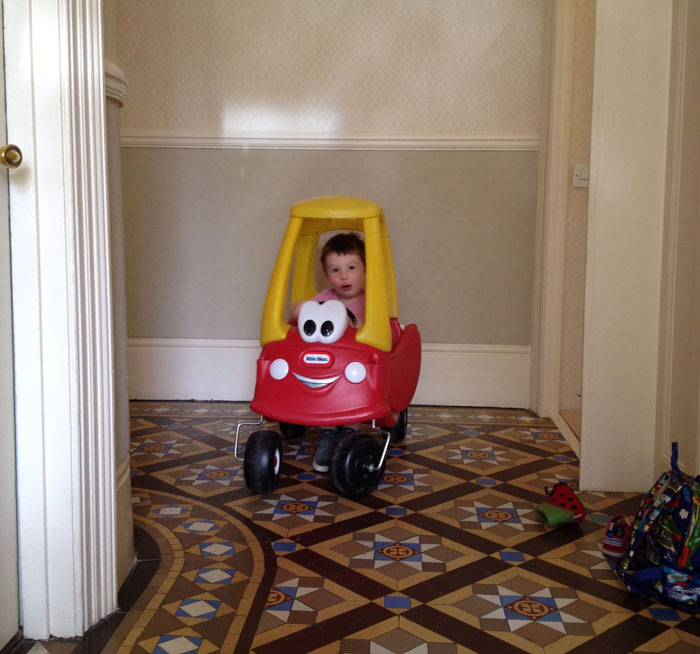
Sometimes I have days like this Saturday, when my three year old found out that the ramps installed to enable his disabled brother to get out to the garden also mean he can drive his outdoor toy car straight up and into the kitchen. Then he repeatedly barged my legs, and on the back of a major toileting incident and various other small but irksome exchanges, I found myself pushing the car (with him in it) back out to the garden, with a noticeable lack of good humour. I then ignored him for a few minutes, so when my husband returned from the shops he was a little alarmed to find Max was standing at the back door screaming, wearing nothing but a pair of pants. At this point I wondered if I had any idea what I was doing.

IMG_0365

I have many moments along this theme – wondering or worrying whether Ben’s doing enough or too much therapy, whether the boys watch too much TV, feeling bad that we haven’t taken them swimming for weeks, or that we’ve made them move house for the second time in two years, and they’ll have to move at least twice more in the next two years, etc, etc.

But then some days I think to myself… Jess, you have this job totally nailed!

Ben had a heavy cold last week, caught from me. He was snotty and a bit feverish but not awfully ill. He started to have a bit of a cough, and on Wednesday night I wasn’t very happy with it. But his temperature wasn’t that high, and he wasn’t that miserable. We put him to bed as usual, and about 10 minutes later he was sick. Which wasn’t ideal, and is relatively rare these days, but it’s not extraordinary. Then he slept well that night, which was very unusual, and by this point my metaphorical ears were pricked.

Ben hasn’t had a chest infection for over two years, but previously he’s had a lot. And I remember the sound of them.

First thing on Thursday morning he still had a bit of a cough, so I phoned the GP. We can normally get an appointment on the same day but they were short of doctors so the best they could offer was going to the surgery and waiting an unspecified length of time to see someone. Nothing sounds less fun than taking a slightly ill boy with a low boredom threshold to sit in a room full of sick people for hours so I dithered a bit. But then Ben coughed and I decided we’d go.

As we arrived, I could hear the administrative staff behind the desk talking about how few doctors there were, and that there were too many people waiting without appointments. Then the doctor came and queried whether all of these waiting people really needed to be seen today.

I was feeling a bit sheepish – on the face of it, yes Ben is disabled and complicated, but his symptoms weren’t that stark: a cough that his mother thinks sounds wrong, a little bit of a fever, some snot, and a really good night’s sleep.

We waited less than an hour before being called in to the doctor’s room. I set out my concerns, and she took his temperature (a bit high) and listened to his chest: crackles on the right! Needs a course of antibiotics!

I mean obviously I’d prefer he wasn’t ill. But the feeling of satisfaction at being proved right was a parenting high point. I know this boy. I know his lungs. And some days I am ALL OVER this mothering (*smug face).

(Max might not agree.)

Broadening Horizons

When I was doing my post-graduate diploma to become an architect, I studied at a very well-respected university in London. Through a complicated, confusing process of admissions, I ended up in a teaching unit with two eccentric tutors. They dedicated themselves to broadening the horizons of their students as widely as possible, the manifestation of which was to teach us as little as possible about buildings while having long (and occasionally unintelligible) conversations about cybernetics, pataphysics and (in the case of my work) weaving.

For me, it wasn’t a hugely successful approach and I didn’t thrive in an environment so self-consciously wacky, but I respect their intention. Life, and particularly professional life, is rarely as varied and fun as one would like so it’s important to broaden horizons before they are narrowed by the requirements of a Local Authority Planning Officer.

I carry this idea in to my parenting. I think the role of any parent is to provide as many possibilities as possible, to raise a child that believes they can do what they want and understands how big and rich the world around them is. Of course I have prejudices and opinions which I can’t help projecting on to my kids – I would like my sons to contribute, I might struggle to rouse enthusiasm for them being bankers – but I mainly want them to feel they have options.

Naturally our aspirations for Ben have adapted a bit to fit his talents. James has had to accept that the already low probability that he’d play international rugby has further decreased. But that’s okay – I have never been hugely keen on the idea of my (inevitably) slight sons being pummelled – we just need to find some alternative possibilities and role-models.

Much of the world is still open to Ben. He can read and spell at an appropriate level for his age so as long as we can facilitate his communication there is no reason that he can’t do all sorts of exciting and interesting things. Once you start to look there are lots of people with profound communication difficulties doing brilliant jobs: Stephen Hawking obviously, the media’s favourite disabled person.

I recently came across the work of Jacqueline Smith – an artist who is physically disabled – through my mum spotting something in a Printmaking magazine. Following some internet detective work, I found the Eye Can Draw project which aimed to establish greater access to printmaking for artists with disabilities in Dundee, Scotland. Amongst other things, they linked eye-gaze technology with graphic software, and then used the drawings to make prints using various printmaking techniques.

Once you think about it, it’s an obvious thing to do. But it hadn’t occurred to me. Ben uses an eyegaze computer to play games; why not encourage him to make art this way?

THIS IS WHAT IT’S ALL ABOUT. These are the people we need to know about. Not just taking Ben to art for kids and hoping/helping him to use his hands, but finding role-models, and their work, which is inspirational in both process and end result.

DSC_0476

I loved Jackie’s prints, and I’m pretty sure I would have liked them even if I hadn’t been so heartened and inspired by her methods of production. She is a talented artist who just happens to make her pictures via some specialist technology, which itself requires skill and expertise to use. It is no surprise to me that Jackie’s work was nominated for the Lumen Prize 2014, for art created digitally.

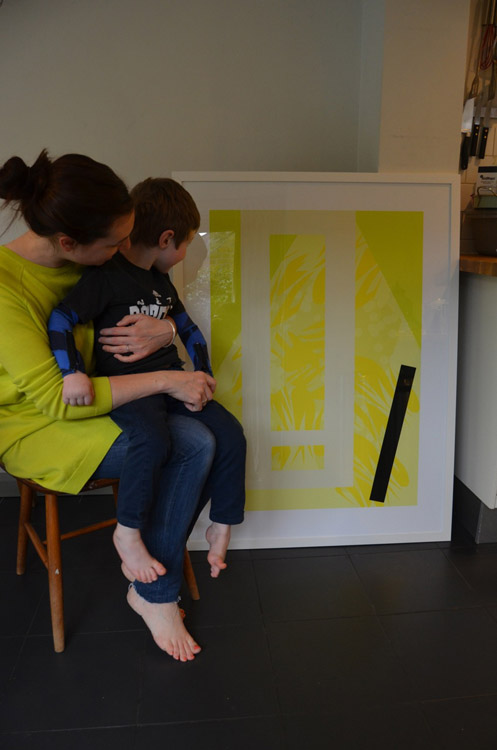
So I bought one! I pretended to myself that it was a present to Ben. I had a very friendly email exchange with Jackie who was concerned that the scale of the print would be intimidating in a domestic environment, but I can’t think of anything better than eye-catching eye-gaze art. Let’s intimidate ourselves with the positivity of disability.

The print is now framed and yes, it is rather large. I might make it my goal to only buy pictures that are the same size as my children.

DSC_0499

Ben’s Dad

DSC_0228

If I could undo Ben’s disability I would. I don’t have any time for the idea that it is part of some plan, or that Special People have Special Children, or that this is the way Ben was meant to be. Ben was a healthy, fully able baby in my womb, then his brain was damaged and now he is disabled. When he is older he can tell me what he thinks, but in my view it would be better if he wasn’t disabled. There is almost nothing that has followed from his birth I wouldn’t give back in order for him to be able to walk and talk. Of course this becomes more and more theoretical as he gets older, and we can’t imagine him any other way.

Ben is disabled, and he can’t walk and talk. But Ben is happy and healthy so we must get on with it.

However, one thing that I know now, that perhaps I wouldn’t have known quite so clearly without Ben’s disability, is that I married the right man. I am lucky. For this I am extraordinarily thankful.

Last week marked the anniversary of James and I getting together exactly fifteen years ago, when we were undergraduates spending too much time watching Neighbours and drinking too many pints of cheap lager. In the following ten years we had many adventures and a lot of fun, travelling frequently and building careers.

Then, five years ago, when Ben was born everything changed. I have no doubt that I wouldn’t have made it through the first year of Ben’s life relatively unscathed if I hadn’t had James. We were worried and sad. It seemed hard to have fun. But at least we were doing it together.

There is no equivalent to the shared responsibility of parenting, the person who is as interested as you in some domestic anecdote about something your child has done, who is as pleased as you are with a small development. I have taken on the majority of day-to-day care and co-ordination of Ben’s life, but James is always there listening, commenting and encouraging. James can do everything for Ben that I do and will do it happily, be that getting up almost every night with him for 6 months when I was breastfeeding newborn Max, or feeding him and giving him cuddles.

IMG_0162

I do not take this for granted. Statistics about relationships of parents of disabled children are chilling: you are more likely to separate if your child is disabled. The combination of demands (physical, financial and psychological) and stress are too much for many couples.

I can’t help think this isn’t helped by many professionals addressing themselves almost exclusively to mothers. We have had numerous experiences in hospitals, clinics or at home where people talk to me and ignore James. They do not ask his opinion, or literally talk to me about Ben with their back to James (for example, about the risks of an impending general anaesthetic).

But it is a fundamental misunderstanding of the dynamic of our family to think James isn’t interested or involved in Ben’s day-to-day life. It is not only insulting to James by minimising his role as Ben’s father, but also puts more pressure on me as the one who should know everything and shoulder most of the responsibility.

It also doesn’t account for my notoriously unreliable memory versus James’s ability for near-perfect recall. Or that James combines all this parenting with a full-time job. Or that, for example, he’s taken a day of leave from that job to be sat on a hospital ward being ignored by a junior doctor.

Sometimes I look at my kids and I almost can’t cope with the amount that I love them. I felt like this about my younger sisters when they were small – I sometimes almost crushed them with cuddles. Like yesterday when I collected Ben from school; I walked in to his classroom and he was so obviously happy to be there, and then saw me and looked like he was the happiest he had ever been.

The only thing better than that feeling of fierce pride and overwhelming love is witnessing it between your husband and your children. He loves them as much as I do, and we are all Team Ben.

DSC_0207