Ben is 6!

IMG_2961

Ben is 6! Like every year, the actual day is full of mixed emotions. While we are joyful that we are celebrating six years since Ben joined us, on the day I am also mindful that this time six years ago Ben was being resuscitated then being transferred on his own in an ambulance to a different hospital, and that our lives changed forever.

But it gets easier every year, as the memories are less immediate, there is more to celebrate and Ben is more engaged in birthdays.

As is now our annual tradition, James made a video to summarise Ben’s year. I won’t post it, partly for reasons of privacy but also because of self-indulgence; while most parents will happily watch a ten minute video of their own child, no-one I know really wants to watch a long video of someone else’s child, even if that child is the subject of a semi regular blog they read. It’s surely the modern equivalent of being made to sit through someone else’s holiday photos.

So, here’s the executive summary. It is unashamedly positive. Let’s ignore the tiresome stuff for now.

In Ben’s sixth year he:

  • Enjoyed ice-skating and went round the rink quite a lot faster than grandpa;

IMG_3517

  • Went down a zipwire, swung from a sports hall ceiling and went kayaking at the Calvert Trust;
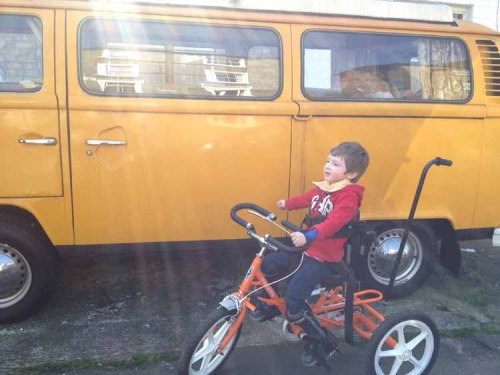
  • Did a lot of triking;

IMG_9741

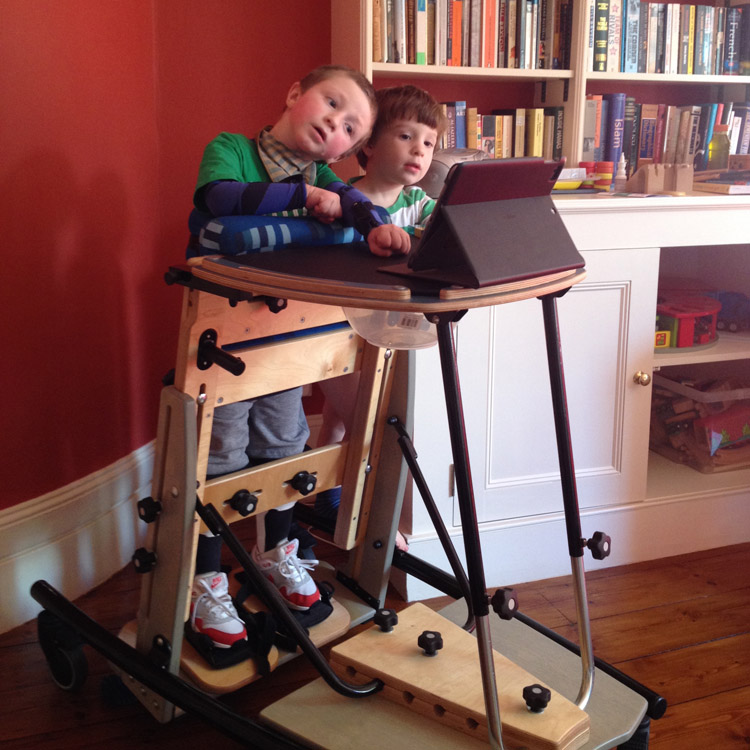
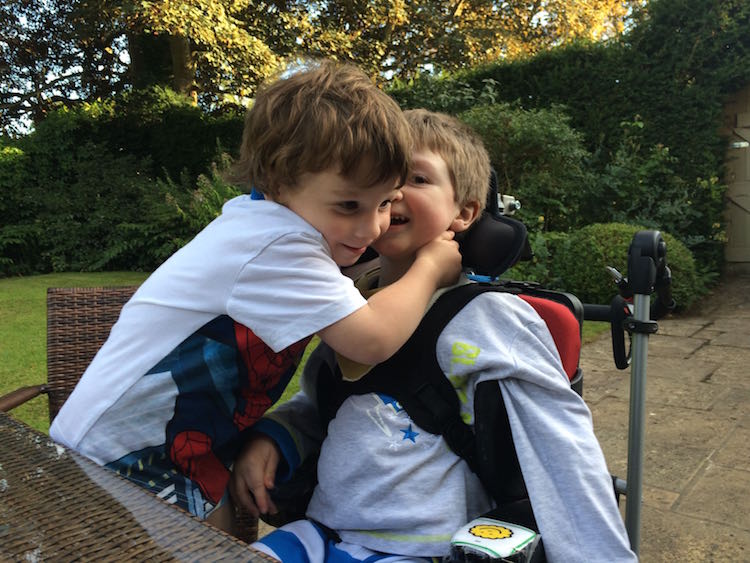
  • Was a lovely older brother to Max, letting him wear his lycra suit and clamber all over him;

IMG_0570

  • Moved house (again – his fourth since he was born);
  • Got a new wheelchair-accessible car (which is great but unfortunately turns out to be one of the cheating VW emission scandal cars…);
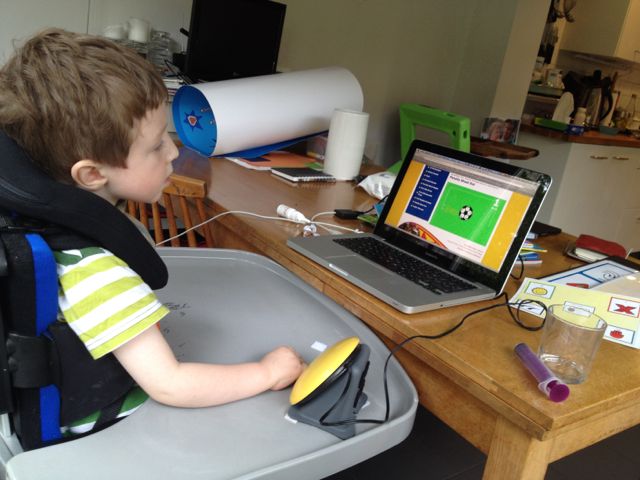
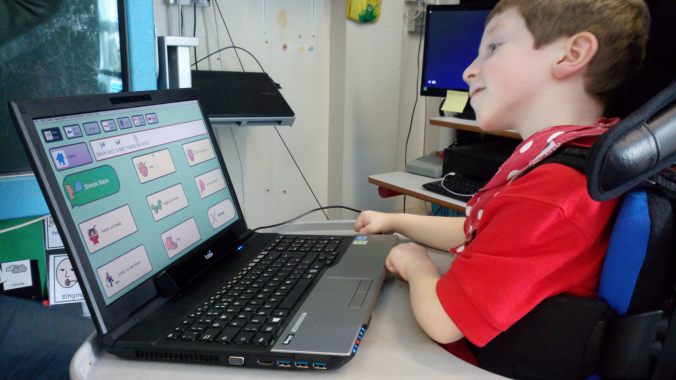
  • Got his own eyegaze computer to use at home and used it to tell us knock knock jokes;
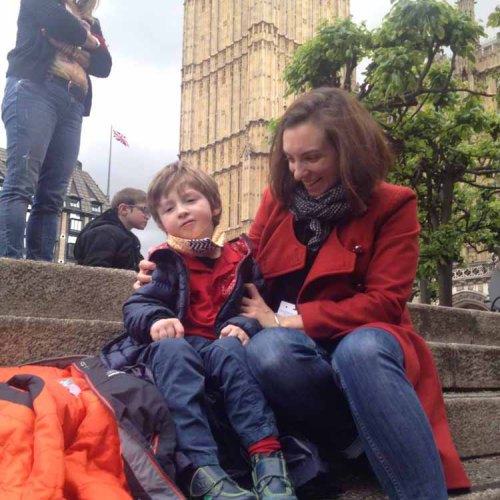
  • Went to the House of Commons and met an MP;

IMG_0286

  • Lost four baby teeth, swallowing at least one;

IMG_4268

  • Did a lot of trampolining;
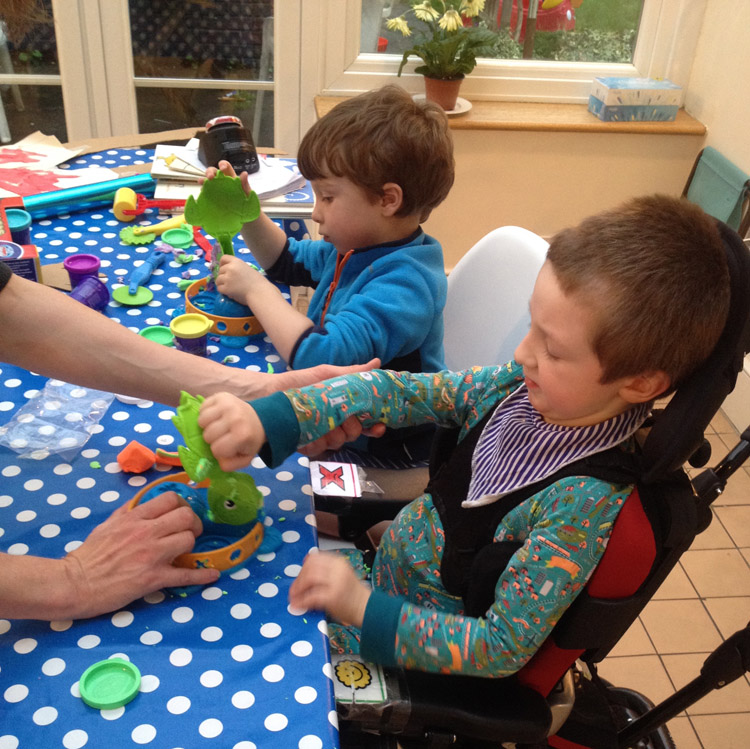
  • Went to a summer playscheme for the first time and made a biscuit the size of his head;
  • Went on holiday to the Cotswolds and Cornwall. Next year places beginning with D. Suggestions welcome;

IMG_1366

  • And last but not least, left one wonderful school and started at another, settling in quickly.

Ben had a lovely birthday. Over the years we have learnt what works and what doesn’t. We are less concerned these days about what a typical six year old birthday party would be like and just do what we think he will enjoy – small family celebrations, lots of presents and balloons, ice-cream cake which he can at least taste if not eat.

If I do say so myself, we have done particularly well with Ben’s presents this year. It’s tricky to think of things he will really like beyond yet more books, but he is really enjoying a puppet theatre where we put on shows for him with hand puppets, a lightbox that we can spell words on, and a teddy bear that will play Daddy’s voice (from Kuwait this week) or anyone else who records their voice via an app. So satisfying when all of the thought I have put into presents he will like pays off.

The coming year will involve more change for Ben, not least with a new sister and another house move. His somewhat relentless life will continue with the usual levels of complexity and endless appointments, but he has continued to prove that he can take it. It feels like he (and we) are more resilient and happier than ever. We will inevitably have some blips. I am certain the arrival of a third child will throw us all off course, he’ll get the usual winter bugs and we will face unexpected challenges. But, but… if I had been able to see how well we are all doing six years on from the awful day of his birth, maybe I wouldn’t have been quite so sad.

IMG_0132

Brothers and sisters

All kids look up to those older than them, and Max is no different. Ben is almost 6, Max is 3 and Max wants to do all of the things Ben does: go to school, go swimming, watch Dennis the Menace.

Max knows Ben is disabled and because chronology is tricky when you are 3, Max wonders whether he will become disabled when he is older. He doesn’t see this as a particularly negative potential development. He wants to know whether he’ll get a wheelchair like Ben’s, or go to the same school when he’s disabled.

There is something bittersweet about our able-bodied son climbing in to Ben’s wheelchair when Ben isn’t using it, about demanding to sit in Ben’s specialist supportive chair to have his snack. I hope it continues like this – Max’s relaxed attitude to disability is how we would all be if we came across more disabled people at school and work.

Over the summer we went to the Liberty Festival at the Olympic Park . It was on one of those British summer days when the rain was relentless and so I can’t say we stayed that long, but they had curated a selection of cultural and sporting events which deserved sunshine and crowds.

One of the activities was a racing track, and a basketball court, with loads of sports wheelchairs for people to use. What an incredibly simple idea, but have you come across it before? Giving people the opportunity to just sit in a wheelchair? There were loads of kids trying to play wheelchair basketball and race along the track. Max was super keen even though the chairs were way too big for him, and off he and Ben went to race (with James pushing Ben). He still talks about it – remembering the time that he got to go in a cool wheelchair and raced against his brother.

I am mindful of this whole business of how you raise siblings of your disabled child. I am pregnant and we expect (fingers crossed, which didn’t go that well with Ben’s birth) another, female, mini-Jess in December. We have thought carefully about this. There are disadvantages to Ben of his parents being spread between other kids, just in terms of time and attention if nothing else – there is less time to model a PODD communication book if another child needs a wee or is in the midst of a meltdown. And there are ever present risks of a sibling feeling like Ben gets the lions share of our attention, of everyone’s attention. Ben’s needs dictate our holidays, mean there are constantly carers in our house, that our lives are disrupted by hospital stays.

Max is also seeing various things I wish he wouldn’t. He recently asked me to teach him how to click with his fingers. When I asked where he’d seen clicking, he recounted in painfully accurate detail an incident a few weeks ago when a lady (who was in a position of responsibility and should have known better) was clicking in Ben’s face as an apparent attempt to distract or entertain him. When James asked her not to, and suggested she speak to Ben rather than click her fingers directly in front of his nose, she got very defensive and we all ended up having an argument. Max was with us and was confused by it all, ‘You and Daddy were very cross, and the lady was shouting, and Ben is in our family’. He thinks people shouldn’t click in Ben’s face, but he likes the general idea of clicking.

We hope all of these potential stresses and strains are convincingly outweighed by the massive advantages of there being more people in our gang. Max loves his brother. He wishes Ben didn’t go to school so that he was at home with us every day. He makes us buy Ben toys so he isn’t left out .

IMG_1871 (1)

Meanwhile a chatty 3 year old is a marvellous lubricant in social situations and forces all of us, not least Ben, to engage when it would be easier not to. We do all sorts of things as a family that we wouldn’t do if it were just me, James and Ben. And we all laugh more. We now have to charge the stimulator in Ben’s tummy daily so Max has been comparing Ben to an iPad. Ben thinks this is funny as do we all. (Yes, we overuse screens in our house and Max spends too much time with an iPad – another consequence of being Ben’s brother).

So let’s hope we can produce another one like Max. I mean, of course we won’t. Kids have a habit of being their own people as the two we’ve got have shown. But if the next one is even a bit as accepting then it will be okay.

Brain surgery

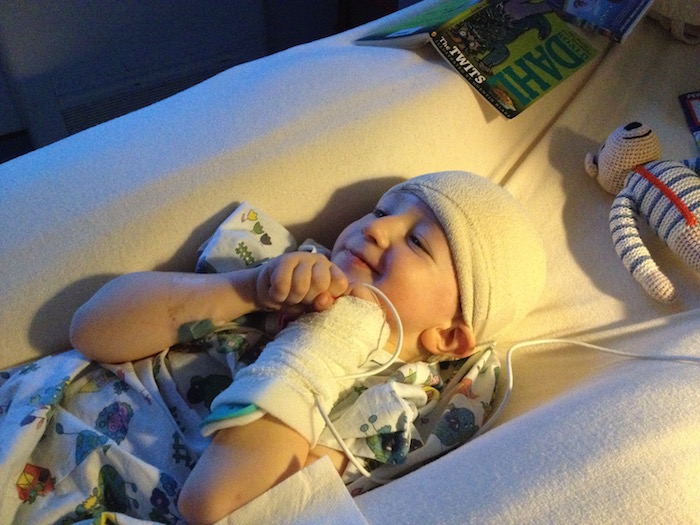
Ben had brain surgery last week. It was an elective operation, in which electrodes were inserted into his brain. These are connected to a battery pack about the size of a cigarette packet on the right side of his tummy. The idea is to try to reduce his dystonia and therefore give him a bit more control over his body. It’s called Deep Brain Stimulation.
IMG_1365

Ben spent a week in hospital after the surgery. He was discharged yesterday and is now back at home – recovering well but still in discomfort. We are relying heavily on paracetamol and films.

We chose for Ben to have this surgery. We entered in to it open-eyed – we knew the risks and we knew it would be hard. We hope that the benefits of reducing Ben’s dystonia, and therefore his disability, will outweigh the pain and disruption of the procedure. We thought hard about whether the gains would be enough to compensate for Ben never again being able to trampoline (in case the wires that now run down his neck snap), and not being able to swim for three months.

Having a child go through major surgery and recovery sends you into a hole. The intensity of the emotion and the level of care required is enormous and exceptional.

It feels all wrong to spend your child’s life taking so much care over who looks after them – we have never previously left Ben with anyone except trusted family, carefully chosen carers, at nursery or at school – then leave them with a group of doctors and nurses who you have only just met, and who are going to do unthinkably invasive things to him while he is unconscious. These places are so weird – full of people for whom this is all in a days work, while James and I are reading Ben knock-knock jokes and trying to convince him and ourselves that everything is going to be okay.

The six hours that Ben was in surgery felt like being in the eye of a storm. Everything calm and controlled, but filled with anxiety and waiting for the call to say he was in recovery. I tried not to dwell on the thought that if Ben’s brain was damaged for a second time I would never forgive myself. Then the call comes, and in we go, and the storm sweeps across us all.

We only really emerged from the swirl of hospitals, and cannulas, and exhaustion yesterday. Here are a few thoughts as we come into the light.

Rotas

When Ben has been in hospital previously, we only had one child and this time we had two. This made a bigger difference to our ability to cope than we expected. Someone who knows Ben well needed to be with him all the time – partly because he was sensitive and sad, mainly because he can’t communicate with anyone who doesn’t know him beyond crying. I had created a rota on a geeky spreadsheet to ensure there was always someone with Ben and someone with Max, but the reality of organising it was so tricky.

The easiest solution was to largely have me or James, or both of us, with Ben and for Max be with family and carers. We knew he’d be confused and annoyed, but hoped new Playmobil pirate sets and promises of cake would get him through. And it did for the first few days. Then, he realised that he hadn’t seen his dad for three days and Ben wasn’t at home. He didn’t understand why last week he’d been on holidays with the four of us hanging out all day, but now he never saw his parents in the same place, his brother was in this mysterious hospital place, and we kept trying to offload him on other people. He was so confused. At one point the fact that both of our kids were struggling nearly broke me. Things improved a bit once Max started visiting Ben at hospital, realised he wasn’t too far away and just looked like Mr Bump, and found out that hospitals have not only play rooms but also cafes that sell croissants.

I am raw to Max’s feelings about all of this. He shows such insight and accommodates so much. On the day before surgery, he asked where we were going to be while he was staying with my sister. We explained (again) that we would be at the hospital with Ben, that he was having brain surgery, that we hoped it would help Ben control his muscles. His first question was, ‘Will Ben be able to eat after the surgery?’. No, he won’t. But the three-year-old is asking all the sensible questions. Be still my heart.

Pulling together

I’ve said it before, I’ll say it again. Our family is kept on the road by us all pulling together. For eight days I have spent up to 15 hours in a small room of a hospital. Sometimes with company, largely on my own with Ben, reading The Twits for the sixth time and eating fondant fancies for lunch because I can’t leave Ben for long enough to buy a sandwich. It’s not been that much fun.

But being James has been quantifiably less fun. James did six night shifts with Ben in a row. We were meant to alternate but the kindness of my husband and the frequency of my tears led to him doing every night. These were nights of Ben being miserable, almost no sleep, frequent observations and intravenous antibiotics. This last week, our family has been kept together by this man.

IMG_1387

Ben and James developed an amazing kind of symbiosis from spending all of these hours together in adversity in a small room. By the end of last week James knew what Ben wanted or needed from the smallest facial gesture or the subtlest wriggle. He knew when Ben wanted to be held, or how to get him to sleep. Oh man, these boys of mine.

Meanwhile, our families have been at our beck and call. My sister Maddy has once again proved that her capacity to sit in hospital rooms for hours is one of her most valuable skills (photo below of Ben and her just before his surgery). Along with looking after Max for days despite him almost continually insulting her.

IMG_1344

It will be okay

So here we are. We’re on Day 9 and Ben is well as he could be. It’s all held together with Calpol and constant entertainment, but we’re home.

A few weeks before the surgery we had a party to celebrate our new house and summer. It was our normal combination of friends, prosecco and semi-naked small children. Uncle George brought his decks and at some point before bedtime he played this song: Can’t Do Without You by Caribou. James and I went to Latitude Festival in July and we arrived, via horrific food poisoning, an emotional final assembly at Ben’s school and six hours of Ipswich traffic jams, to Caribou playing this song on the main stage. I love it.

As we then danced to this song in our garden at our party a few weeks later, with James holding Ben and Max jumping around, I had a moment. A little bit of clarity that Everything Is Okay – Ben is happy, our family is amazing, and we can all dance together at a party with our friends on a summer evening. I imagined looking at us from the outside and thinking ‘they look happy, that little family of four’.

As I sat in the hospital room when Ben was in surgery I listened to this song. As I stood in our kitchen at midnight during the last week, having just returned from the hospital but needing to make Ben’s meals for the next day before I could go to bed, knowing that I needed to be up at 6.30am to get back to Ben and James, I played this song. I imagine that many people associate this song with taking drugs on dance floors, but it’s become my anthem of Deep Brain Stimulation. I absolutely cannot do without my little gang of boys, we just need to get through this little patch of discomfort.

Fear

Ben has a phobia of dogs. Or at least, we first noticed that he was scared of dogs. Then we found it was also cats, then foxes, and guinea pigs. And chinchillas.

IMG_0964

For a boy who has very limited communication, Ben found a very effective way to express his disquiet upon seeing these animals (or, as time went on, pictures of them): by gagging or sometimes actually being sick. Maybe the whole thing started because he happened to be sick when a dog was around, so the two became conflated in his mind and seeing a dog triggered vomiting. Who knows – Ben can’t tell us.

Either way, it started last summer and got progressively worse. At the beginning Ben would gag when we saw dogs in the park. Then he gagged at some dogs in TV programmes, sometimes being sick. Then it grew to include drawings in books, or dog-like bears, or cats. And plastic toys of animals. And TV adverts for plastic toys of animals. We sent the ’12 Dogs of Christmas’ DVD which someone gave him as an unfortunate but well-meaning present to the charity shop.

We get worried about Ben being sick for a whole number of reasons. Nutrition: because he needs all the calories he can get. Safety: because he chokes easily. Health: because he is prone to chest infections and repeated vomiting could lead to aspiration (breathing in stuff which doesn’t belong in lungs). And mess: because he tends to be sick on his chair or carpets which is a pain to deal with.

We got to the point where we would avoid or switch off TV programmes or books that had characters that triggered a reaction. One morning, a rogue TV show slipped through and Ben was so sick that we had to let the bus go and I drove him to school once we’d washed and changed him. He was unable to engage at all with the mobile petting zoo when it visited his school without gagging. He started gagging when we told stories about him gagging earlier in the day when he saw a dog. So much gagging.

It was having a significant negative effect on our day-to-day lives and we were wondering how to get some help. By coincidence, we saw a hospital psychologist about something unrelated and she arranged a course of therapy for Ben at the hospital with a trainee psychologist. We were very lucky to be offered this – the difficulty of access to Child and Adolescent Mental Health Services is well documented and I doubt we would have got such personalised treatment as quickly or easily if we had waited for a referral.

We have just finished a block of sessions where we worked with the psychologist to draw up a hierarchy of Ben’s fears – with talking about dogs with him in earshot at the bottom, through to him stroking an actual dog at the top. We figured that we’d focus on dogs and hope the chinchilla fear abated as a result.

Already, Ben has clearly demonstrated that he can learn to manage his anxiety – stories and pictures which made him gag the first time he heard or saw them are okay after a few weeks. We still have a way to go but are seeing real progress. I inadvertently tested this in our local shop last week. I went to get some milk and when I came back Ben was gagging for no apparent reason. Then I noticed I had left him directly opposite a card rack which featured literally nothing but photos of dogs! A few months ago he probably would have been sick, but this time we talked about it, and he recovered really quickly. You wouldn’t believe how many dog images there are in the world once you start looking for them.

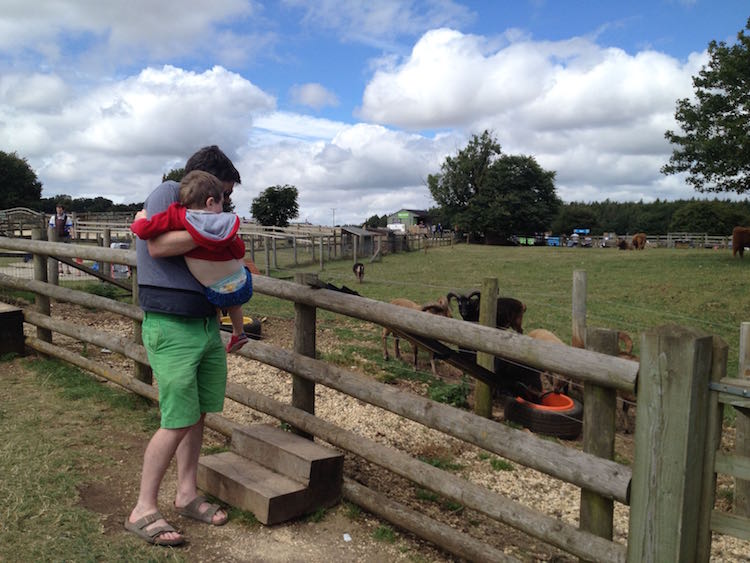
It’s not going to be linear progress; Ben is now okay with the cat that visits our garden, but gags when we read him a new story about a dog. But we can now envisage a time when we can go for walks in the park without being on high alert. We’re currently on holiday and have been to a farm park* where Ben happily saw and fed goats, sheep, horses and turkeys. This is huge progress compared to our visit to a Miniature Pony Sanctuary this time last year which Ben DID NOT LIKE.

IMG_1151

What the therapy has made clear is that it is us adults who need to change our attitude as much as Ben. By immediately turning off offending TV programmes, or generally panicking at the first sign of Ben being sick, we were confirming to Ben that there was definitely something to worry about: these dogs must indeed be truly terrifying if all the grown-ups are so keen to get rid of them. We did all of these things for good reasons – it’s entirely justified to want to avoid Ben vomiting – but we were ultimately making things even worse and have had to retrain ourselves in how we respond. We also have to try to re-educate Max, who has become so attuned to the problem that he shouts ‘DOG, DOG’ at the first sign of a canine, which isn’t hugely helping.

IMG_4545

IMG_4542

As with so much of parenting, it’s all about being calm and consistent, about forcing oneself to demonstrate to your kids that everything’s going to be okay even though they are scared. We have to risk Ben being sick. We can’t carry on visiting people’s houses, finding out as they open the door that they have a dog, and introducing ourselves by Ben threatening to vomit on their 100% wool rug.

When going through this process, we also have to bear in mind Ben’s consent. On the one hand, we are trying to improve Ben’s quality of life by helping him overcome the feelings of anxiety he gets when he sees or hears dogs (or cats, guinea pigs, bears…). But it’s perfectly reasonable for him to not like dogs. We have to respect his right to really not want to look at pictures of dogs for fun, or to be able to say ‘No’ if he’s terrified. Max hates lawnmowers – we don’t make him stand around next to men mowing lawns.

We are treading a narrow and tricky path between pushing Ben’s comfort zone a bit, while respecting his right to move at his own pace. Ultimately, he should be able to express a dislike of dogs, or anything else, and have that view acknowledged. We would just like him to be able to express his dislikes like he does with other things he hates – by whinging, or sticking out his bottom lip, or loudly protesting – rather than puking all over us all.

* We went to the Cotswold Farm Park which was brilliant – easily accessible for wheelchairs, loads for both boys to do, and Ben particularly loved their maze. Unlike the Model Village in Bourton-on-the-Water which lets in those ‘confined’ to wheelchairs for free because they can’t actually get to any of the model village. Which would be sort of okay if they didn’t charge the rest of your family full price and be insulting and grumpy about the whole thing.

Listening to the lungs

When you are a parent, there are times when you really can’t be sure you’re doing it right. Much like when you thought all grown-ups knew what they were doing and then got to your twenties and realised the world is full of clueless adults, it turns out a lot of parents are winging it with varying levels of success.

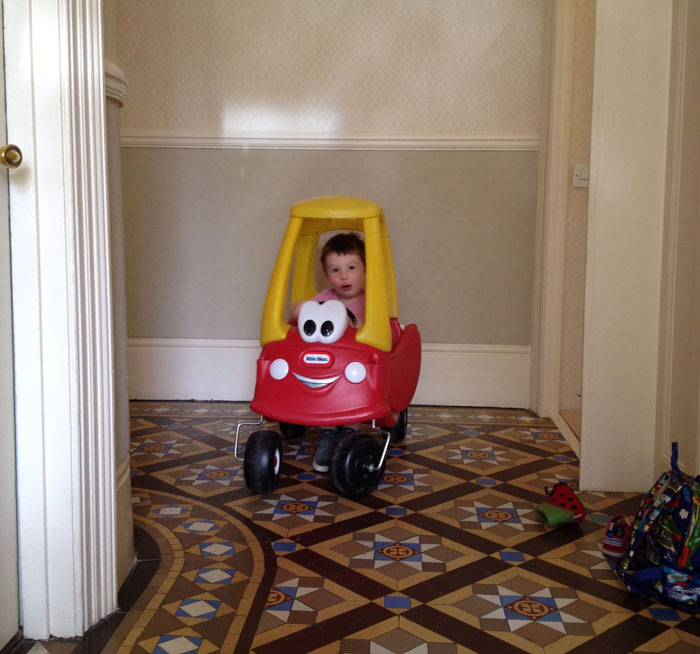
Sometimes I have days like this Saturday, when my three year old found out that the ramps installed to enable his disabled brother to get out to the garden also mean he can drive his outdoor toy car straight up and into the kitchen. Then he repeatedly barged my legs, and on the back of a major toileting incident and various other small but irksome exchanges, I found myself pushing the car (with him in it) back out to the garden, with a noticeable lack of good humour. I then ignored him for a few minutes, so when my husband returned from the shops he was a little alarmed to find Max was standing at the back door screaming, wearing nothing but a pair of pants. At this point I wondered if I had any idea what I was doing.

IMG_0365

I have many moments along this theme – wondering or worrying whether Ben’s doing enough or too much therapy, whether the boys watch too much TV, feeling bad that we haven’t taken them swimming for weeks, or that we’ve made them move house for the second time in two years, and they’ll have to move at least twice more in the next two years, etc, etc.

But then some days I think to myself… Jess, you have this job totally nailed!

Ben had a heavy cold last week, caught from me. He was snotty and a bit feverish but not awfully ill. He started to have a bit of a cough, and on Wednesday night I wasn’t very happy with it. But his temperature wasn’t that high, and he wasn’t that miserable. We put him to bed as usual, and about 10 minutes later he was sick. Which wasn’t ideal, and is relatively rare these days, but it’s not extraordinary. Then he slept well that night, which was very unusual, and by this point my metaphorical ears were pricked.

Ben hasn’t had a chest infection for over two years, but previously he’s had a lot. And I remember the sound of them.

First thing on Thursday morning he still had a bit of a cough, so I phoned the GP. We can normally get an appointment on the same day but they were short of doctors so the best they could offer was going to the surgery and waiting an unspecified length of time to see someone. Nothing sounds less fun than taking a slightly ill boy with a low boredom threshold to sit in a room full of sick people for hours so I dithered a bit. But then Ben coughed and I decided we’d go.

As we arrived, I could hear the administrative staff behind the desk talking about how few doctors there were, and that there were too many people waiting without appointments. Then the doctor came and queried whether all of these waiting people really needed to be seen today.

I was feeling a bit sheepish – on the face of it, yes Ben is disabled and complicated, but his symptoms weren’t that stark: a cough that his mother thinks sounds wrong, a little bit of a fever, some snot, and a really good night’s sleep.

We waited less than an hour before being called in to the doctor’s room. I set out my concerns, and she took his temperature (a bit high) and listened to his chest: crackles on the right! Needs a course of antibiotics!

I mean obviously I’d prefer he wasn’t ill. But the feeling of satisfaction at being proved right was a parenting high point. I know this boy. I know his lungs. And some days I am ALL OVER this mothering (*smug face).

(Max might not agree.)

Cycling

In our quest for fun weekend and holiday activities, Ben’s tricycle has been a godsend. We are constantly aiming for variety in Ben’s life; things to do that aren’t us reading him books or watching an ipad, activities that get him out of his wheelchair.

IMG_8510

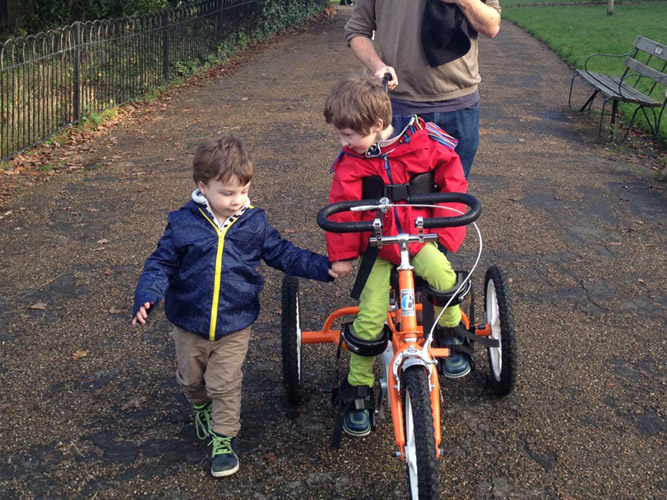
The trike offers all of the above, whilst also allowing a rare opportunity for Ben and Max to do the same thing at the same time and pace. Both boys have got orange bikes/trikes, and we have just hit the moment when Max has worked out how to ride his balance bike for longer than 2 minutes without demanding we carry it. Meanwhile, Ben has hit his stride on the trike.

IMG_9451

This means we can spend fun mornings in the park. Ben is happier, and more active, than he would be if we were pushing him in his wheelchair (and strangely less scared of dogs). The boys like racing each other, and I feel like we’re a normal family. Our boys are learning to ride their bikes together, on sunny days, in parks full of daffodils. We’re living the dream!

IMG_9718

IMG_9726

We’re not the only ones who like the trike – people smile at us as we pass, much more than they would if Ben was in his wheelchair. I think a big orange tricycle gives people a way in – even legendarily unfriendly Londoners find themselves saying hello. One woman asked if she could take a photo.

We bought Ben’s trike last year. We got advice from various physios and had trials with two companies. There is no statutory (e.g. NHS) funding for equipment like this, and they are really expensive, so we took our time deciding what kind would work best.

The trike we decided on, made by a company called Theraplay, can be parent-operated from behind, so Ben can ride the trike normally with us pushing and steering. This allows it to be as normal a riding experience as possible, but with us doing most of the work. Ben chose to have an orange one.

IMG_9741

Whenever we consider buying big pieces of kit like this there’s a tension between enthusiasm and caution. Enthusiasm for the possibility of this being The Thing That Ben Loves, that he can use easily and effectively, that he is able to operate independently and generally makes all our lives brilliant and fun. Caution because we’re about to spend £1400 on something that Ben might not like, might not be able to use, and then we’ll have to work out how and where to store a huge white elephant and manage our disappointment.

This time the gamble has paid off. We have been slowly increasing the distance and speed that we push Ben. He now likes us going really fast. So far, we have been doing all the work – Ben’s feet are forced round as we push the trike forward, but we might be on the cusp of him being able to do some of it himself.

He finds holding on to the handle pretty tricky, but he can sometimes push the foot pedals round on his own now. We still hold the handle in order to steer for him but for a couple of metres we aren’t pushing at all – all of the forward momentum is Ben on his own.

This is the moment that I really hoped might happen, but was worried might not actually materialise. To pedal the trike, Ben needs to control his legs separately and time it right. It is difficult for him but, like so much that he does, he is trying really, really hard. Well done that boy! Well done that trike!

IMG_8492_2

Hobbies

IMG_9484

It is tricky for us to encourage Ben’s hobbies. Or find fun stuff for him to do that isn’t watching an iPad or being read a book. Activities often feel like hard work for not that much reward. We have had some successes: swimming and stories at the Horniman Museum in particular.

Over the last couple of months we have been trying two new activities with Ben regularly – music on Mondays and trampolining on Wednesdays.

Music is the very best kind of therapy – therapeutic input with specific goals in a trojan horse of fun! I’m certain Ben has no idea he’s working. I wrote about us starting music therapy here. Since then Ben has got over his upset at each session finishing and is happy to arrive and leave each week. We have just had a review with his therapist, who I will call C, where she showed me videos of some of the sessions and summarised how they were getting on so far.

We rarely have reviews that are as wonderfully positive as this. You could be forgiven for thinking Ben is some kind of musical genius when you talk to C. Her feedback is full of things like:

Ben has been extremely motivated to participate and shown himself to be very sensitive and musical, working hard but also sharing a clear sense of his fun character‘.

And:

‘On a small number of occasions Ben has also very clearly, melodically, and beautifully, sung in response to the music. This is very fragmentary at present and it is likely to be an evoked – rather than consciously directed – response. However, the musicality and sensitivity of this illustrates clear musical understanding.’

In the videos I watched it was striking that during long periods (i.e. up to a minute) Ben was listening intently to music being played and was totally still. This is unusual – Ben is nearly always moving some part of his body. When he did try to participate he managed, despite all of the physical challenges. I saw him bashing a drum at the right time, and kicking a tambourine to a beat. Not always, but often. It is all hugely exciting and Ben is so obviously engaged.

Meanwhile, on Wednesdays we have been going to trampolining before the school day starts, on the amazing big trampoline that is hidden beneath the floor of Ben’s school hall. Ben was pretty relaxed from the beginning, but has been enjoying it more and more each week that we go. He clearly now knows what to expect and is really comfortable with the instructor, who I’ll call D. D has been bouncing higher and doing ever more bold moves as Ben lies on the trampoline surface and is flung around.

Having been invited to come along by the staff at school, Max has taken longer to engage, preferring to play with the PE equipment in the hall rather than venture on to the trampoline. It’s not only disabled kids that need time to acclimatise and build up their confidence. Today, finally, he totally embraced the concept and D helped him to bounce and lie next to Ben. If finding successful activities for Ben is difficult, finding things that both Ben and Max enjoy at the same time is THE HOLY GRAIL. I actually got cheek-ache from smiling so much (video below).

Similar to music, the trampolining is doing all sorts of things for Ben beyond letting him have fun. Being bounced around is excellent vestibular input (to the structures within the ear which provide information about balance, equilibrium and spatial orientation) for a child that doesn’t necessarily roll down hills or go down slides. It gives unique feedback through a body that can’t communicate with itself very well, and is physical therapy in disguise – Ben clearly tries to lift his head and arms throughout the sessions.

img_9477

This is what happens when the stars align and you find something Ben’s interested in, at a time that suits him, in a venue that works, with a therapist or instructor who is really good at what they do. C is really careful – to the untrained eye she appears to be sitting in a room helping Ben play a drum. To a skilled eye, she is getting Ben in the right position, making up a song that interests him, adjusting the timing so he can get organised to move his hand to the beat, positioning the drum where he can bash it, constantly testing and adjusting to get the best out of him. D is filled with enthusiasm and has gently worked out what Ben likes and included Max as much as she can. She works at a pace dictated by Ben, and is unfailingly pleased with every bit of feedback Ben gives her.

It’s all totally bloody brilliant. I couldn’t be prouder of these boys

(Not the best quality photos – iPhone cameras not happy with institutional lighting and bouncing.)

How we learn to talk

IMG_6819

I have just done a two day course on a system that I hope will help Ben communicate with us and everyone else.

Communicating is one of Ben’s biggest challenges. He has a lot to say, but his severe disability hampers all of his efforts to tell us what he thinks or wants: he can’t speak, he can’t point, yet he understands a lot.

He has found highly effective ways to get round this day-to-day. He can smile or frown, laugh, shout or show us his bottom lip (the degree of protrusion of the lip is directly proportional to his sadness, on a spectrum that ends in full-blown sobbing). Whingeing indicates dissatisfaction. Looking expectant means ‘I’m interested’.

Ben has the intellect to express far more sophisticated ideas and desires than this – but he needs the tools. So we are working with Ben’s school and a number of speech and language therapists to maximise his opportunities, using Assistive and Alternative Communication, or AAC, the term used to capture a whole range of communication systems that don’t rely solely on speech.

Everyone involved in this effort comes together at a termly review meeting. Last week that involved eight professionals sitting around a table for several hours discussing progress. The combined level of expertise is immense.

And partly because of all of this input, Ben is doing brilliantly. In last week’s meeting someone pointed out that (PROUD MUM ALERT) Ben’s spelling is on a level with his non-disabled peers, so it’s important to not push him too hard. He already has to work much harder than a typical kid to spell consonant-vowel-consonant words but he’s doing it – on an eye-gaze computer or by looking at magnetic letters with Granny.

141016-sam-eye-gaze

The major new communication concept we are introducing to Ben is a PODD book, developed by an Australian woman called Gayle Porter, a minor celebrity on the aided language scene.

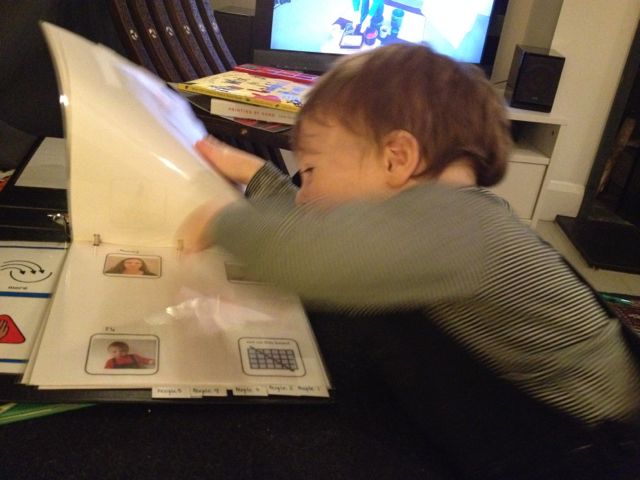
PODD books are full of symbols that you point at to express yourself. The ambition is that Ben will eventually be able to show us which symbols he wants to ‘say’ (video of a child using PODD here).

IMG_9118

The success of using aids like PODD books is totally dependent on the expertise of the people surrounding Ben. The course I was on last week was an attempt to increase my confidence and knowledge.

I came away enthused. This has huge potential for Ben. But at the same time I’m nervous, intimidated even. I took away three main insights from the course that really highlighted how big an endeavour this will be:

1. Do we have the stamina to do this justice?

A typical child hears spoken language for at least 18 months before they start talking (over two years if you’re Ben’s brother Max). It therefore follows that we should be modelling use (otherwise called ‘receptive input’) of the PODD book to Ben for at least a year before we expect him to be using it with us. If we were really to mimic normal acquisition of speech, James and I would use it to talk to each other in front of Ben.

At the course we were shown totally inspirational videos of young children communicating, in ways that just would not happen if they hadn’t been taught to use PODD. But … in some of the videos, their mothers (and they were almost exclusively mothers) had modelled use of the PODD books with their children for over a year before their children started interacting with the book.

The level of skill of these women is impressively high – they can navigate expertly from page to page and find symbols really quickly. But even more important is their level of determination. They have dedicated years of their lives to teaching their kids to use PODD books, even when the kids weren’t apparently engaging with them. It is hugely inspiring, but also massively daunting. What if we’re not committed enough? What if we get bored and demoralised, and that means we fail Ben?

2. You can’t learn a language if you’re placed on mute

If you think of the PODD book as Ben’s way of talking, then you have to have it available to him all the time. Otherwise you are effectively silencing his voice. It is close to the equivalent of gagging a verbal child to stop them talking.

We are already guilty of doing this: we introduced Yes and No symbols on Ben’s chair so he can look at these to answer questions. A few weeks ago, the No got puked on, the sellotape got wet and the symbol fell off. Despite daily good intentions, I still haven’t got round to sticking it back on. And I haven’t got round to putting the Yes and No symbols on his wheelchair.

I introduced an opportunity for him to tell me things and them I took it away. Shit.

3. This needs to be a whole family enterprise

On the course I also saw videos of young children using PODD books really competently with their disabled siblings. Max is really trying to work out the rules around him at the moment and where Ben fits into it: for example, ‘big boys’ walk and babies don’t, but Ben is a big boy and doesn’t walk (cue confused/amazed face). We’ve had discussions about whether Ben can hear Max talking, because normally people talk back when they hear you, but Ben doesn’t talk.

Max already talks to Ben on his terms – he says ‘night night’ to Ben every night and waits for Ben to look at him because he knows that’s Ben way of saying goodnight back. When Max asks Ben a question he says, ‘Ben, can I play with your Peppa toy, YES OR NO’!

IMG_4770

Max could easily pick up the way a communication book works (the photo above shows him at 18 months getting interested in one), but only if he sees us using it. We have to normalise it within our family, even if the wider world insists on only speaking to each other.

I should reiterate that I really am filled with enthusiasm – the PODD system has been thoughtfully developed and children exactly like Ben have learnt to use it proficiently. But, oh my goodness, what a weight of expectation. Remind me of this blog in a year, when my enthusiasm for pointing at symbols might be wavering and I need to remember that we knew we were in it for the long haul.