Ben is 6!

IMG_2961

Ben is 6! Like every year, the actual day is full of mixed emotions. While we are joyful that we are celebrating six years since Ben joined us, on the day I am also mindful that this time six years ago Ben was being resuscitated then being transferred on his own in an ambulance to a different hospital, and that our lives changed forever.

But it gets easier every year, as the memories are less immediate, there is more to celebrate and Ben is more engaged in birthdays.

As is now our annual tradition, James made a video to summarise Ben’s year. I won’t post it, partly for reasons of privacy but also because of self-indulgence; while most parents will happily watch a ten minute video of their own child, no-one I know really wants to watch a long video of someone else’s child, even if that child is the subject of a semi regular blog they read. It’s surely the modern equivalent of being made to sit through someone else’s holiday photos.

So, here’s the executive summary. It is unashamedly positive. Let’s ignore the tiresome stuff for now.

In Ben’s sixth year he:

  • Enjoyed ice-skating and went round the rink quite a lot faster than grandpa;

IMG_3517

  • Went down a zipwire, swung from a sports hall ceiling and went kayaking at the Calvert Trust;
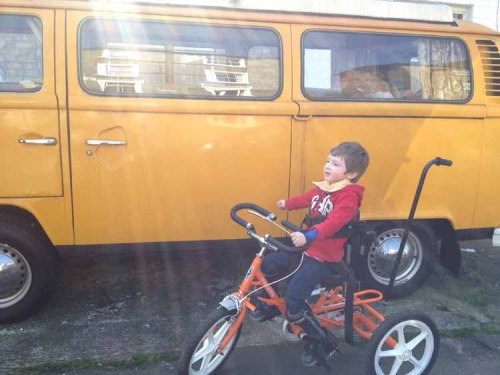
  • Did a lot of triking;

IMG_9741

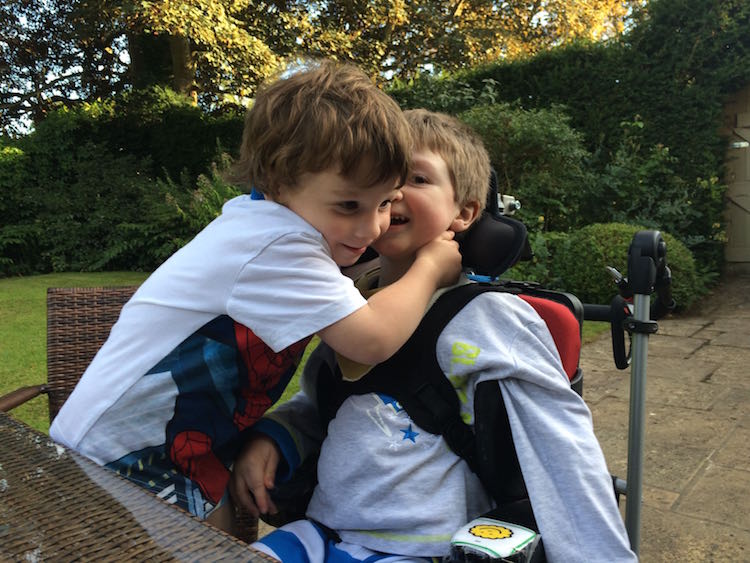
  • Was a lovely older brother to Max, letting him wear his lycra suit and clamber all over him;

IMG_0570

  • Moved house (again – his fourth since he was born);
  • Got a new wheelchair-accessible car (which is great but unfortunately turns out to be one of the cheating VW emission scandal cars…);
  • Got his own eyegaze computer to use at home and used it to tell us knock knock jokes;
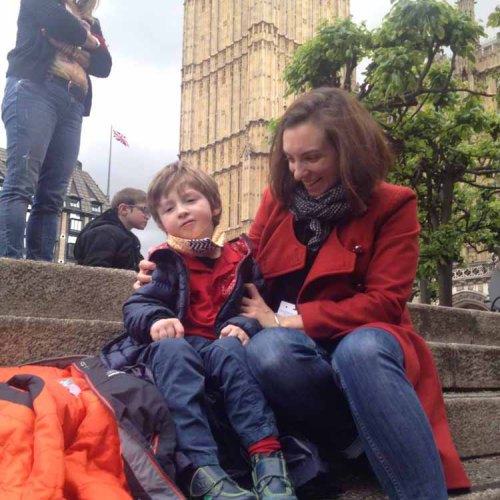
  • Went to the House of Commons and met an MP;

IMG_0286

  • Lost four baby teeth, swallowing at least one;

IMG_4268

  • Did a lot of trampolining;
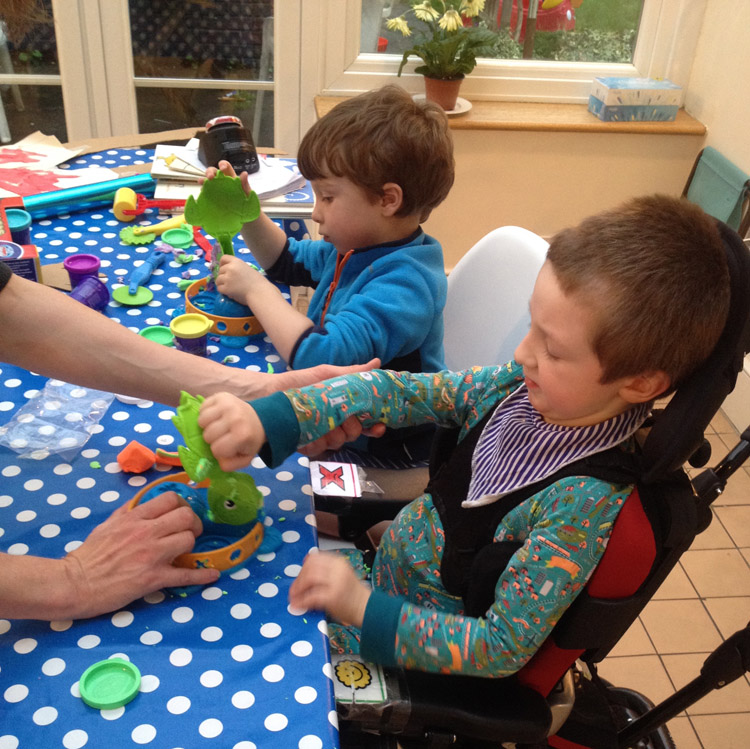
  • Went to a summer playscheme for the first time and made a biscuit the size of his head;
  • Went on holiday to the Cotswolds and Cornwall. Next year places beginning with D. Suggestions welcome;

IMG_1366

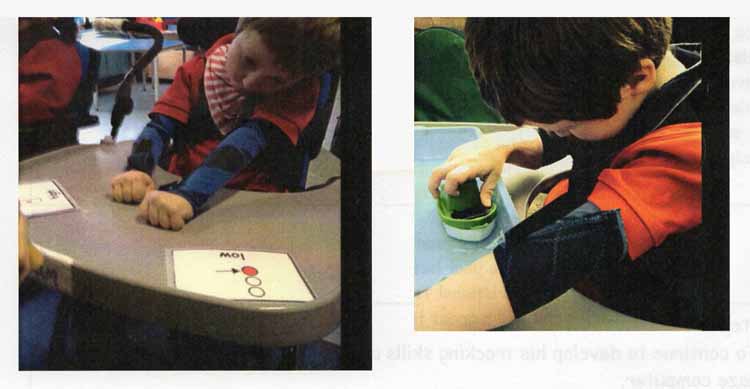
  • And last but not least, left one wonderful school and started at another, settling in quickly.

Ben had a lovely birthday. Over the years we have learnt what works and what doesn’t. We are less concerned these days about what a typical six year old birthday party would be like and just do what we think he will enjoy – small family celebrations, lots of presents and balloons, ice-cream cake which he can at least taste if not eat.

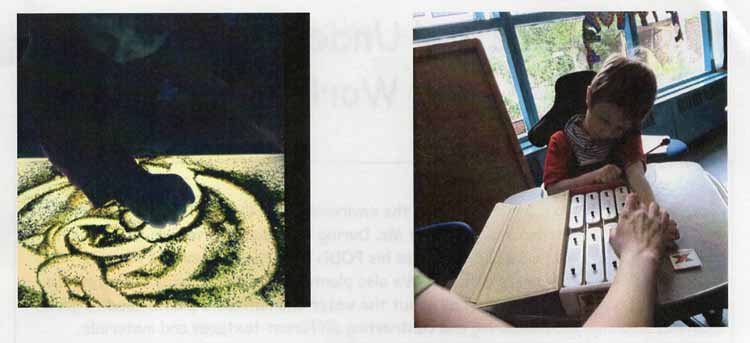
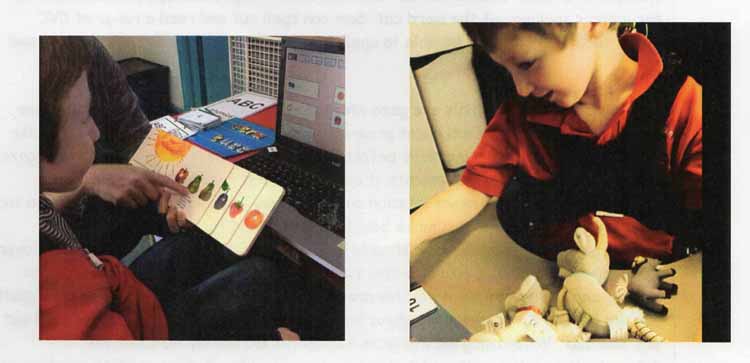
If I do say so myself, we have done particularly well with Ben’s presents this year. It’s tricky to think of things he will really like beyond yet more books, but he is really enjoying a puppet theatre where we put on shows for him with hand puppets, a lightbox that we can spell words on, and a teddy bear that will play Daddy’s voice (from Kuwait this week) or anyone else who records their voice via an app. So satisfying when all of the thought I have put into presents he will like pays off.

The coming year will involve more change for Ben, not least with a new sister and another house move. His somewhat relentless life will continue with the usual levels of complexity and endless appointments, but he has continued to prove that he can take it. It feels like he (and we) are more resilient and happier than ever. We will inevitably have some blips. I am certain the arrival of a third child will throw us all off course, he’ll get the usual winter bugs and we will face unexpected challenges. But, but… if I had been able to see how well we are all doing six years on from the awful day of his birth, maybe I wouldn’t have been quite so sad.

IMG_0132

Appreciating good doctors

Our family, and Ben in particular, are pretty intense users of the NHS. I breezed through my twenties with barely a GP appointment but in the last six years we have been really getting to know the people and processes that make up our national health service.

In the last three months Ben has had brain surgery followed by eight days in two different hospitals. In that time, he has also had six outpatient hospital appointments (one of which lasted 3.5 hours and involved three different professionals), one appointment with our community paediatrician, two orthotics appointments and one visit to the wheelchair service. That doesn’t include his frequent contact with physios, occupational therapists and speech and language therapists at school.

Making our lives the best they can be relies on building relationships with good doctors and therapists, and when the NHS works well it works really bloody well. This was really been demonstrated last week.

(Photo of Ben in a hospital waiting area. Every time we go he stares avidly at this explanation of wind speed measurement until we read it to him.)

On Tuesday we went to a clinic we had never been to before, where Ben was seen by a consultant paediatrician, a specialist speech and language therapist and a specialist technologist in order to look at the way he communicates. Before we even got there, the team had already made contact with our community paediatrician, three different speech and language therapists who have worked with Ben, and asked us to fill out a questionnaire. Ben’s school speech and language therapist came to the appointment with us, and after hours of working with Ben and much chat, everyone concluded that they needed to spend more time with him. So all of those professionals will visit Ben at school in the coming weeks and months and then we will meet again.

Later in the week we saw Ben’s neurologist, let’s call him Dr D, who we have now known for the entirety of Ben’s life. Following a discussion about Ben’s brain stimulator, he called the neurologist who fitted Ben’s stimulator (at a different hospital) to check he would see us at another appointment next week. We then ran through all of the major aspects of Ben’s life, discussing progress and options, and he warned us (in a friendly way) not to underestimate Ben’s intelligence.

The same night, at 6.30pm, I got a phone call from our GP regarding recent problems with Ben’s medication. After discovering that there is a national shortage of one of the medicines that Ben takes daily, he had called the hospital pharmacy and one of Ben’s neurologists, and had worked out a way of us getting the medicine in the short term until the normal supply is resumed. He had made about six phone-calls on Ben’s behalf, to find a solution, and only called me when he had fixed it.

I would like to take a moment to give some advice to anyone who finds themselves in a situation similar to ours, who sees as many doctors as we do. Our GP practice is the one that Ben was registered with when he was born. It has not been the closest surgery to our house for several years but I took a view that I would rather have the consistency of a practice I knew and doctors I respect than move to a more geographically convenient surgery. Of course I get frustrated with their phones being engaged and with nurses who won’t give Ben the flu spray, but these niggles are far outweighed by having access to a good GP who knows Ben and the rest of us.

Similarly, Dr D is based in our local hospital where the outpatients’ clinic is always too hot and there’s nowhere to change Ben. There is another hospital a bit further away, that has a fancy new children’s hospital building, excellent changing facilities for disabled children and a Marks & Spencers Food shop.

It has been suggested to us that we should move neurology consultants and have everything at the other hospital, but I can’t quite tell whether this is because they think the doctors are genuinely better at the swankier hospital or because they have been seduced by the surroundings. Either way I see no reason for us to move – Dr D is excellent, knows Ben, knows Max, knows us, and calls doctors in the other hospital on his mobile to talk about Ben if he needs to. Most importantly, we like him and, as far as I can tell, he likes us. So we’re sticking with him for the time being, and if that means buying a limp ham sandwich for lunch rather than having the option of M&S sushi, then so be it. If you find a doctor you respect, stick with them.

I haven’t familiarised myself with the recent specific arguments between the Secretary of State for Health and junior doctors, largely because I’ve been spending a lot of time sitting in hospitals. But it is worth taking some time to appreciate the level of commitment and expertise of the doctors (senior and junior) involved in Ben’s care, how hard they work to solve problems, how late they stay to resolve medication issues, and how very nice they all are about it.

Cuddling and carrying

Recently I have found myself talking about good things that have resulted from Ben’s birth and life. It’s now less eight weeks until the birth of a new baby so a good time to focus on the positive.

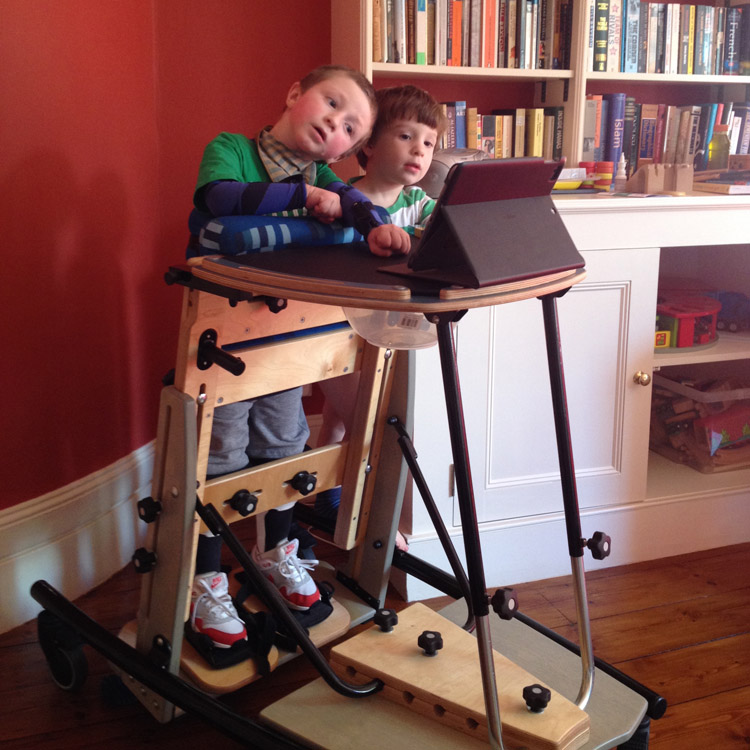
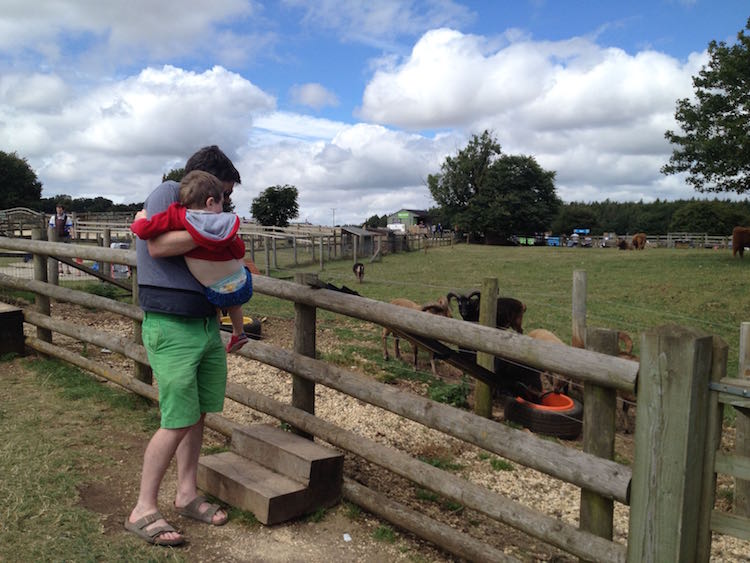
One of these conversations was about carrying Ben. Ben is almost 18kg which is very light for an almost-six year old but quite heavy for someone who can’t support any of their own bodyweight. He has various pieces of equipment to sit or stand in but every day there are dozens of transfers to be done: from bed to changing table, downstairs to specialist chair, out of chair to changing table, back in to chair, in to wheelchair, out of wheelchair, changing table, upstairs, in and out of standing frame, in and out of bath, etc etc. This is just the basics – if we spend the day doing things away from home there will probably be more lifting – so Ben can sit on top of the sculpture in the park like Max, or to be lifted so he can see animals over the fence, or in order to sneak up on people in the woods.

We are just on the cusp of getting a hoist to help us with some of these transfers. A hoist is a machine which attaches to a sling underneath Ben and lifts him up. We have known this is coming for a while and I find myself surprisingly philosophical. I strongly suspect Ben won’t mind – he loves swings and hammocks (and zipwires) so I don’t think he will mind repeated suspensions throughout the day. I know there is only so long we can ask others to lift him and we have a responsibility to provide an option that doesn’t endanger back muscles.

It’s the mediation of my relationship with my son through equipment that I resent. At the moment I often lift Ben like (for want of a better description) a baby, with one arm cradled under his neck and the other under his legs. He always looks up when I do this and I can look down at his beautiful little face, and he often has an expression of pure joy and comfort. Should anyone else infantilise Ben I will hate them forever (or close), but I am allowed. I have been carrying him this way for almost six years. One of the joys of early motherhood is the physicality of it – small boys who know your body better than you do and want their skin on yours. It is sad that these moments will be slowly replaced by the attachment of a sling to a hook, the pressing of some buttons and the whirr of a machine. I must find a way to keep the physical connection, for us to both remember the joy of him being on my lap.

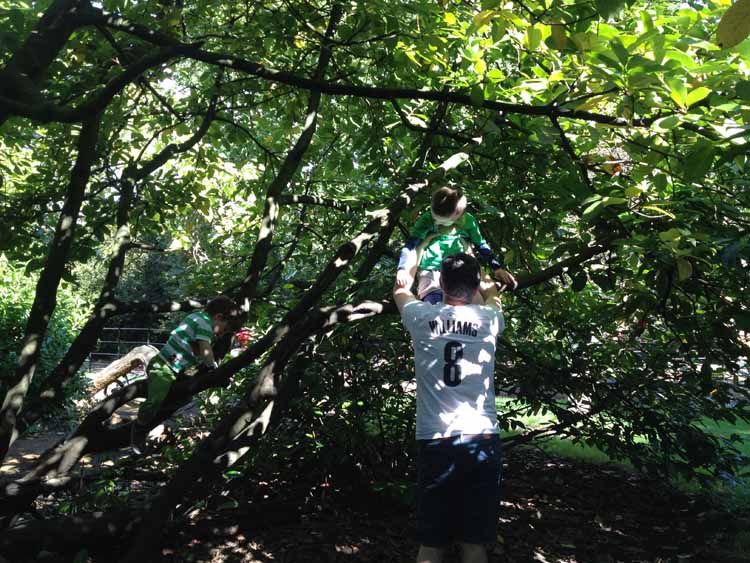
James does most of the outdoor carrying – he is the one helping him climb trees – but I do my fair share of the lifting, including carrying Ben up and down stairs at home. Earlier this year, before I was pregnant, we realised that if I was going to continue doing this I needed to be strong so in addition to running a bit I started seeing a personal trainer who focused on weights and strength. No-one should get the wrong idea about this – my default position is inactivity and I didn’t voluntarily run outside until I was 32. I am no gym bunny. My relationship with the trainer involves him encouraging and/or forcing me to stop being so pathetic while I deny eating a loaf of sourdough bread every week. I do not look like someone who spends a lot of time exercising (because I don’t).

But what began as a way to continue lifting Ben has been a revelation. Partly because it’s time spent doing something completely different to wiping small children, but mainly because I didn’t realise how empowering it would be to feel strong.

Then I got pregnant and as my bump has grown I have carried on lifting Ben and training at the gym. Nothing feels more satisfying than lifting (admittedly small) weights, surrounded by grunting men in vests, in the male-dominated section of the gym. Or continuing to be able to do all of the things I would normally do with Ben while 31 weeks pregnant. Ben is very accommodating of being literally pushed aside by a growing bump. I get a bit out of breath as we get to the top of the stairs when I’m carrying him, but I can do it and I will carry on for as long as I am able. There will inevitably be a month or so post-birth when I can’t lift him and even holding him might be tricky, so I’m making the most of it while I can. I am extremely appreciative of having this body, which is making its third baby and still able to carry its first.

IMG_5210

I have been going through a phase of obsession with the author Kate Atkinson and came to re-read a book of hers recently. I had forgotten how utterly unsuited the storyline is to me right now; I had to abandon it after a scene about a mother being murdered in front of her children precipitated some particularly heartfelt weeping. But just before that I read this passage:

‘ Their mother was wearing Joanna’s favourite dress, blue with a pattern of red strawberries. Their mother said it was old and next summer she would cut it up and make something for Joanna out of it if she liked. Joanna could see the muscles on her mother’s tanned legs moving as she pushed the buggy up the hill. She was strong. Their father said she was ‘fierce’. Joanna liked that word. Jessica was fierce too.’

Kate Atkinson, When Will There Be Good News?

I want to be strong. And when it comes to caring for my kids, I want to be fierce.

Brothers and sisters

All kids look up to those older than them, and Max is no different. Ben is almost 6, Max is 3 and Max wants to do all of the things Ben does: go to school, go swimming, watch Dennis the Menace.

Max knows Ben is disabled and because chronology is tricky when you are 3, Max wonders whether he will become disabled when he is older. He doesn’t see this as a particularly negative potential development. He wants to know whether he’ll get a wheelchair like Ben’s, or go to the same school when he’s disabled.

There is something bittersweet about our able-bodied son climbing in to Ben’s wheelchair when Ben isn’t using it, about demanding to sit in Ben’s specialist supportive chair to have his snack. I hope it continues like this – Max’s relaxed attitude to disability is how we would all be if we came across more disabled people at school and work.

Over the summer we went to the Liberty Festival at the Olympic Park . It was on one of those British summer days when the rain was relentless and so I can’t say we stayed that long, but they had curated a selection of cultural and sporting events which deserved sunshine and crowds.

One of the activities was a racing track, and a basketball court, with loads of sports wheelchairs for people to use. What an incredibly simple idea, but have you come across it before? Giving people the opportunity to just sit in a wheelchair? There were loads of kids trying to play wheelchair basketball and race along the track. Max was super keen even though the chairs were way too big for him, and off he and Ben went to race (with James pushing Ben). He still talks about it – remembering the time that he got to go in a cool wheelchair and raced against his brother.

I am mindful of this whole business of how you raise siblings of your disabled child. I am pregnant and we expect (fingers crossed, which didn’t go that well with Ben’s birth) another, female, mini-Jess in December. We have thought carefully about this. There are disadvantages to Ben of his parents being spread between other kids, just in terms of time and attention if nothing else – there is less time to model a PODD communication book if another child needs a wee or is in the midst of a meltdown. And there are ever present risks of a sibling feeling like Ben gets the lions share of our attention, of everyone’s attention. Ben’s needs dictate our holidays, mean there are constantly carers in our house, that our lives are disrupted by hospital stays.

Max is also seeing various things I wish he wouldn’t. He recently asked me to teach him how to click with his fingers. When I asked where he’d seen clicking, he recounted in painfully accurate detail an incident a few weeks ago when a lady (who was in a position of responsibility and should have known better) was clicking in Ben’s face as an apparent attempt to distract or entertain him. When James asked her not to, and suggested she speak to Ben rather than click her fingers directly in front of his nose, she got very defensive and we all ended up having an argument. Max was with us and was confused by it all, ‘You and Daddy were very cross, and the lady was shouting, and Ben is in our family’. He thinks people shouldn’t click in Ben’s face, but he likes the general idea of clicking.

We hope all of these potential stresses and strains are convincingly outweighed by the massive advantages of there being more people in our gang. Max loves his brother. He wishes Ben didn’t go to school so that he was at home with us every day. He makes us buy Ben toys so he isn’t left out .

IMG_1871 (1)

Meanwhile a chatty 3 year old is a marvellous lubricant in social situations and forces all of us, not least Ben, to engage when it would be easier not to. We do all sorts of things as a family that we wouldn’t do if it were just me, James and Ben. And we all laugh more. We now have to charge the stimulator in Ben’s tummy daily so Max has been comparing Ben to an iPad. Ben thinks this is funny as do we all. (Yes, we overuse screens in our house and Max spends too much time with an iPad – another consequence of being Ben’s brother).

So let’s hope we can produce another one like Max. I mean, of course we won’t. Kids have a habit of being their own people as the two we’ve got have shown. But if the next one is even a bit as accepting then it will be okay.

Filling the summer holiday

It feels like an age ago, but in July and August Ben had a month with no school, less structure, and a mother nervous about how to fill all the time. My perceived ideal for school holidays is a mixture of laziness, constructive activities and some degree of chaos, but without school there are a lot of hours to fill in a month and finding a variety of things to do that Ben is interested in can be tricky.

In our borough there is no holiday provision for disabled children. Nothing at all. There are occasional misty-eyed mentions of a playscheme that used to operate at Ben’s old school but that got shut down. There is much talk about the Local Offer website; as part of new legislation in 2014 every council has to publish details of what is available locally for children with special educational needs and disabilities– schools, clubs, facilities. This is a brilliant idea – much of the good stuff in terms of provision for disabled kids is discovered through chats with other parents or serendipitous connections. The Local Offer should make clear what clubs and places there are in your local area, and which of them might suit your particular child.

I went to some consultation events about the Local Offer – our local authority were trying to work out what information parents, carers and young people actually wanted. The question I kept asking then, and continue to ask now, is what happens if all the Local Offer shows for people like me is that, in terms of leisure and holiday activities, there is NOTHING suitable for my child? And lo, here we find ourselves.

One way parents may fill a month of school holidays (or indeed weekends) is to take their kids to holidays schemes, football camps or drama groups. I hadn’t been able to find anything like this for Ben. I tried asking our local social services team (the team that helps Children with Disabilities) and they sent me a brochure which confirmed there wasn’t much on offer.

Through parents of kids similar to Ben I heard about a holiday scheme in a neighbouring borough that might be suitable. I got in touch with them directly, and they said they would be happy for Ben to attend. 10 days before it started our local borough agreed to fund Ben’s place. We decided he would go with his usual carer – partly because it wasn’t clear until quite late whether there would be funding for him to be looked after by their staff, partly because it’s the first time Ben has gone to something like this and I was nervous about leaving him with people he didn’t know!

So, following some communication about Ben’s needs and a phone call with the head of the service, Ben spent four days at a Whippersnappers playscheme. It was based in a special needs school, with lots of disabled kids, children with various special needs and some with no disability at all, and staff used to kids like Ben. He loved it. It was a warm fuzz of inclusion, fun and variety. *

IMG_0079

The amount of stuff they packed in to each day was astonishing – singing, drumming, massage, stories, craft. They went to the theatre and to Kew Gardens. Ben came home with stuff he’d made, including a cookie as big as his own head which he was particularly pleased with. The staff at Whippersnappers knew what they were doing and had put huge thought in to how to fill days with fun stuff.

plaster cast

(Photo above from Facebook)

Ben finds unfamiliar places difficult but he was quickly comfortable at Whippersnappers. He was more relaxed than we expected (so I’m told) – to the extent that he fell asleep mid-massage – and really happy when he got home.

A couple of weeks later he got a package through the post. He was excited. We opened it up to find a t-shirt printed as part of the playscheme that has his name on it.

This has been a brilliant discovery. Just two days a week at a playscheme like this made a huge difference to the first couple of weeks of the holidays. If Ben has had a busy, stimulating, fun day out with other kids I can feel less guilty about the next day involving more TV watching that is ideal, or that Ben’s day is largely spent discussing new wheelchairs and hoists.

It’s good for him to go off and do fun stuff without me and come home smeared in paint, so that when we spend most of the other days together we aren’t bored of each other. I love our house filling up with the fruits of these labours – collages and pictures and a wheelchair covered in glitter on the floor.

Why it came down to a chance conversation with a friend for us to find something so perfectly suited to Ben continues to be a mystery, and it is still unclear whether our borough intends to do anything to provide for the kids in their borough who otherwise have no holiday activities to go to, or whether the social work team can do anything except to wait for me to send emails asking for funding for activities that I have found myself.

I feel like I’m constantly hoping for a level of proactivity and communication which never appears. It would be lovely if someone came to us offering something helpful for once, rather than waiting for me to do all the legwork. All of the needs so carefully discussed and worked on by Ben’s school during term-time do not disappear for the six weeks of the summer holiday, and Whippersnappers have proven that it’s possible to fill that gap with fun stuff.

It’s not good enough to build websites to list what’s not suitable, not accessible and not welcoming to disabled kids and ignore them for six weeks. The kids, and their families, deserve better.

* Yes, in the photo of Ben and James with the massive cookie it says ‘willy’ and ‘bum’ on the wall behind. This is what happens if you ask a 3 year old to help you label body parts.

New School

We are coming out of the post-surgery haze. Having come out of hospital one week after the operation, Ben started at a new school exactly two weeks after surgery. We had feared that he wouldn’t be well enough and might miss the beginning of term, so it felt like a huge win to get him there in one (slightly bruised, stitched together) piece.

IMG_1460 (1)

James has taken a significant chunk of time off work so we have had the luxury of introducing Ben to school slowly, calmly, with both of us around to make it work. We have been able to take him in together, learning how to drive into central London without killing a cyclist or getting embedded in a stationary traffic jam, and pick him up early. Max has come in with us and got to know the new school. We have all been able to meet the staff and see where Ben spends his day. It’s all been significantly less stressful than I anticipated.

It’s not all been plain sailing. Until earlier this week Ben had periods of profound unhappiness which couldn’t be resolved with paracetamol, or ibuprofen, or TV, or books, or lying in bed. There are few things more sapping than spending four hours with a child who is really unhappy and being apparently incapable of making things better. Maybe he had a headache (there is, after all, stuff in there that wasn’t there before), or a tummy ache (ditto), or the wounds are uncomfortable, or he’s just really bored of being with us at home. Not fun. But if someone told me pre-surgery that Ben would start at school two weeks later and be largely cheerful (or at least not miserable), I would have taken it.

He’s now done two weeks and he isn’t just putting up with school, he is really happy. As we walked in on the first day, Ben was all smiles. He has loved school thus far and he knew he would enjoy it, and he was right. That is partly because he likes learning and the variety of a school day, and partly because it’s an excellent school. James and I were far more nervous than Ben, but the staff are so obviously capable, receptive and skilled that we have had no choice but to happily leave Ben there and go for lunch in Clerkenwell or take Max to the Museum of London, again.

I’ve described before the importance, and marvelousness, of one’s disabled child going to a really good school. We have been fortunate enough to find two. Ben has moved schools because we, and the professionals working with him, felt he would benefit from more specific and specialist input so he has moved from a school for children with a range of special educational needs to a school for physically disabled children. He, and we, loved his previous school and were sad to leave. We all made very good friends there and Ben was lucky to be taught and supported by lovely, skilled people for two years. Saying goodbye to them all involved a lot of weeping, for once not just by me.

As part of leaving, Ben got his last school report. We spend a lot of time reading expert reports about Ben that are, necessarily, factual and focus on problems. Ben’s report was the exact opposite of this – hundreds of words of enthusiasm and celebration. It was a joy to read and was written evidence of the can-do attitude of his lovely teacher. Forgive me as I quote some of my favourite bits – comments that could only be made by people who have taken time to really get to know Ben and see past the immediate obstacles to communication and learning:

report 3

‘Children and adults are drawn to Ben’s fun friendly nature and positive attitude.’

report 4

 ‘One of Ben’s many lovely qualities is his empathy. If another pupil receives praise or is celebrated for an achievement Ben will start to beam and become very excited.’

report 6

 ‘Ben can communicate with adults using his communication board, his PODD book, symbols or just by gesture.’

 ‘Ben has really flourished with phonics activities this year, and with the continued support he receives from his family he has excelled in this area.’

report 2

report 1

We are incredibly proud of him, so pleased he’s had such a brilliant experience of school so far and so thankful for such talented teachers and assistants. What a geek! Like mother (and father), like son.

Brain surgery

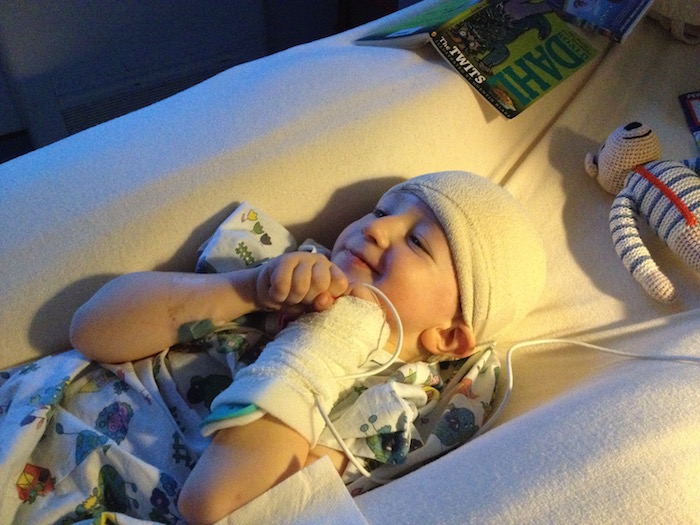
Ben had brain surgery last week. It was an elective operation, in which electrodes were inserted into his brain. These are connected to a battery pack about the size of a cigarette packet on the right side of his tummy. The idea is to try to reduce his dystonia and therefore give him a bit more control over his body. It’s called Deep Brain Stimulation.
IMG_1365

Ben spent a week in hospital after the surgery. He was discharged yesterday and is now back at home – recovering well but still in discomfort. We are relying heavily on paracetamol and films.

We chose for Ben to have this surgery. We entered in to it open-eyed – we knew the risks and we knew it would be hard. We hope that the benefits of reducing Ben’s dystonia, and therefore his disability, will outweigh the pain and disruption of the procedure. We thought hard about whether the gains would be enough to compensate for Ben never again being able to trampoline (in case the wires that now run down his neck snap), and not being able to swim for three months.

Having a child go through major surgery and recovery sends you into a hole. The intensity of the emotion and the level of care required is enormous and exceptional.

It feels all wrong to spend your child’s life taking so much care over who looks after them – we have never previously left Ben with anyone except trusted family, carefully chosen carers, at nursery or at school – then leave them with a group of doctors and nurses who you have only just met, and who are going to do unthinkably invasive things to him while he is unconscious. These places are so weird – full of people for whom this is all in a days work, while James and I are reading Ben knock-knock jokes and trying to convince him and ourselves that everything is going to be okay.

The six hours that Ben was in surgery felt like being in the eye of a storm. Everything calm and controlled, but filled with anxiety and waiting for the call to say he was in recovery. I tried not to dwell on the thought that if Ben’s brain was damaged for a second time I would never forgive myself. Then the call comes, and in we go, and the storm sweeps across us all.

We only really emerged from the swirl of hospitals, and cannulas, and exhaustion yesterday. Here are a few thoughts as we come into the light.

Rotas

When Ben has been in hospital previously, we only had one child and this time we had two. This made a bigger difference to our ability to cope than we expected. Someone who knows Ben well needed to be with him all the time – partly because he was sensitive and sad, mainly because he can’t communicate with anyone who doesn’t know him beyond crying. I had created a rota on a geeky spreadsheet to ensure there was always someone with Ben and someone with Max, but the reality of organising it was so tricky.

The easiest solution was to largely have me or James, or both of us, with Ben and for Max be with family and carers. We knew he’d be confused and annoyed, but hoped new Playmobil pirate sets and promises of cake would get him through. And it did for the first few days. Then, he realised that he hadn’t seen his dad for three days and Ben wasn’t at home. He didn’t understand why last week he’d been on holidays with the four of us hanging out all day, but now he never saw his parents in the same place, his brother was in this mysterious hospital place, and we kept trying to offload him on other people. He was so confused. At one point the fact that both of our kids were struggling nearly broke me. Things improved a bit once Max started visiting Ben at hospital, realised he wasn’t too far away and just looked like Mr Bump, and found out that hospitals have not only play rooms but also cafes that sell croissants.

I am raw to Max’s feelings about all of this. He shows such insight and accommodates so much. On the day before surgery, he asked where we were going to be while he was staying with my sister. We explained (again) that we would be at the hospital with Ben, that he was having brain surgery, that we hoped it would help Ben control his muscles. His first question was, ‘Will Ben be able to eat after the surgery?’. No, he won’t. But the three-year-old is asking all the sensible questions. Be still my heart.

Pulling together

I’ve said it before, I’ll say it again. Our family is kept on the road by us all pulling together. For eight days I have spent up to 15 hours in a small room of a hospital. Sometimes with company, largely on my own with Ben, reading The Twits for the sixth time and eating fondant fancies for lunch because I can’t leave Ben for long enough to buy a sandwich. It’s not been that much fun.

But being James has been quantifiably less fun. James did six night shifts with Ben in a row. We were meant to alternate but the kindness of my husband and the frequency of my tears led to him doing every night. These were nights of Ben being miserable, almost no sleep, frequent observations and intravenous antibiotics. This last week, our family has been kept together by this man.

IMG_1387

Ben and James developed an amazing kind of symbiosis from spending all of these hours together in adversity in a small room. By the end of last week James knew what Ben wanted or needed from the smallest facial gesture or the subtlest wriggle. He knew when Ben wanted to be held, or how to get him to sleep. Oh man, these boys of mine.

Meanwhile, our families have been at our beck and call. My sister Maddy has once again proved that her capacity to sit in hospital rooms for hours is one of her most valuable skills (photo below of Ben and her just before his surgery). Along with looking after Max for days despite him almost continually insulting her.

IMG_1344

It will be okay

So here we are. We’re on Day 9 and Ben is well as he could be. It’s all held together with Calpol and constant entertainment, but we’re home.

A few weeks before the surgery we had a party to celebrate our new house and summer. It was our normal combination of friends, prosecco and semi-naked small children. Uncle George brought his decks and at some point before bedtime he played this song: Can’t Do Without You by Caribou. James and I went to Latitude Festival in July and we arrived, via horrific food poisoning, an emotional final assembly at Ben’s school and six hours of Ipswich traffic jams, to Caribou playing this song on the main stage. I love it.

As we then danced to this song in our garden at our party a few weeks later, with James holding Ben and Max jumping around, I had a moment. A little bit of clarity that Everything Is Okay – Ben is happy, our family is amazing, and we can all dance together at a party with our friends on a summer evening. I imagined looking at us from the outside and thinking ‘they look happy, that little family of four’.

As I sat in the hospital room when Ben was in surgery I listened to this song. As I stood in our kitchen at midnight during the last week, having just returned from the hospital but needing to make Ben’s meals for the next day before I could go to bed, knowing that I needed to be up at 6.30am to get back to Ben and James, I played this song. I imagine that many people associate this song with taking drugs on dance floors, but it’s become my anthem of Deep Brain Stimulation. I absolutely cannot do without my little gang of boys, we just need to get through this little patch of discomfort.

Fear

Ben has a phobia of dogs. Or at least, we first noticed that he was scared of dogs. Then we found it was also cats, then foxes, and guinea pigs. And chinchillas.

IMG_0964

For a boy who has very limited communication, Ben found a very effective way to express his disquiet upon seeing these animals (or, as time went on, pictures of them): by gagging or sometimes actually being sick. Maybe the whole thing started because he happened to be sick when a dog was around, so the two became conflated in his mind and seeing a dog triggered vomiting. Who knows – Ben can’t tell us.

Either way, it started last summer and got progressively worse. At the beginning Ben would gag when we saw dogs in the park. Then he gagged at some dogs in TV programmes, sometimes being sick. Then it grew to include drawings in books, or dog-like bears, or cats. And plastic toys of animals. And TV adverts for plastic toys of animals. We sent the ’12 Dogs of Christmas’ DVD which someone gave him as an unfortunate but well-meaning present to the charity shop.

We get worried about Ben being sick for a whole number of reasons. Nutrition: because he needs all the calories he can get. Safety: because he chokes easily. Health: because he is prone to chest infections and repeated vomiting could lead to aspiration (breathing in stuff which doesn’t belong in lungs). And mess: because he tends to be sick on his chair or carpets which is a pain to deal with.

We got to the point where we would avoid or switch off TV programmes or books that had characters that triggered a reaction. One morning, a rogue TV show slipped through and Ben was so sick that we had to let the bus go and I drove him to school once we’d washed and changed him. He was unable to engage at all with the mobile petting zoo when it visited his school without gagging. He started gagging when we told stories about him gagging earlier in the day when he saw a dog. So much gagging.

It was having a significant negative effect on our day-to-day lives and we were wondering how to get some help. By coincidence, we saw a hospital psychologist about something unrelated and she arranged a course of therapy for Ben at the hospital with a trainee psychologist. We were very lucky to be offered this – the difficulty of access to Child and Adolescent Mental Health Services is well documented and I doubt we would have got such personalised treatment as quickly or easily if we had waited for a referral.

We have just finished a block of sessions where we worked with the psychologist to draw up a hierarchy of Ben’s fears – with talking about dogs with him in earshot at the bottom, through to him stroking an actual dog at the top. We figured that we’d focus on dogs and hope the chinchilla fear abated as a result.

Already, Ben has clearly demonstrated that he can learn to manage his anxiety – stories and pictures which made him gag the first time he heard or saw them are okay after a few weeks. We still have a way to go but are seeing real progress. I inadvertently tested this in our local shop last week. I went to get some milk and when I came back Ben was gagging for no apparent reason. Then I noticed I had left him directly opposite a card rack which featured literally nothing but photos of dogs! A few months ago he probably would have been sick, but this time we talked about it, and he recovered really quickly. You wouldn’t believe how many dog images there are in the world once you start looking for them.

It’s not going to be linear progress; Ben is now okay with the cat that visits our garden, but gags when we read him a new story about a dog. But we can now envisage a time when we can go for walks in the park without being on high alert. We’re currently on holiday and have been to a farm park* where Ben happily saw and fed goats, sheep, horses and turkeys. This is huge progress compared to our visit to a Miniature Pony Sanctuary this time last year which Ben DID NOT LIKE.

IMG_1151

What the therapy has made clear is that it is us adults who need to change our attitude as much as Ben. By immediately turning off offending TV programmes, or generally panicking at the first sign of Ben being sick, we were confirming to Ben that there was definitely something to worry about: these dogs must indeed be truly terrifying if all the grown-ups are so keen to get rid of them. We did all of these things for good reasons – it’s entirely justified to want to avoid Ben vomiting – but we were ultimately making things even worse and have had to retrain ourselves in how we respond. We also have to try to re-educate Max, who has become so attuned to the problem that he shouts ‘DOG, DOG’ at the first sign of a canine, which isn’t hugely helping.

IMG_4545

IMG_4542

As with so much of parenting, it’s all about being calm and consistent, about forcing oneself to demonstrate to your kids that everything’s going to be okay even though they are scared. We have to risk Ben being sick. We can’t carry on visiting people’s houses, finding out as they open the door that they have a dog, and introducing ourselves by Ben threatening to vomit on their 100% wool rug.

When going through this process, we also have to bear in mind Ben’s consent. On the one hand, we are trying to improve Ben’s quality of life by helping him overcome the feelings of anxiety he gets when he sees or hears dogs (or cats, guinea pigs, bears…). But it’s perfectly reasonable for him to not like dogs. We have to respect his right to really not want to look at pictures of dogs for fun, or to be able to say ‘No’ if he’s terrified. Max hates lawnmowers – we don’t make him stand around next to men mowing lawns.

We are treading a narrow and tricky path between pushing Ben’s comfort zone a bit, while respecting his right to move at his own pace. Ultimately, he should be able to express a dislike of dogs, or anything else, and have that view acknowledged. We would just like him to be able to express his dislikes like he does with other things he hates – by whinging, or sticking out his bottom lip, or loudly protesting – rather than puking all over us all.

* We went to the Cotswold Farm Park which was brilliant – easily accessible for wheelchairs, loads for both boys to do, and Ben particularly loved their maze. Unlike the Model Village in Bourton-on-the-Water which lets in those ‘confined’ to wheelchairs for free because they can’t actually get to any of the model village. Which would be sort of okay if they didn’t charge the rest of your family full price and be insulting and grumpy about the whole thing.

‘Earthquakes, and the Light They Let In’

Kate Gross advised Prime Ministers, set up at international NGO and had two boys. I didn’t know her, but she was by all accounts brilliant, committed, and a good friend of a friend of mine. Aged 36 she died of colon cancer. In her last year she wrote a book, ‘Late Fragments’, in order to create something while her life was narrowing and write down the things she wanted her friends and family to know. It’s a powerful book.

She and her family have experienced a kind of heartbreak that I am so fortunate to not fully understand. But much of what she writes about does resonate with me: how she has found herself reacting to the worst kind of adversity, what is important when the shit hits the fan, and unexpected silver linings.

She describes the sadness and horror following her diagnosis, and a period of misery, but also how at some point she found the sadness settling in and leaving space for other things. I recognise her description of coping with a change of circumstance that you neither anticipated nor wanted, that ‘I am not unusually unfeeling, but am basically wired for happiness’. One finds a new normal.

People often commiserate with me about how tough our lives are, and ask how we cope. The answer depends a lot on what mood I’m in, and how well I know the person asking, but broadly: we now know no different. This is our normal. It is entirely accidental – there is no rhyme or reason why my child is disabled rather than yours, but he is, and there’s only so long you can spend letting the sadness take over. After the ‘quake’, you find a way to accommodate the changes.

‘The tough bit is not the start, it’s the bit where you just have to put your head down and keep going; it’s an endurance sport. Living with the after-effects of the quake is much harder than surviving the initial impact. There is a point when everyone else has gone back to normal life, when the spotlight isn’t on you and your crisis any more, and it is then that things are at their toughest.’

And no-one understands that, and so much more, better than one’s immediate family. Gross describes her love for her sister, and her feeling that she’s letting her parents down by dying.

‘Of course they will have their own distinct grief. But they will keep it to themselves. They know this story isn’t about them. So they are there in the background, making things good. Encouraging me when I need courage. Reading to my children when I am too tired and broken to do it. Leaving food in my freezer, mowing the lawn, replacing the lightbulbs, quietly making every little thing all right.’

If you have a family who you’re close to, both physically and emotionally, they are the ones providing the scaffolding. We didn’t choose to have a really sick child who turned out to be severely disabled, and nor did our families. The effect on James and me is obvious. Less clear is the impact on our parents and siblings who have the fierceness of their own love for their grandson or nephew, but also have to watch us struggle. Their lives, both emotionally and practically, are shaped by Ben’s needs. They help and support him and us, willingly and uncomplainingly. The ripples from the quake spread wide.

Which brings me to the last of Kate Gross’s eloquent points about a life lived in adversity: ‘Earthquakes, and the Light They Let In’. If your life is not always easy, then you develop a fine appreciation of the ordinary being extraordinary. For me: a child who kisses you spontaneously, or who can run in the rain, or another child who has spent five years trying to rub his own eyes and has just learnt how to do it.

If you have had enough sleep to lift your eyes and look around, there is much to be thankful for. We are here. We have beautiful boys who force open the chinks and let the light in.

Photo: Big Smile Photography

‘That’s disgusting’

IMG_0570

Ben was ill recently, which meant he was off school and had to come with me to take Max to nursery. He was a trooper, considering he had a fever, and was not as grumpy as I expected as we walked round the corner.

Max goes to Ben’s old nursery and since Ben only left a year ago lots of the kids (and most of the staff) still know him and are excited to see him. This means he gets greeted enthusiastically by various adults as we enter, and then lots of kids come over to him as we go in to the playroom. I think I enjoy this familiarity more than he does.

This time we entered the room with Max holding on to me, because he wanted to go home, such is the whim of a 3 year old who likes nursery. As I negotiated doors that don’t stay open, a wheelchair with one hand, and a clingy Max with the other, a whisper went round the room that Ben was here. A little gang of 2-4 year olds came over and crowded round Ben, touching his legs and holding his hands. Truth be told, Ben isn’t hugely keen on this level of physical proximity from a gang of small (unpredictable) small children, but it’s quite a lovely thing to watch.

Then, a girl (probably 3 years old) pointed at Ben’s face.

‘That’s disgusting’, she said.

She meant the dribble. Ben’s lack of control of his tongue and mouth mean he can’t talk or eat, and he also can’t control his saliva. He can’t stop dribbling, and in fact if he’s excited, nauseous or stressed (such as when six children are crowding him) his tongue whirrs around in his mouth, increasing the amount he dribbles.

‘No, it’s not,’ I said. ‘It’s just dribble. He’s dribbling because he can’t help it. Ben’s not disgusting.’

Then I dabbed his mouth with the bib he always wears, got distracted by Max’s ongoing emotional crisis, and the kids talked about something else. While attempting to engage Max in something that wasn’t holding on to my leg, Ben lost patience with all the hanging around combined with fever and children, and burst in to tears. Max started crying in sympathy (increasingly common these days – really sweet but emotionally taxing) and a lovely nursery worker came to take Max out of my arms so that I could take Ben home. It was a great little outing.

Obviously that girl didn’t intend to be mean. She isn’t old enough to realise any of the implications of what she was saying and is just repeating what she’s been told at some point. I mean, if we took everything small children said as insults, then the locksmith who came to our house yesterday might have walked out when Max told him he was a bum, rather than fitting the window locks which will hopefully prevent us being burgled again. [Side note: they stole Ben’s iPad which we rely on daily. It’s unfeasibly irritating.]

This incident made me think again about how we manage Ben’s dribbling. In the past we have put Hyoscine patches behind his ears, which dry up secretions and so reduce the amount of saliva coming out of his mouth. However, Ben has a tendency towards a blocked nose at the best of times, and after nights spent holding him next to a hot shower in order to clear congestion, we didn’t feel reduced dribbling was worth difficulty in breathing.

In the meantime, we’ve just got used to it. Ben always wears a bandana bib to absorb any dribble, it’s become his signature look. The amount varies hugely – some days he can wear the same bib all day and we barely notice an issue, other days the dribbling is almost constant. We dab his mouth with the bib without even noticing.

But mainly, we haven’t done anything about it because we’re not sure Ben is that bothered. He occasionally gets a sore chin, but it’s easily treated with cream. I’m not convinced that Ben realises he dribbles, and if he does I don’t think he thinks it’s a problem. There are options to surgically reposition salivary glands, or take or increase medication. or inject Botox. All of these would involve recovery periods, side effects or disruption. Is any of it worth it if Ben doesn’t perceive a problem?

Unless. Did he notice the girl saying he was disgusting? How often does that happen that we don’t hear or realise? People stare at him sometimes – is this because of his disability or because he’s dribbling? Would reduced dribbling reduce the staring, or decrease some people’s level of disgust? How big a deal is some dribbling – I come from the perspective of having recently toilet-trained a small boy, so a bit or dribble is not high on my list of horrible things. If you’re an adult and really offended by some saliva, maybe you need to piss off.

My instinct is that we don’t interfere until Ben is annoyed by his dribble, or becomes aware of others noticing it. We can’t put him through invasive procedures or risk side-effects of drugs because we, or others, don’t like a bit of saliva, but I’m five years in to a world of bibs and dribble and am perhaps uncommonly blind to the issue. And maybe I haven’t factored in the honesty and unintended insults of children.