The way things look

I was struck by a conversation I had with an Occupational Therapist (OT) when Ben was very small – she is perceptive and (typical of all good therapists) sees her work in the context of the whole life of the children she treats. She was commenting on how lovely Ben was and said that would be useful to him because he would probably always need people to help him. It’s true – both that people are always more willing to go the extra mile for people who are smiley and engaging, and that Ben depends on people going out of their way for him.
DSC_0930

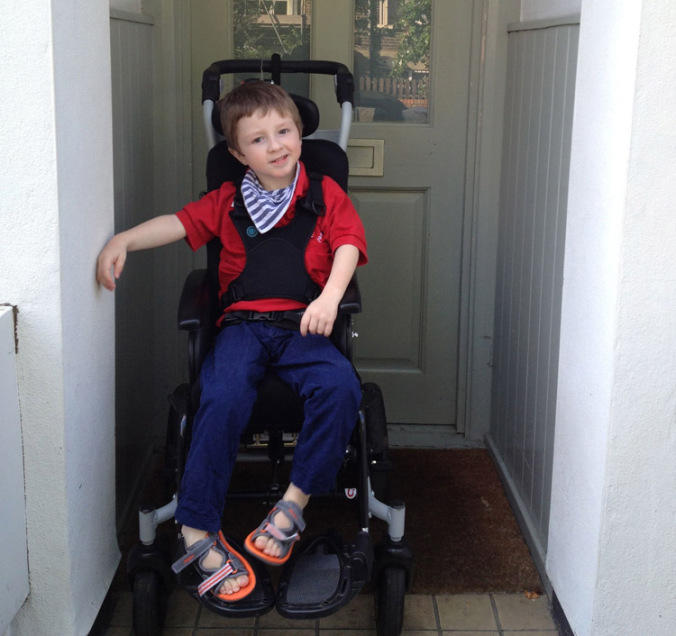
Partly as a result of conversations like that, I always try to make sure Ben looks good. I buy him nice clothes that work for him and us (jumpers we can get on/off, coats that fit in a wheelchair) and look smart after a day sat in a wheelchair. I buy things in cheerful colours that will suit his slight frame. I enjoy doing this – I do the same for his brother – but I think it’s particularly important for Ben. We have to maximise the chances of strangers seeing past a disabled child in his wheelchair and noticing the cool little kid. Of course we don’t always manage it (there are plenty of days when both our kids look like Dickensian orphans) but we try.

We are supported by my sister’s attempts to inject cool. I don’t know how many other children wear Nike Air Jordan’s over their ankle-foot orthoses.

[This could all be an elaborate excuse for me to spend more money in Scandinavian clothes shops but don’t tell James that.]

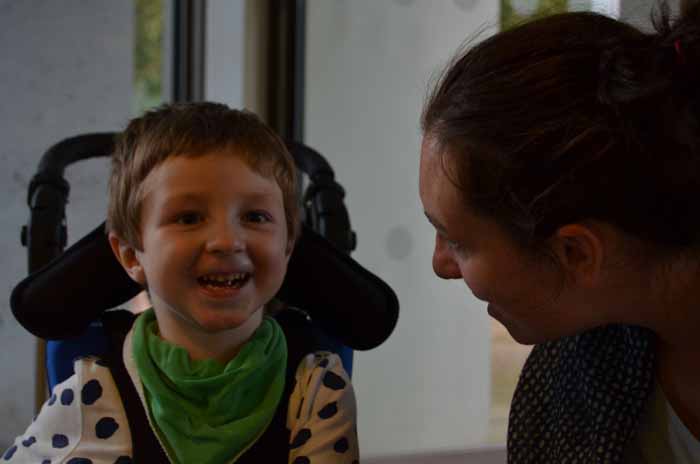
We can’t buy everything from mainstream shops but I seek out the best of the options. Ben dribbles sometimes and he wears a bib all the time so they can be changed easily without his clothes getting wet. Very early on we bought bandana bibs in bright colours which are kind of his trademark now. I hate the idea of him in baby bibs and have known to be quite stern on this front. He’s disabled, no need to infantilise him.

IMG_5531

If he does need specialist aids, I think they should recognise his age. A really good example of this is his hand splints.* ‘I’d really like to wear hand splints’, said no-one, ever, but the designer of these thought about them being for kids, decided against making them flesh-coloured in the hope no-one would notice them, and made them colourful. It’s probably not a coincidence that they were ordered by the OT mentioned above.

DSC_0631

But for some things, particularly equipment, there aren’t many options. It’s a constant source of frustration that things Ben needs are ugly and clunky.

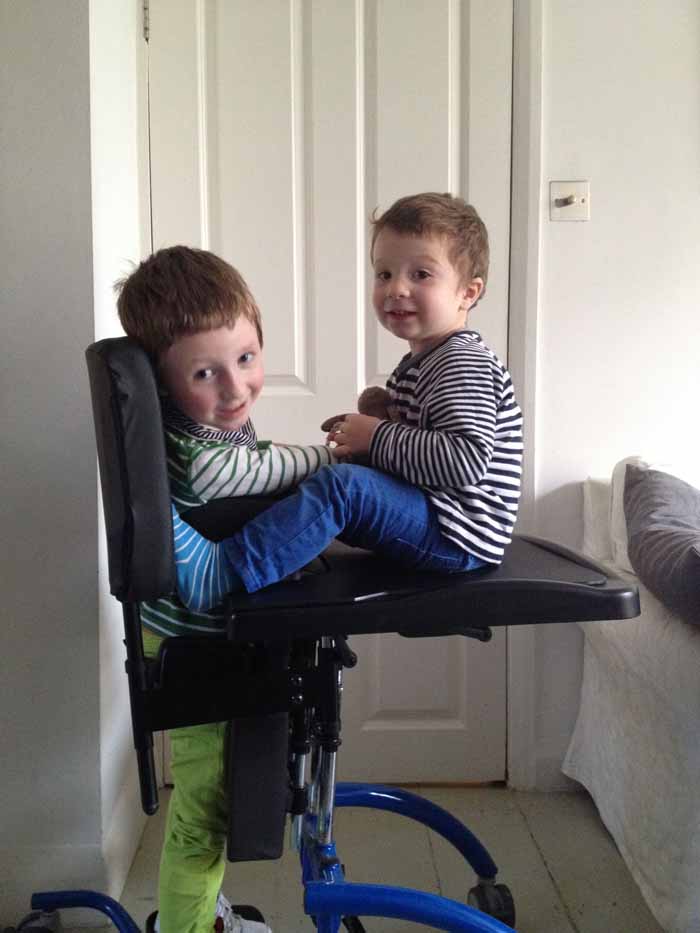
I trained as an architect and care about how things look. I’d rather not have a sitting room filled with supportive chairs, standing frames and walkers but I have no choice. These pieces of kit are helpful and Ben uses them every day so we have to look at them. They are so specific that not many companies make them, so our choices are limited.
IMG_8183

Ben’s bed is the exact opposite of the hand splints. He was growing out of his cot and needed a larger bed that could be raised and angled. Everyone agreed we needed a “profile” bed. Our local social services only supply one kind of these. It’s a full-size single mattress and looks exactly like a hospital bed. The only thing that differentiates it from an adult bed is that it has cot bumpers on the side rails which are flesh-coloured. I can’t begin to understand why anyone would think that was a good idea.

DSC_0619

When I asked if there were any options that would be more suitable for a five year old boy, the therapist (not the one above) suggested we could put stickers on it. I have actually done this. It took an hour to stick stars on every available surface. Now Ben often has a scrunched sticker stuck to him when we get him out of bed, but the bed still looks like it should be on a ward and I resent the fact that while some boys get to sleep in beds shaped like cars, Ben gets the same bed that he recovers from anaesthetics in.

DSC_0623

I have loads of examples on this theme: the time that I ordered an expensive specialist hood for Ben’s supportive buggy which took months to arrive and looked like something a 15 year old made in their school workshop. Actually, not by me at 15 because I’m quite good at making things, but by someone who shouldn’t have taken Design & Technology as a GCSE option. I returned the hood and wrote a letter to the manufacturer explaining why this product was ugliest thing I had ever seen and didn’t even work. Then my husband rewrote the letter to be slightly less offensive and the company said they ‘value feedback from our customers and will act on the constructive elements of your letter’. Ha!

The poor aesthetics bother me, but so does the absence of real design expertise. It’s not good enough for a buggy to just provide the right postural support to a child; that buggy is also going to be pushed by parents and folded up hundreds of times. A buggy that repeatedly injures the adult folding it and causes grandparents to spit expletives is not a good piece of product design.

There is one unanticipated side-effect of all this frustration and lack of control. When Max first needed proper winter shoes I considered giving him Ben’s old boots. They’re specialist, supplied by his physio, but essentially just boots. They’re in pretty good condition since Ben never walked in them!

James told me I was being ridiculous.

So now when Max needs new shoes (which feels like every month), I take him to a shop and choose the shoes I like most. I don’t look at the price and I don’t care whether they are the prudent choice. It is a joyful luxury to choose your child’s shoes based on looks alone and I love it.

* Ben has his hands fisted most of the time and his wrists bent outwards. The splints, which he mostly wears at night, are an attempt to stretch out his wrists and fingers to avoid him losing range in the muscles.
Cuddling

IMG_0135

The other day my mum sent me a link to a blog by Alain de Botton about psychoanalyst John Bowlby and his work on attachment theory. “I’m not sending it for any particular reason by the way”, she added a little nervously – presumably just in case I thought she was accusing me of raising children with attachment disorders.

I know very little about psychoanalysis and so a lot of the detail is unfamiliar to me. Essentially I understand from the article that Bowlby looked at how our experience of early maternal care shapes the way we form relationships throughout our lives, suggesting that kindness does not smother and spoil children.

“Bowlby poignantly invokes loving care that a little boy needs: ‘all the cuddling and playing, the intimacies of suckling by which a child learns the comfort of his mother’s body, the rituals of washing and dressing by which through her pride and tenderness towards his little limbs he learns the values of his own…’ Such experiences teach a basic trust.”

The typical development of children is that they are wholly dependent when babies, in a tactile, floppy, defenceless way and then as they grow they get more physically and psychologically independent. They begin to sit in a highchair rather than your lap, they crawl and then run away from you, they talk to people without needing you to interpret. Much of this trajectory is stalled or disrupted for Ben; he is still dependent, he cannot move away.

This means we retain the lovely physical proximity of a child on your lap, of a small head nestled in your neck. We now know his body almost as well as he does and he knows exactly what we feel like.

In the 1950s Bowlby researched the trauma experienced by children who were separated from their parents during hospital stays, when visiting times were restricted and mothers not allowed to hold their sick children.

 “It took a long time for Bowlby’s ideas about the importance of the early bond between the mother and child to get broader recognition and support. But it did happen, eventually. There was no single dramatic revolutionary moment. Many thousands of people changed their minds in small ways: an idea that sounded stupid, came to seem mildly interesting… so that today a child facing a frightening operation is surrounded by love and kindness and her parents get to sleep in a bed beside her.”

I wasn’t able to hold Ben until he was four days old when he was still surrounded by wires and tubes. On day six we visited the hospital and were holding him for most of the day. A nurse said we should be careful we didn’t spoil him – if he got too used to cuddles he would want them all the time. I think that was an incredibly mean-spirited thing to have said to people in our position. I couldn’t imagine anything better than being able to cuddle my son all the time, and hated that we left him there overnight while we returned home. The saving grace was that we didn’t really know him yet and he was so ill that he needed nurses more than he needed parents.

IMG_6225

Recently we have spent two days in a different hospital while Ben has had general anaesthetics for tests. He knows exactly what’s going on and puts up with the whole thing with extraordinary patience. No-one loves being in hospital – that unique combination of lack of control, limited daylight and sitting around makes me feel more exhausted than after a run. But the bit of the day that is almost unbearable is the period of time when I know Ben is sedated and that he will wake up soon, but I can’t be certain they will come and get me immediately. So there may be a moment when he opens his eyes and he’s in an unfamiliar room, confused by the fading anaesthetic, surrounded by strangers. I don’t know if it’s a legacy of the early hospital stay or the fierce protectiveness of motherhood, but it makes me feel incredibly sad. Imagine if we weren’t there at all, if we weren’t allowed to be there.

Bowlby’s work suggests that children need parents to be consistent and loving, to meet their needs and make them feel safe. That, he argues, is how children develop into adults who can form healthy relationships.

Ben’s disability means he is dependent on many adults; he has more physical contact than an average four year old would have with people who aren’t his parents. More intimate tasks undertaken by people he hasn’t necessarily chosen. James and I can’t do all of the ‘mothering’ that Bowlby describes so we have to broaden the circle and hope that we can still produce a child who is secure in his attachment, who feels safe and has healthy relationships.

Ben needs a village, not just two parents, to tend to his washing and dressing, the feeding and cuddling. He and we are used to him being looked after by other people, some paid some not. We hope that by making sure these people are kind and competent he feels secure. He can tell whether he can trust people – whether they are holding him safely and will meet his needs.

We are looking into having someone stay at our house overnight to get up with Ben when he wakes. Almost five years of getting up most nights is a lot of missed sleep and I like the idea of someone else doing it. It is the next stage in a life that will only involve more paid carers, not fewer.

But of course, the reality is that someone else will be going in to Ben, into his bedroom at 3 in the morning, when he expects it to be me. We can interview suitable candidates and check their CVs but really you want someone who will cuddle correctly in the middle of the night and that’s tricky to test. We have to have high standards – there is nothing more important than a four year old boy feeling safe in his own bed. It is our responsibility, and it’s making us anxious.

IMG_6670

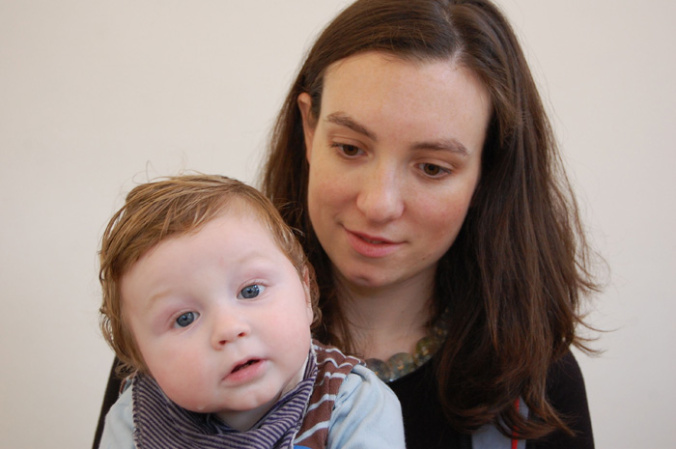
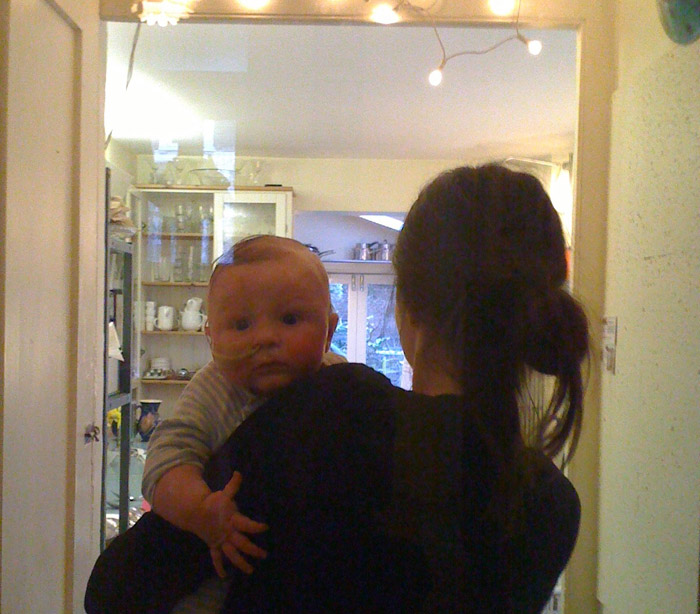
Top photo: Ben with my sister Maddy when he was 3 months old


School bus

Ben is now at school full time. He goes to the special primary school in our borough so we have to drive him there which takes 20-30mins.

Most children who go to the school get the school bus. I spoke to various people about this before the summer and was given the impression that the school bus is all or nothing – every morning and afternoon or not at all. I was grumpy about it on a day when I happened to be interviewed for a film about parenting children with special educational needs. I grumbled at length about the inflexibility of such systems.

I applied for transport assistance, thinking that I’d see what happened and we didn’t have to take it if we didn’t want to. I was told we could pretend we had physio every afternoon so Ben couldn’t get the bus. A woman who works for the transport bit of the council then came to visit us and assess Ben’s needs. She was really friendly, confirmed Ben would be offered a place on the bus due to his disability, and said it was totally up to us how often and when he used it. All of the scare stories about the inflexibility of the bus were totally unfounded!

We then couldn’t decide what to do because Ben is so young and time to fit in his breakfast in the morning is already limited (the bus arrives half an hour earlier than if I drive him straight there). I enjoyed taking and collecting him when he had gone to school 2.5 days a week last year and it meant I got to know the staff and kids at the school. But doing the school run for an hour every morning and afternoon five days a week is a lot of time – time that could be spent with my other child, or working, or making a dent on the Ben-admin/washing/massive piles of lego in my sitting room.

We came up with a complicated rota of Ben getting the bus on various mornings and afternoons after an initial few weeks of me driving him. Everyone nodded when I told them, looking kindly at me like I was nuts. We realised that no-one, including us and more importantly Ben, would be able to keep track, so we settled on Ben getting the bus each morning and being collected every afternoon.

On the first morning, we were ready at the front window looking for the bus – we had been given strict instructions that the bus would wait for 3 minutes from our allotted pick-up time but no more. We’d told Ben what was happening and he was totally fine. He was smiley and relaxed.

While waiting, James and I had some small misunderstanding about something and I burst in to tears. I found the whole thing so emotional – my little boy going all on his own on the bus with people he’d never met before. And Ben’s school bus is, by definition, full of disabled children. Happy, friendly, lovely kids, but there’s no getting away from your child being disabled in that context.

Non-disabled four year olds don’t get buses to school, they potter round the corner to the local primary. In fact hardly any British city kids get organised buses to school; there is no culture of school buses like I have seen in American films. (Aside: construction companies in Qatar buy old American school buses, so when we lived in Doha you would often be waiting at traffic lights next to big yellow buses with SPRINGTOWN HIGH SCHOOL written on the side, which were full of adult migrant labourers being driven to work.)

Then the bus arrived and we met Omar, the driver. Ben got lifted up on a platform on the back of a bus, and was all smiles as his wheelchair was secured. Then he was gone. Of course I called the school mid-morning and they said he had arrived happy.

That routine lasted three days.

On the fourth day we repeated everything as normal, Ben smiled at Omar, and then his bottom lip appeared in direct correlation to the height of the wheelchair lift. Ben’s bottom lip is legendary – he has used it to great effect ever since he was a little baby. By the time he was in the bus he was crying and wouldn’t open his eyes to say goodbye to me. ‘Ben’s very sad’, said Max.

So now each morning Ben is happy while we all wait for the bus. The bus arrives and Ben smiles at Omar. Then he sticks his bottom lip out as he gets in to the bus and cries as it leaves. Unless the lady who accompanies the children sings to him, in which case he allows himself to open his eyes a tiny bit and marginally retract his lip. As soon as she stops, off he goes again with the tears. It’s all heartbreaking.

I keep asking the bus staff how he was during the journey and each day they say he stopped crying as soon as they turned the corner. Every day each child is greeted by the headteacher or deputy head on their way in to school, and every morning they say he was happy. We collect him each afternoon and his class teacher says he was cheerful.

So I guess he’s okay and we all carry on until he gets used to the idea of leaving us on the bus. But in the meantime my heartstrings are taut and in danger of snapping.

The Twits

The time has come to elaborate on the ‘stories’ part of ‘Son Stories’.

Ben loves stories. He’s always liked books. When Ben was almost one year old, we were on our way back from a holiday and due to huge snowstorms and a perilous motorway we made an unplanned stop at my sister Maddy’s house in Nottingham. At midnight Ben woke and was really struggling to breathe. My sister and her boyfriend got up to show us the way to the nearest hospital, where we carefully walked over the ice to reach A&E. As soon we mentioned breathing problems in a child with cerebral palsy who was not yet 1, we got whisked through to a bed where they gave Ben some drugs and a nebuliser. We were surrounded by doctors and nurses, Ben was very distressed and his breathing was really laboured.

While James briefed an Intensive Care doctor on Ben’s history, in case he needed to be sedated and ventilated, a nurse suggested I sit with Ben for a bit and do something he enjoyed to see if his breathing calmed down. So we read The Very Hungry Caterpillar. Ben smiled at the list of food like he always did, and by the time the caterpillar had become a butterfly Ben’s breathing was much improved.

The nurses said they had never seen a more dramatic response to a book.

After school this afternoon I put Ben into his Brookfield chair (new, less supportive than his normal chair so he has to work a bit harder, a bargain at £750) and offered him a choice of four books to read, all of which he knows well: Sir Scallywag and the Golden Underpants, Watch Me Throw The Ball, Shifty McGifty and Slippery Ben and The Twits. He knows all of these books well – particularly the first three which are fun picture books.

Ben chooses by looking at the book he wants. He chose The Twits by Roald Dahl.

The Twits is a more recent addition to our library. As I mentioned previously, Ben’s a big fan of an old video on YouTube of Rik Mayall reading George’s Marvellous Medicine. His uncle Harry then bought him a box-set of every Roald Dahl childrens book and we’ve been working our way through them.

I think some people wonder how much Ben understands, how much he can learn. The kid chose the book with barely any pictures, no colours and a lot of words. He bloody loves stories. Even when his brother is trying to run over his hand with a truck.

An hour later I found Max sitting in the chair, drinking milk and watching TV. How many other kids get to relax unsupervised in furniture that valuable?

(Apologies for blurry phone photos – hard to take high quality pictures when you’re busy reading)

‘I feel sick’

I am having an incredibly boring couple of days. Ben has vomiting and diarrhoea. It has unfortunately coincided with the days when we do not have help from nannies/carers and Max ‘settling in’ to a new nursery. Obviously Ben can’t go to school. It’s not really possible to look after both kids so James had to take yesterday off work. As always, my work gets pushed aside.

Any parent is familiar with the curious mix of boredom and worry that accompanies having a sick child. Max’s developing speech means he can now tell you a lot of what he thinks or feels, so when he woke up vomiting on Saturday night he could scream ‘I sick!’. Over the next few days he could tell us that he felt sick, that he needed a cuddle, that we needed to be gentle when we changed his nappy. It’s not fun seeing him ill, but amazing that he can be so eloquent about it.

That’s the first time we’ve nursed a speaking child though an illness – we are much more used to a child who is unable to say how they feel or what they want. Ben is often sick; when he vomits we have to wait and see whether it’s a sign of illness or just another bit of reflux. It became clear yesterday that he was ill and couldn’t go to school. So ill that we stopped all food and he had small amounts of dioralyte (though his gastrostomy tube) while watching hours and hours of TV. Today he woke pale and quiet and withdrawn. By mid-afternoon today he’d had half a banana (whizzed up in the blender and pushed through his feeding tube) and was complaining that Bob the Builder was unsatisfactory entertainment so hopefully he’s on the mend.

James and I know Ben so well we can generally tell by his movements, facial expressions and noises whether he is happy or not, whether he’s in pain or content. But we never know what’s coming – he can’t tell us he feels sick before the inevitable puke. He can’t tell us he’s hungry to indicate his tummy is ready for some food. So we just have to guess, and sometimes that means what goes in comes right back out again. So. Much. Wiping. And entirely homebound.

Earlier this week Ben had a general anaesthetic in order to have some tests. Other people can have this scan without sedation but Ben would move too much. It meant a whole day in hospital while we prepared for and then he recovered from the anaesthetic. Ben’s five weeks in hospital after he was born has left us with a strong distaste for the artificial light, overheated rooms and lack of control of a stay on a ward. It never gets any easier leaving Ben after he’s been anaesthetised (he’s had two operations related to his gastrostomy), sitting around eating M&S sandwiches while wondering what’s going on, worrying that he’ll wake up and won’t know where he is. It’s horrible when they do say you can go and see him because he’s confused and upset, and looks tiny in the massive hospital bed.

One of the questions his assigned nurse had asked in the morning was whether Ben could talk. We said no, but that he understood speech. Throughout the day we told him who each new person he met was and explained what was going to happen. Ben hates any kind of fiddling (he cries when he is weighed, even though this only means being held by me while I stand on some scales) but after 45 minutes of ‘magic’ cream on his hands and a lot of warning, he was surprisingly okay about the cannula being put it. They took blood at the same time as preparing for giving him the anaesthetic. Ben has a yearly blood test to check he is getting all of the necessary nutrition, something he finds traumatic. At least this reduced the number of times he’ll need to be pierced with a needle.

In the afternoon, as he recovered and waved his bandaged arm around, he started complaining that the entertainment was not up to scratch. A sure sign that he was on the up. He then whinged when the nurse came near him with a pulse/sats monitor. His nurse understood what he was trying to say, ‘You said he couldn’t talk, but I’m in no doubt what he means.’ Indeed.

Holiday?

DSC_0673

The summer holidays have really derailed my commitment to writing blogs. Despite Ben still going to nursery for two days a week though the school holidays a combination of my husband being away in June, our nanny being away for most of July, me trying to do some work, then us going on holiday for two weeks meant I was struggling to keep on top of basic tasks. And my house was a tip.

I had good intentions of writing when we were on holiday – wouldn’t it be the perfect opportunity, with all that spare time? But Ben developed a fever on Day 1 of our stay in Devon and spent a considerable amount of time vomiting (in a carpeted holiday home, hard to tell sometimes whether I was more stressed about Ben or the soft furnishings). Then his gastrostomy site got infected so he was really sore. Then we went on to Cornwall where we stayed with good friends and loads of kids so I was too busy sipping Aperol Spritz in the hot tub to be writing.

Talking of which, if Ben could talk I’m certain he would tell us the hot tub was the highlight of his holiday. He is at his calmest, stillest, most relaxed in the very hot water. I spent 45 minutes in there with him one morning. He would happily have stayed longer but I was concerned about whether he was actually being cooked and whether his fingertips would ever rehydrate.

I had purposefully reduced the amount of Ben-admin I did on holiday – which meant I spent only one morning making calls and answering emails. On our return to London, I caught up with everything and we had embarked upon all the appointments we had postponed while we were away…

We returned to London on Friday and then (these are only the Ben-based bits):

Saturday – 1hr physio at home

Sunday – 1hr physio at home

Monday – 1hr physio at home and checking fit of a new chair. Cooked, blended and froze a week’s worth of food for Ben (approx 1.5 hrs). Confirmed Ben can attend a hospital appointment for some tests. Rearranged Ben’s specialist dentist appointment so he can go to a picnic with friends from nursery later in the week. Ordered repeat prescriptions from pharmacy.

Tuesday – Opthalmology appointment at hospital. Waited in for collection of Wheelchair Accessible Vehicle we had borrowed for holiday. 1hr physio at home. Tracked down spare part for Ben’s chair which had been delivered to the wrong house.

Wednesday – new chair for Ben delivered. Met with Assistive Technology team to start loan of eyegaze computer which wouldn’t work. Met with council transport co-ordinator to complete application for Ben to get the bus to school. Packed bags and made food so Ben could stay with my parents overnight. Dropped Ben off, then deliver medications that I forgot to pack originally. Called company to arrange fitting of spare part to Ben’s chair.

Thursday – picnic at Ben’s nursery to say goodbye to other kids/parents on his penultimate day. Spoke to community nurses about Ben’s sore gastrostomy site. Rearranged some hospital tests. Caught up with Ben’s speech and language therapist and arranged to meet next week. Met with Assistive Technology team to get eyegaze computer.

Friday – Ben’s last day at nursery. Traded voicemails with Community Dietician. Collected medicines from pharmacy.

IMG_7691

We are constantly trying to think about the balance between Ben being a small boy and being a disabled child. Other 4 year olds get to spend summer holidays playing in parks, going swimming, making cakes. Ben rarely has a day without an appointment. In this instance, he had just had two weeks of illness/recuperation/relaxation, and most of these appointments were important to ensure his ongoing comfort, development and nutrition, so I think it was okay. But it’s not fair. As his parents we have to keep reviewing whether the things we make Ben do are right, and that he isn’t missing out on too much of the fun stuff.

I often talk with friends/acquaintances about why I am not working as an architect, why I’m not employed on a permanent basis; weeks like this are why I’m based at home for now.

(P.S. In that last photo of Ben doing physio exercises, he’s watching a video on the iPad to encourage him to keep his head up. His favourite thing at the moment is an old BBC Jackanory film of Rik Mayall reading Charlie and the Chocolate Factory by Roald Dahl. He has watched it tens of times and thinks it is HILARIOUS.)

Swimming (with update)

There aren’t that many activities that we can do with Ben where he is really participating, rather than spectating. Swimming is one of them.

It’s taken a while for Ben to warm up to swimming. Our local leisure centre, Peckham Pulse, has a brilliant hydrotherapy pool which we can use but at first he found the loud, echoey acoustics of the pool overwhelming (tears). Splashing was also stressful for him (tears). And all of the fuss of changing and unchanging on uncomfortable wooden benches (tears).

I wondered if it was a family thing – around the same time I was taking Max to eye-wateringly expensive baby swimming lessons where he’d scream every time the instructor came close, hated being put under the water, and tried to climb out every time we approached the side. I persevered because I thought it was important that he learnt some water survival skills. When James pointed out that hating being underwater and trying to escape from the swimming pool at every opportunity probably indicated Max had understood the basics, I stopped going.

We kept taking Ben swimming occasionally and if we could minimise all of the other factors, he enjoyed actually being in the water. We went to a few hydrotherapy sessions to get ideas about what we could do with him, and it turned out he loved being bounced up and down, and being spun round, and being held in the bubbles when the jets were turned on. On holiday, Ben discovered the joy of the hot tub.

The secret to enjoyable swimming for Ben is to try to avoid the noise and splashing of other swimmers, which essentially means avoiding too many neuro-typical kids. Taking Ben to Rafts & Rascals is not how anyone would voluntarily spend a Saturday morning. Since it’s a bit hard to monopolise the hydrotherapy pool at a huge leisure centre, we were thrilled to discover the Family Disability Swim Session at 11am on a Sunday morning. We didn’t make it as often as we would like, but when we did it was fantastic and something we could all enjoy as a family: the holy grail of weekend activities.

On a rainy bank holiday Monday in May we didn’t have anything planned so we thought about swimming. On the pool timetable it said there was a Disability Swim session 12-1.30pm. Perfect! I phoned to check that we can take kids to this… and was told, ‘Yes, that’s fine for your disabled child to swim’.

‘Oh, great, we’ll have our other child with us too. He’s 2.’

‘No, non-disabled children aren’t allowed in the pool at this time.’

I then had a conversation where the lady suggested that one of us could go in the pool with Ben from 12-1.30pm while the others waited outside. Then Max could go in the pool after 1.30pm while Ben waited outside. This was her ingenious solution to the problem of Ben not liking swimming with boisterous kids, and Max having the misfortune of not being disabled.

When I complained I was sent the following email:

Hi Jess

Hope your well

Just to let you know the group that hired our hydro pool at 11am on Sunday have pulled out due to low number so we have put the Family disabled swim back on (11am-12pm)

This session will start again on Sunday 8th June 11am to 12pm

Thanks in advance

Most of my points were ignored but good news that the Family Disability Swim Session, when disabled and non-disabled children are allowed to swim together, was reinstated on a Sunday! Except I just looked at the pool timetable and the session has now been moved to 8-9am on a Saturday morning. How incredibly convenient! Thanks! Apart from it taking superhuman organisation to get anyone out of the house at 7.30am on a Saturday, it takes over an hour to feed Ben so no family swimming for us.

Luckily Ben has been getting plenty of opportunity to swim at weekly pool sessions with his school. We were nervous about this when he approached the first afternoon last September – he had never been in a swimming pool without me or my husband, and we were hypervigilant of the handling/noise/splash/discomfort/tears issues. We were proved wrong; Ben took the whole thing in his stride and has loved every swim lesson since.

Or, mostly loved it.

No-one had anticipated Ben’s love for Rick, a teacher who accompanied them to swimming (and often taught Ben in the classroom). Rick would help get the kids changed and then leave to get changed himself, at which point Ben would burst in to heartrending sobs which could only be alleviated by Rick returning. The boy’s got favourites.

We’re going on holiday to a house with a hot tub in August so Ben will be able to get his fix of water. Maybe by September the clumsy officialdom at Peckham Pulse will have realised that disabled kids have non-disabled siblings and they might like to go swimming together.

UPDATE

The Family Disability swim session at Peckham Pulse has been reinstated on Sundays at 11am and we all went last weekend. It was brilliant – Ben was relaxed and totally in the zone. Meanwhile Max tolerated his armbands and learnt to float! There were at least four other families in the pool and it was a glorious mixture of disabled kids, their non-disabled siblings, mums and dads and we all loved it.

The downside is that Max has asked to go swimming ever since so I took him this week and he spent a considerable amount of time shouting at me:

Max: I want to be a fish.’

Me: ‘You can swim like a fish’

Max: ‘No. I WANT TO BE A FISH.’

Repeat. Repeat. Etc.

Inquiry: failing disabled children

I wrote last week about our experience of getting Ben in to a nursery. It was stressful but in the grand scheme of things we were incredibly lucky.

Ben has been to that nursery for 2-3 days a week, year-round, for almost four years. Since last September he has spent 2.5 days a week at a local special needs primary school and then two days a week at the mainstream nursery. He is still a nursery age child so the time at school counts as ‘nursery’ from an educational perspective.

If we all just pretend for a moment that things are simple and linear, it is possible to track a path from Ben in 2010/11 who was startled by all loud noises, uncomfortable around young children and wary of new people to Ben in 2013/14 who took ONE WEEK to settle in to a new school, copes admirably with loud, unpredictable classmates and has made trusting relationships with staff. I don’t think that would have happened if Ben had spent the last four years at home with me, and I think a large portion of his development (particularly social) is down to nursery. Meanwhile, of course, I’ve been able to work a bit and have maintained some semblance of sanity while having some income.

We just got Ben’s first school report which makes me want to burst with pride. I won’t bore you with the full transcript, but two bits that illustrate my point here are:

‘Ben took no time to settle in and establish himself as a very popular young man! He quickly adjusted to his new school and new routine. He built really positive relationship with the adults in his class and it has been wonderful to see him make so much progress this year.’

‘Ben has participated in choir club together with some children from the local mainstream school, and really enjoys being with the other children. He is extremely popular with them too and is always the first to be picked by them for partner games. Ben clearly loves this and everyone comments on how happy he is in choir.’ [NB by definition, choir involves noise]

Ben has so far had a broadly positive experience of childcare and education but at a national level the picture still seems bleak.

The report of a Parliamentary Inquiry into childcare for disabled children was published this week and is full of extraordinary, but unsurprising, statistics about the difficulty, cost and inadequacy of childcare:

“Despite the huge progress made in creating a national system of childcare provision in the past two decades, the evidence received by this Inquiry clearly demonstrates that national policy has failed to create a childcare system that meets the needs of disabled children and their families. “

Some stats:

Only 16% of mothers of disabled children work compared with 61% of all mothers.

72% of families with disabled children cut back or give up work because of childcare problems.

86% of families of disabled children who use childcare pay above average

33% of parent carers don’t use childcare because staff don’t have the right experience.

41% of families with disabled children age 3 and 4 can’t access 15hr free early education offer (that theoretically all children are entitled to)

Behind all those statistics are real parents trying to go to work and bright, beautiful disabled children who deserve the opportunity to experience everything that good childcare has to offer.

The Inquiry took oral evidence from a number of mothers of disabled children. One of the striking things is the inconsistency of provision. I have crossed paths with Stacie Lewis a number of times – we live in neighbouring boroughs in south London, our children are close in age and have a similar level and type of disability. But her experience was totally different from mine. She went to more than 50 childminders and nurseries before she found one that would take her daughter.

The inevitable problem with providing good childcare for disabled children is it is more expensive than if the child were not disabled. They need more support, more staff hours, more meetings with other professionals, better trained staff, adapted equipment and buildings. It is no coincidence that Ben’s nursery is run by our local authority – private nurseries are unlikely (and generally don’t) take on children who will undermine their profit margin.

Our local authority ‘restructured’ Ben’s nursery last year which involved a new staffing structure and everyone having to reapply for their jobs. I wrote a number of letters expressing concern about the effect this would have on children like Ben which the council essentially ignored and so inevitably, come the summer, all of the staff who directly knew Ben had left. We kept Ben at home for a few weeks before we felt confident that he could return and be safely cared for. He then had to get to know new staff, who had very little training in Ben’s particular needs.

I’m glad we persevered – both in terms of making it work with new staff, and in fighting with our local authority for seven months so Ben could continue to go to the nursery when he started school part-time. Some of the children have known Ben for years now – they bring him toys to play with and read him books. The staff (who survived the restructure) know our family and supported us in getting Ben in to school early. There is real value in Ben being part of this and it is incredibly disappointing that thousands of disabled children are being denied such opportunities.

Care/Trust

I met a woman recently who has two small children, one of whom has cerebral palsy. She would like to return to her skilled job but can’t find suitable childcare for her disabled child. A therapist recently asked her whether she thought it was right for her to go to work, didn’t she think she should stay at home with her disabled child who really needed her? I suspect no-one ever said such things to me because they somehow knew I might do something regrettable to them. Only someone who has no experience of looking after a disabled child would think it was a good idea for their mother to have no respite.

I went back to work when Ben was 10 months old. It was a bit more complicated than that sounds because ‘back’ meant to an employer who had last employed me three years previously and the job I had gone on maternity leave from was in Qatar.  But ‘back’ I went, for two days a week.

We obviously needed some childcare. I had no real understanding of how it works in London and so had half-heartedly put Ben’s name down for the two nurseries I walked past each day – one a small private nursery who were perfectly friendly but didn’t seem optimistic about us making it to the top of their waiting list any time soon, and an Early Years Centre run by our local council.

I visited a potential childminder and sat in her sitting room as an evangelical Christian TV channel was put on mute. I explained Ben’s needs (being fed through his gastrostomy tube, medications, needing to be entertained, held, helped to sleep). She was happy with all this but she was recently qualified and had no particular experience of a child like Ben. Then she talked about how she would have up to four children with her. I left and phoned my husband, James, to tell him there was no way that woman could look after Ben; that she had no understanding of how relentless a job it would be.

We decided that if Ben was going to be in any kind of childcare it should be a nursery, where staff could take turns if he was miserable for hours and there would be more going on around him. So I called the Early Years Centre to check our progress on the inevitable waiting list and, in a moment of extraordinary luck, the manager answered. She listened to me describe Ben and called back that week to offer us a place for two days a week, starting in a few months.

Leaving Ben at the nursery was very hard. The first time I took him, I called James to weep – convinced that I couldn’t possibly leave Ben, that he wouldn’t be okay, that I could never return to work. It takes an incredible amount of trust to leave any child in someone else’s care – particularly a child who staff have very little experience of, when they have only just been taught how to feed him, when he occasionally chokes and turns blue with no warning.  A child whose care involves liaising with physiotherapists, occupational therapists, speech and language therapists, community nurses, dieticians and who will vomit on you at least once a week.

At the same time it was very easy. All I had to do was go to work, stay there all day and pick him up. It meant leaving the house at 6.30am in the dark and crossing London but it was so incredibly liberating. I could walk up any flights of stairs I liked with no buggy, I read books for the first time in almost a year. I felt a bit duplicitous that people might think I was an average 30 year old woman and not realise I was Ben’s mother. At work, people talked to me about all sorts of things that weren’t related to babies or cerebral palsy or mothering. I could pee whenever I liked, and think about what sandwich I might have for lunch. It was restorative and important to remember I was competent.

James was very supportive but inevitably late for work having dropped Ben and a mountain of bags off at nursery. They had generally been up most of the night anyway – Ben’s sleeping was appalling and we had a deal where James got up with him before I worked. And he had a big job at the time so was normally coming home from work at about 7pm to help me get Ben to sleep, having supper, then working on his laptop until after midnight. It was brutal.

Going to work was absolutely the right thing to do, and only possible because I had a very supportive employer.

One of the challenges for a parent of a disabled child is that your child is highly dependent on you, but you need for your own sake and theirs to find a way to have a break. By the nature of Ben’s difficulty in independently eating/drinking/moving/playing, he needs adults around all of the time and they need to be people he and we trust. We feel we should have him with us all the time. But because his needs are so high, because he can’t entertain or occupy himself, because he can’t sleep through the night, we need to have a break and must learn to let others take care of him.

Ben’s keyworker at nursery was a Sierra Leonean woman (let’s call her A) with only one setting when she talked and that was LOUD. Ben had (still has) a startle reflex so he jumped at loud noises and often found this upsetting. He was totally confused by A but over time he accommodated the noise and the enthusiastic physical affection. A, meanwhile, became one of Ben’s fiercest defenders. She was just the first of a number of keyworkers that took it upon themselves to care for Ben, teach him to look and laugh, buy his favourite books out of their own money. Heaven help anyone who didn’t appreciate him (leading to a succession of agency 1:1 assistants who were deemed unsatisfactory and dismissed).

The nursery story isn’t all sweetness and light and I’m sure I’ll come on to the trickier moments (when I actually withdrew Ben for a bit), but at its heart Ben’s nursery is a place that is totally okay with the idea of difference. It has middle class kids living in the surrounding Georgian houses and working-class kids from the estate down the road, social service referrals and children who are there five days a week while their parents work in media, kids from all countries and permutations of families. It’s often a shambles, but as a lesson to kids that everyone should be included it’s doing pretty well and we were all very lucky to find it.

(Photos are of Ben at 10-12 months old, when he started at nursery)

Hearts and minds

There are unique challenges to parenting a disabled child. One of them is that your role as a parent is blurred with so many others: physiotherapist, occupational therapist, speech and language therapist, nurse, teacher, advocate interpreter; so many things to consider and activities that the simple mothering can get buried under the tasks you feel should be doing but would actually be done better by someone who had actually trained as a physiotherapist/teacher.

The other complication is that there are so many people involved, all in slightly different ways, so our lives are full of us explaining Ben to different professionals with slightly different emphases. This is true through from the apparently simple (what should we be feeding Ben?) through to the specialist (what drugs should he be on?), and with varying degrees of medicalisation. It’s one of the reasons why we would rather wait longer to see our usual Consultant rather than a new doctor.

Ben was in hospital for the first five weeks of his life. To begin with we could do almost nothing for him except sit close and stroke his hand – his care was in the hands of incredibly specialist nurses and doctors. As he got better and bigger the intensity of medical intervention decreased and we did more for him. I recall someone describing this period when their own child was in NICU, saying they realised that their parenting and nurturing would start when they were the best person to meet their child’s needs, but in the meantime their child needed medical professionals more than they needed a mother. It could have been Martha Wainwright, who I shared a breast-pumping room with at University College London Hospital. There’s nothing like pumping milk to force intimacy with strangers.

Once that initial, horrific, period was over Ben still required medical input but what he really, really needed was loving parents and James and I have tried our best to do that well but it’s not always easy.

Ben is seen by 19 different professionals or clinics (e.g. therapists, various hospital consultants, community doctor, nurses, dietician, social worker). Some of them we see annually or every six months (hospital clinics), some he sees weekly (therapists), so over the course of 2013 he had over 150 separate appointments. Many were at home or nursery, but I was there for the vast majority of them. I try hard to cull any appointments that we don’t need, and many of them are with lovely people who we enjoy seeing, but still that’s a lot of time each week which isn’t spent just hanging out with Ben, doing things he enjoys, being a mother.

We live a life where people say things you would prefer not to hear (‘we don’t have the luxury of being able to take children as disabled as Ben’s) and many things involve protracted, energy sapping bureaucratic ordeals (getting a Statement of Special Educational Need), all of which I handle better if I’ve had some sleep, and unfortunately this is one of the things Ben finds difficult. So on any given day it’s likely that I’ve been up during the night and that has inevitable effects on the quality of my parenting and my ability to cope. Unfortunately the likelihood of me bursting in to tears increased exponentially when I was pregnant with Ben and is now directly proportional to how tired I am. So there’s a fair amount of weeping some weeks, along with a lack of tolerance for people not helping us when they could. It also might lead to me sitting on a chair crying with Ben in my arms, and a Consultant sitting on the floor in front of me, wiping my tears.

Some of the appointments involve reviewing every aspect of Ben’s life, so our choices as parents are laid bare and discussed. This is often helpful, and with people who we trust and value their opinion, but not always. And we sometimes have to stand up for what we think is right despite their views. Which means Ben doesn’t need to have a blood test now (which he hates) just to check something which no-one’s that worried about.

One of the implications of this scrutiny, and of the complexity of Ben’s condition, is that aspects which aren’t particularly medical become medicalised in all of our minds. We were worried about Ben’s weight last year and had numerous conversations with people because his feeding is difficult, but it eventually became clear that we just weren’t feeding him enough. And that was because we were thinking of his feeding routine like a medicine chart, rather than what a 4 year old boy might eat. When we started putting Petit Filous down his gastrostomy tube, he got fatter. It’s not rocket science, but it is difficult to see the wood when you’re surrounded by trees and feeding tubes.

Christine Burke, who led a training session I attended earlier this year, said that the key thing for professionals involved in the lives of disabled people is that they come to work with their head and their heart. The best people we see (and there are many) are very skilled at what they do, but they also understand something of what our lives are actually like, and respect our views as parents. They explain options to us and leave us to make choices. They don’t call other professionals about Ben without talking to us first – both because that might be seen as rude, and because if they actually asked me I would be able to answer their question immediately. There also happens to be a direct correlation between how good people are at their jobs and how much they ask about Max – because they appreciate that Ben is part of a family, and we are parents to two children.

The worst thing anyone can do is come to work with only their head and see some aspect of their interaction with us as merely a task in their day. I am Ben’s mother and I will fight for what is right for him, and I may be exhausted (I may start sobbing) but you had better appreciate how special he is.