How we learn to talk

IMG_6819

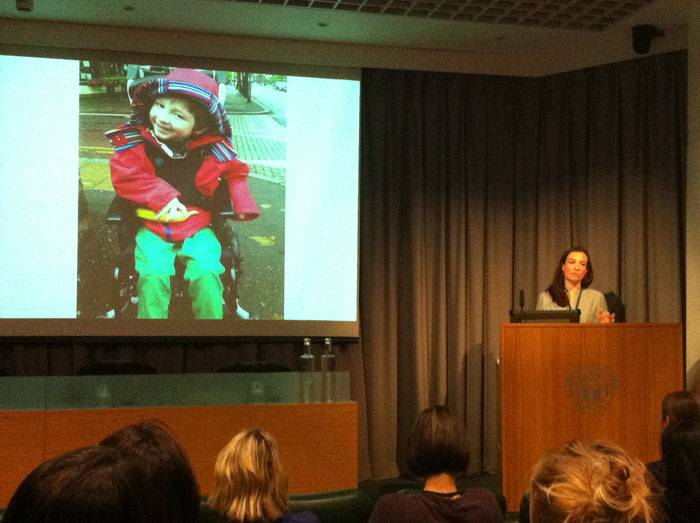
I have just done a two day course on a system that I hope will help Ben communicate with us and everyone else.

Communicating is one of Ben’s biggest challenges. He has a lot to say, but his severe disability hampers all of his efforts to tell us what he thinks or wants: he can’t speak, he can’t point, yet he understands a lot.

He has found highly effective ways to get round this day-to-day. He can smile or frown, laugh, shout or show us his bottom lip (the degree of protrusion of the lip is directly proportional to his sadness, on a spectrum that ends in full-blown sobbing). Whingeing indicates dissatisfaction. Looking expectant means ‘I’m interested’.

Ben has the intellect to express far more sophisticated ideas and desires than this – but he needs the tools. So we are working with Ben’s school and a number of speech and language therapists to maximise his opportunities, using Assistive and Alternative Communication, or AAC, the term used to capture a whole range of communication systems that don’t rely solely on speech.

Everyone involved in this effort comes together at a termly review meeting. Last week that involved eight professionals sitting around a table for several hours discussing progress. The combined level of expertise is immense.

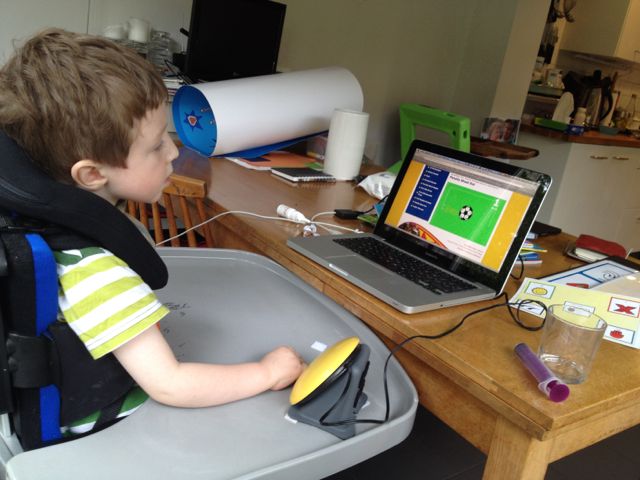
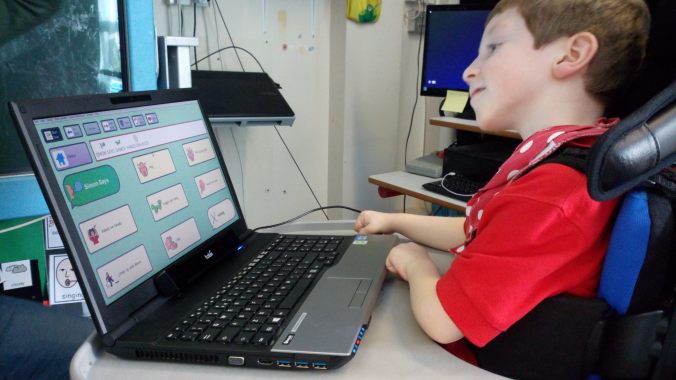
And partly because of all of this input, Ben is doing brilliantly. In last week’s meeting someone pointed out that (PROUD MUM ALERT) Ben’s spelling is on a level with his non-disabled peers, so it’s important to not push him too hard. He already has to work much harder than a typical kid to spell consonant-vowel-consonant words but he’s doing it – on an eye-gaze computer or by looking at magnetic letters with Granny.
141016-sam-eye-gaze

The major new communication concept we are introducing to Ben is a PODD book, developed by an Australian woman called Gayle Porter, a minor celebrity on the aided language scene.

PODD books are full of symbols that you point at to express yourself. The ambition is that Ben will eventually be able to show us which symbols he wants to ‘say’ (video of a child using PODD here).

IMG_9118

The success of using aids like PODD books is totally dependent on the expertise of the people surrounding Ben. The course I was on last week was an attempt to increase my confidence and knowledge.

I came away enthused. This has huge potential for Ben. But at the same time I’m nervous, intimidated even. I took away three main insights from the course that really highlighted how big an endeavour this will be:

1. Do we have the stamina to do this justice?

A typical child hears spoken language for at least 18 months before they start talking (over two years if you’re Ben’s brother Max). It therefore follows that we should be modelling use (otherwise called ‘receptive input’) of the PODD book to Ben for at least a year before we expect him to be using it with us. If we were really to mimic normal acquisition of speech, James and I would use it to talk to each other in front of Ben.

At the course we were shown totally inspirational videos of young children communicating, in ways that just would not happen if they hadn’t been taught to use PODD. But … in some of the videos, their mothers (and they were almost exclusively mothers) had modelled use of the PODD books with their children for over a year before their children started interacting with the book.

The level of skill of these women is impressively high – they can navigate expertly from page to page and find symbols really quickly. But even more important is their level of determination. They have dedicated years of their lives to teaching their kids to use PODD books, even when the kids weren’t apparently engaging with them. It is hugely inspiring, but also massively daunting. What if we’re not committed enough? What if we get bored and demoralised, and that means we fail Ben?

2. You can’t learn a language if you’re placed on mute

If you think of the PODD book as Ben’s way of talking, then you have to have it available to him all the time. Otherwise you are effectively silencing his voice. It is close to the equivalent of gagging a verbal child to stop them talking.

We are already guilty of doing this: we introduced Yes and No symbols on Ben’s chair so he can look at these to answer questions. A few weeks ago, the No got puked on, the sellotape got wet and the symbol fell off. Despite daily good intentions, I still haven’t got round to sticking it back on. And I haven’t got round to putting the Yes and No symbols on his wheelchair.

I introduced an opportunity for him to tell me things and them I took it away. Shit.

3. This needs to be a whole family enterprise

On the course I also saw videos of young children using PODD books really competently with their disabled siblings. Max is really trying to work out the rules around him at the moment and where Ben fits into it: for example, ‘big boys’ walk and babies don’t, but Ben is a big boy and doesn’t walk (cue confused/amazed face). We’ve had discussions about whether Ben can hear Max talking, because normally people talk back when they hear you, but Ben doesn’t talk.

Max already talks to Ben on his terms – he says ‘night night’ to Ben every night and waits for Ben to look at him because he knows that’s Ben way of saying goodnight back. When Max asks Ben a question he says, ‘Ben, can I play with your Peppa toy, YES OR NO’!
IMG_4770

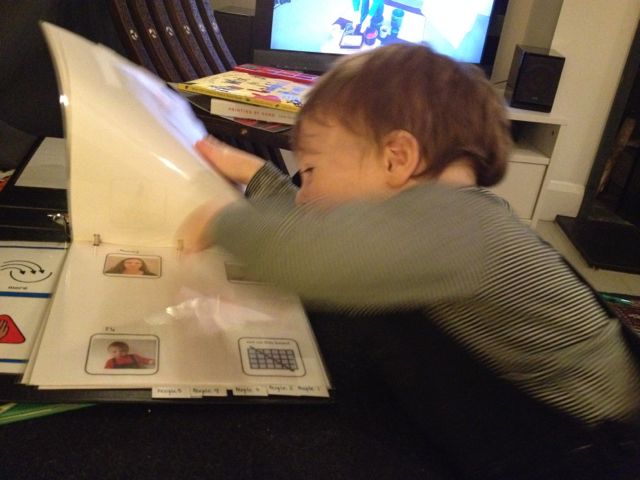
Max could easily pick up the way a communication book works (the photo above shows him at 18 months getting interested in one), but only if he sees us using it. We have to normalise it within our family, even if the wider world insists on only speaking to each other.

I should reiterate that I really am filled with enthusiasm – the PODD system has been thoughtfully developed and children exactly like Ben have learnt to use it proficiently. But, oh my goodness, what a weight of expectation. Remind me of this blog in a year, when my enthusiasm for pointing at symbols might be wavering and I need to remember that we knew we were in it for the long haul.

Music: finding a beautiful voice

IMG_8580

Ben has just started music therapy. After an initial assessment with a charity over two years ago, we finally made it to the top of the waiting list. As the days get longer, we are seeing more and more of Croydon as we make our way to the purpose-built Nordoff Robbins centre. for weekly music sessions

We were a bit nervous. We know Ben likes music – one of the comments from his school report last year was that he loved choir, something we were really pleased about, not least because by definition choirs involve a lot of noise. Ben still has a reflex that causes him to physically startle at loud noises. He has found this upsetting in the past but is learning to manage the shock.

And we watch him enjoying music at home – one of the most reliable ways to make him laugh is for his uncle to play the piano while telling jokes, in the style of Flanders and Swann.

But all of that didn’t necessarily mean music therapy would go well, especially after a full day at school and then an hour in the car.

At our first session we were met by our friendly music therapist, who I will call C. She suggested that she take Ben off into the music room while I wait in the entrance room. What?! Let Ben be taken off into another room without me? With someone he (and I) has only just met? Are you nuts?! That has literally never happened before.

But of course I was too embarrassed to say all that – no-one wants to be a mollycoddling, helicopter parent unless absolutely necessary. Ben was totally relaxed. C seemed confident. So I said meekly, ‘Great, yes, I’ll just be here’, trying to portray a sense of calm and normality.

Then I sat in the waiting room, sending my husband texts saying things like ‘Ben’s in music therapy on his own! Nervous!’, praying that Ben didn’t puke on C. I was straining to hear what I could from the music room but I couldn’t hear any complaining, just a bit of distant guitar, then a drum, then some singing.

After half an hour he reappeared looking pleased with himself and C said it had gone really well. I was even more chuffed than Ben.

Our second visit followed the same pattern, only this time at the end of the session I heard Ben crying from the other room and when he came through the door he was crying sad, hot tears. C said he had got upset when she sang a goodbye song. As we chatted he calmed down a bit, but each time we talked about leaving or saying goodbye the tears started again. And on the way home he sobbed on and off for twenty minutes, which is really unusual for him. He gets upset and he cries sometimes, but almost never for that long.

This week we went for our third session and the same thing happened at the end, but with less dramatic sobs and a quicker recovery. C is taking it all in her stride, but I started to worry that Ben just doesn’t like music. It seems unlikely since he’s happy when we arrive and enjoys music at school, but maybe…

I was talking to another music therapist while waiting at the centre, and he said it was lovely that C and Ben were getting on so well. We had a conversation about how much Ben ‘talks’ i.e. not at all, but he makes all sorts of noises that we can interpret as happy, sad, annoyed or bored. He said it was lovely to hear Ben singing with C, and that Ben has a ‘beautiful melodic voice’, which struck me as an incredibly accurate and particularly lovely thing to say about a child who can’t use his voice easily.

I’m hoping Ben’s approach to music might be like his acclimatisation to the school bus; he started cheerful, then found it all too much, then settled into happy contentment.

I’m pretty sure he really likes C and her music, and is just really upset that every week it finishes after only half an hour. In the absence of Ben being able to tell me, I’m keeping my fingers crossed. Maybe he is finding his voice.

Chairs of Freedom

Using a wheelchair is a sort of shorthand for being disabled – easy to understand, simpler to explain than a gastrostomy or dystonia or dysphagia, and a good graphic symbol. It is the approachable face of disability – a chair with wheels! We all understand chairs!

But of course they are also intimidating. Many parents of recently diagnosed babies wonder whether their child will walk, whether they will need a wheelchair. Lots of people have asked us if Ben will walk, whether he will always need his wheelchair. Everyone is preoccupied with walking, when its significance for us has been eclipsed by other more pressing matters. At least weak legs can be compensated for with a chair; finding a way to get round the inability to eat or talk is much more complicated.

If you have the good fortune to walk up stairs and run up hills then a wheelchair seems incredibly restrictive, something to be ‘confined’ to. However, if you find walking difficult then a wheelchair is an optimistic, helpful aid – providing the opportunity to get out in to the world (stairs/kerbs/snow/sand/mud/gravel/cobbles permitting). It’s crucial that it fits right, that it supports in the correct way. Ben spends hours in his.

IMG_8003

Ben’s wheelchair is provided by the NHS (I think, to be honest I’m not certain) through our local Wheelchair Service. We’ve worked our way through a couple so have visited numerous times and once we’re there we meet knowledgeable therapists who try their best to find and adjust the best chair for Ben.

But the process! The process of getting to the actual appointment is enough to drive me nuts.

Unlike every other aspect of interaction with therapists who work with disabled children, there is no process for review except for me to think, ‘Oh, Ben’s grown! He’s not looking as comfortable in his wheelchair, let’s make a wheelchair appointment’. Or to think, ‘Actually he’s flopping to one side in this chair, it could do with an expert reviewing it’.

Meanwhile, if something on the wheelchair breaks, we’re supremely relaxed. Should we find ourselves in a restaurant for lunch and Ben’s footplate drops on to the floor, we just call Wheelchair Maintenance. That is a totally different ballgame. One phone call and they will visit Ben’s chair at school the following day, wheel it off in to their magical van, and back it comes Good As New.

But if I phone the Wheelchair Service because the chair needs to be adjusted or reviewed, they put Ben on their waiting list. Two – four months later he gets an appointment, generally in the middle of the day so he misses hours of school.

One/two/three months is a long time for a boy who sits in the chair every time he leaves the house. Every time he visits the cinema, or gets on the school bus, or goes to meet Michael Rosen.

Of course, what actually happens is that I wait until Ben is looking like he might possibly be getting a bit longer and so in approximately three months time his chair will be too small, and so I phone and put him on the list.

It seems to me ironic that it’s so hard to see a wheelchair therapist, when they more than anyone realise the value of a good wheelchair and take pride in making sure wheelchairs are comfortable and practical.

This is an absurd system. It is bonkers to not acknowledge that children grow. Every other piece of Ben’s equipment can be adjusted by a physio or occupational therapist at home or school, and they will do it within a week or so of a problem being identified.

I have no doubt the reasons for such a creaky system are many and varied; I have expressed my frustration at length with the friendly, talented therapists who work for the service! Presumably there’s not as much money as there could be in areas like this. I have been told it’s difficult to recruit therapists to wheelchair services – it’s maybe not the most glamorous end of the physio world. The service has a high rate of DNAs (Did Not Attends) because by definition the kids they see are more complicated than the general population, more likely to be ill, more likely that something will come up last minute, and the DNAs mean fewer appointments to go around.

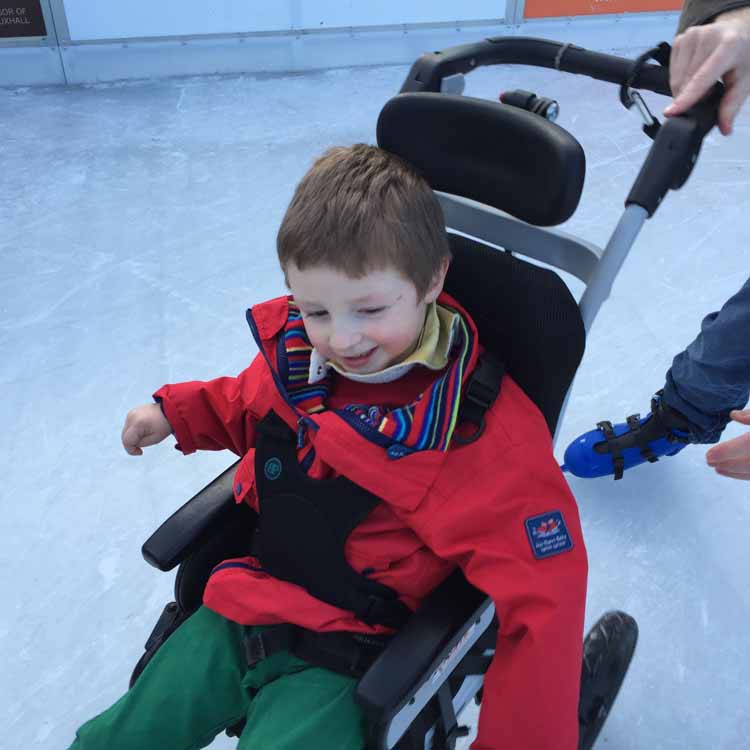
One of the advantages of having a comfortable, functioning wheelchair is you can use it to go ice skating. Then you realise that being in a wheelchair works incredibly well. Ice is one of the few environments where people in wheelchairs experience no inconvenience, while walking people are near-incapacitated. Hanging on to Ben’s wheelchair becomes really helpful, and then we can whizz him around at high speed, something he loves, as long as we go as fast as possible.

IMG_8676

12 Thoughts About Physical Disability prompted by Stephen Hawking in The Theory of Everything

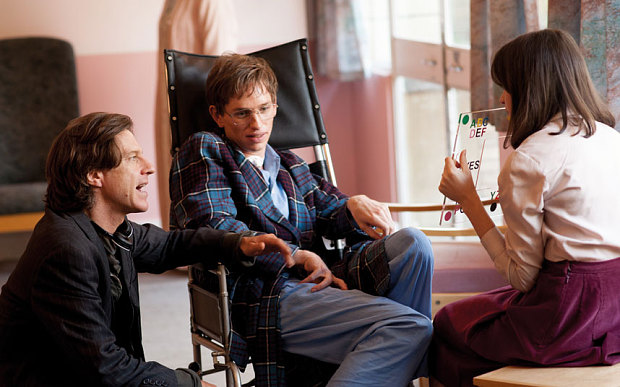
I went to see The Theory of Everything this week, a film about the physicist Stephen Hawking and his relationship with his wife Jane. Hawking is diagnosed with Motor Neurone disease at the beginning of the film and becomes progressively more physically disabled just as his scientific career is taking off.

It is brilliant. Eddie Redmayne as Stephen Hawking is extraordinary and his portrayal of encroaching disability is utterly convincing. Many aspects of his life are common to any physically disabled person but his experience is particularly relevant for people whose intelligence and cognition are unaffected.

It is a salutory reminder of why some people in the disabled movement use the phrase ‘not yet disabled’ to describe able-bodied people. We are all just one diagnosis away from being disabled.

How Hawking’s increasingly weak and uncooperative body affects his life and his family are portrayed well and are familiar, hence why I spent a bit of time weeping in to my sweets (£8.47 worth of pick-a-mix to be precise. I KNOW, it’s a reaction against never being allowed sweets as a child).

There are obvious differences between a genius physicist losing motor function and a small boy being born with brain injury that leaves him physically disabled. Ben is actually very interested in space, but let’s all agree he hasn’t yet written a cosmic book that has sold 9 million copies.

But there are similarities, so in the manner of a Buzzfeed article, here is a list of 12 thoughts about being (or caring for someone who is) physically disabled prompted by The Theory of Everything:

  1. Physical disability can be a bit shit, and everything would be easier for Stephen Hawking and for Ben if they weren’t disabled. This is very sad, and it’s easy to become overwhelmed by the sadness, but resist because…
  2. It’s possible to live a good and full and useful life if you are disabled. This may mean you redefine Time or it may mean something less ambitious, but it can be a life well lived.
  3. It’s not necessarily that easy for the family members who surround a disabled person (Hawking was keener on physics than he was on making things easy for his wife) but people will do a lot for those they love, and will do it happily (until they, like Stephen, divorce you for their nurse. Let’s brush over that for now).
  4. Kids and siblings are great. They tend to be cheerful and accepting of disabled people and like riding on wheelchairs.
  5. Male carers or helpers are really useful – physical strength is hugely valuable if someone’s body doesn’t work very well. Such strength can enable things to happen, such as overcoming the fact that…
  6. Wheelchairs and beaches are inherently incompatible.
  7. Working with a good speech and language therapist can make all the difference.
  8. It’s all about communication. It is totally crucial to find the right system of communication, find the right person to make it work, and make sure it keeps working.
  9. Avoid stairs. If that means having a bed in your kitchen, so be it.
  10. Get help, from friends, family, volunteers. Employ people if you can.
  11. If you’re the carer for a disabled person, don’t lose yourself. Jane Hawking’s love of Iberian poetry was subsumed by Stephen’s obsession with black holes and his refusal to allow others to help. It needn’t have been that way.
  12. Felicity Jones, who plays Jane Hawking, looks 15 years old at the beginning of the film, and about 18 years old at the end when apparently 30 years have gone by. Perhaps caring for a disabled person bestows some magical anti-ageing properties? I’ll come back to you on this.

theory_of_everything_still_a_l

ttoe_d25_07877_3135284b

toe4

Advice

advice 2

Late last year I gave a talk about Ben and myself to about eighty paediatricians taking part in a training day at the Royal Society of Medicine. I had twenty minutes to give ‘A Parent’s Perspective’. The main challenge was to edit sufficiently to fit within time – given the opportunity there is much I can think of to say. If I were allowed to do Mastermind with Ben as my specialist subject, I would blitz it.

They were a receptive audience and gasped (‘Ben had 157 appointments last year’) and laughed (niche jokes about junior surgeons’ lack of interpersonal skills) at the appropriate points. I was asked a number of very perceptive questions at the end, but I was really struck by one:

“What do you wish you had known, or had been told, when Ben was born – and what would you advise someone just starting out on a similar kind of life to yours?”

I didn’t immediately know how to answer this, but after a momentary panic in front of a large audience, I thought of something and here I will expand on it.

When Ben was in hospital just after he had been born I was expressing breastmilk for him, something I was finding relentless and dispiriting. A breastfeeding support worker put me in touch with a woman I will call E, who had expressed for over six months because her child had difficulty feeding.

Once Ben came home from hospital I couldn’t keep up with a brutal regime of pumping, bottle-feeding, tube feeding and sleep deprivation, so I stopped expressing milk. But by that time I was in touch with E anyway, and she came round for a cup of tea. She told me she thought I was doing brilliantly which was incredibly encouraging.

Meeting her in the first few months of Ben’s life was hugely important. Her son was very different from mine, with a totally different condition, but there were similarities between our lives – not least the shock of realising things are not (and probably won’t ever be) as you expected.

Most importantly, she was heavily pregnant with her second child. The idea that she had been able to accommodate all of the difficulties of her first child sufficiently to decide to have another one gave me hope. Not just that it might be possible to have another child, but that our lives might one day be as optimistic.

I stayed in touch with E and we met periodically, through my emergence from the fug of the aftermath of Ben’s birth, and the births of my second and her third child. It was comforting and fun.

This kind of camaraderie is not unique to parenting a disabled child – much of the success of NCT is because new parents need solidarity and someone who understands the challenges and joys of a brand new baby. But finding yourself talking to a parent of a disabled child is a bit more niche and therefore perhaps a bit more special. There is huge solidarity and comfort in talking to people who have experienced similar difficulties to you, who you don’t have to explain everything to. It is most uplifting if those people are thriving, but actually any contacts will do.

I have since met many other mothers of children who are disabled, complicated or simply non-typical. I tend to find these conversations are accelerated – with no need to do as much explaining, we will very quickly be discussing private feelings and traumatic experiences. We recognise the similarity of our lives, and our subject matter touches on all of the most intimate and important aspects of being human: what your priorities are, who you were and who you have become, how and who you love.

Or sometimes I’ve just had a chat about purely practical matters. No deep connection, but getting the number of a good physio is valuable. Sometimes having a disabled child in common is not enough, and someone is just not my kind of person, but that’s fine. Sometimes things are not going very well and I just need to hunker down and get through it, not talk to anyone.

Over the years these acquaintances have come in many guises – friends of friends, women from the supermarket, bloggers, parents accompanying their children to sessions at Small Steps or fellow students on a course. I have valued these connections hugely.

So if I met myself five years ago, I would say find some friends who have been in a similar position. Either online or in your city. There are people who have survived a life like yours, and many who have thrived. You are not alone.

(You could always send me an email)

P.S. These photos were taken by my brother-in-law, a paediatrician, who attended the conference. People thought he was really weird and a bit obsessed with me and Ben until they realised he was related to us.

P.P.S. I think of my approach to make-up as quite restrained. These photos would appear to show otherwise.

Cosmic Christmas!

It was Ben’s school nativity play last week. His first ever. Called ‘Cosmic Christmas’, it wasn’t the typical nativity story (each class were aliens from a different planet, I don’t recall that detail from my school plays) but it was great. Each class did different things according to the childrens’ disabilities or talents.

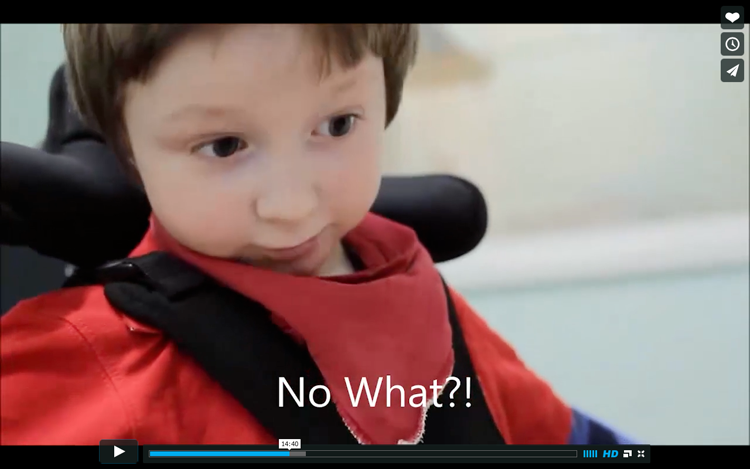
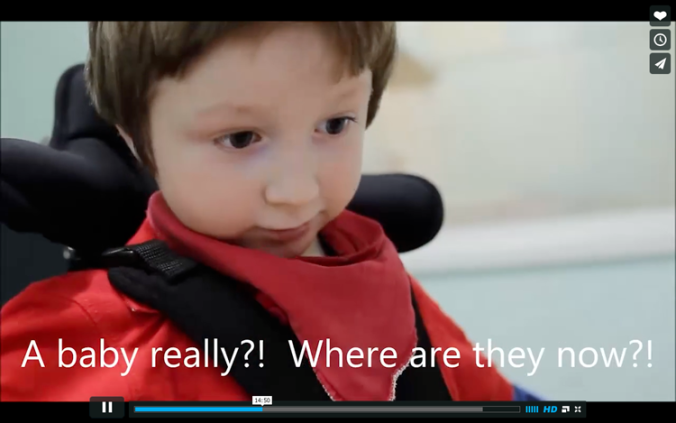
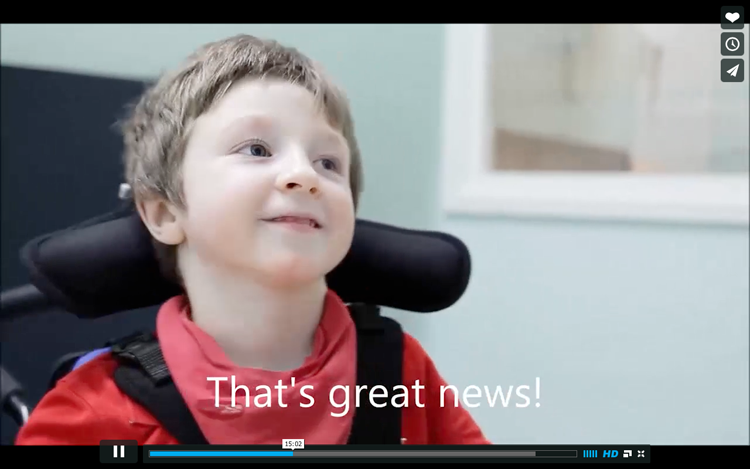
As part of the performance, the school had pre-recorded videos with some of the children. We watched Ben and another boy smiling as the sun rose on Red planet, news had spread that Mary and Joseph were going to Bethlehem. They then had a subtitled ‘conversation’:

‘Have you heard?!’

no what

‘The star said that Mary is having a baby!’

a-baby-really

‘They’re crossing the desert to Bethlehem’

thats great news

Having heard that Mary and Joseph were going to have a baby, the aliens then celebrated with a dance, to African music obviously. Most of the kids in Ben’s class are in wheelchairs, which had all been decorated in the red theme.

There was loads of emotive music and a little tear in my eye. It can’t be assumed that Ben will enjoy events involving kids, noise, or lights, however carefully planned. But Ben was happy and engaged, even if a bit tense at times (the boundary between exciting and overwhelming being very narrow at times like this).

At the end, everyone sang the school song ‘Something Inside So Strong‘ with all of the staff doing makaton signing. It was a glorious mix of total chaos (these are not a group of kids who naturally keep still or quiet), festive fun and emotion.

A crew from the BBC was filming the play and this week they put this video online. The school phoned to ask whether James or I would talk to BBC Radio 5 live about watching the play. I might have said no, but as James passed on the message he said ‘Do you want to go on 5 live at 10.30am? You should do it’. It then seemed a bit pathetic to say no.

James has done 5 live before, and it’s never a bad thing to equal one’s partner’s achievements (yes, he was talking on a satellite phone in the midst of a revolution, but let’s not be pernickety).

So that is how I found myself sitting on the floor of my sitting room waiting for a call at 10.30am on Thursday morning. When James bought the cheapest house phone in the shop last month I don’t think he anticipated it being used for live radio. When it rang (tinnily) I was put through to the studio, which meant I could hear the live radio program down the phone. I sat through a lot of news about ankle injuries and wingers, then a very sad breaking news story, before the presenter said hello and we were off.

You can listen here (from about 44 minutes in). I did what I always do in any public speaking situation, which is to instantaneously forget what I have said. When James asked me afterwards how it had gone, I had no idea (yes, he wasn’t listening, some excuse about a meeting). The school were happy, which was the most important thing – they called to say Ben had been listening in his classroom and had smiled at my voice. When I went to collect him that afternoon I felt like a minor celebrity.

I was thrilled to be given the opportunity to talk about Ben (this blog being an obvious manifestation of my enthusiasm in this regard) and to celebrate Ben’s school, which I love. The staff had worked very hard on the play and the kids and parents enjoyed it – and that is something worth publicising. People love a feel-good story about kids, and the video was ‘most watched’ on the BBC website for a good few hours. It is beautifully filmed and it celebrates kids who deserve to be celebrated so all to the good.

It is, however, a fascinating insight into the perception of disability by media, or at least what you have to call a news story to get people to click on it. The headline of the BBC News video, The parents who never expected to see their child in a nativity play, is awful and misrepresentative of the piece as a whole. The whole ethos of the school is positive and optimistic and to involve the parents, so it would be a failure if parents thought there would never be a nativity play and had no idea what their children were capable of, only to turn up to a Christmas play and have their minds blown!

When the 5 live producer had called me to discuss the piece, he had asked, hopefully, whether I had ever thought this would happen? Had watching the play had been the highlight of my year? I said it was fun, and I enjoyed it, but loads of good things have happened this year. As much as I like to tug people’s heartstrings when possible, let’s not get carried away.

I told the producer enthusiastically about Ben’s recent spelling triumph using an eye gaze computer, and the presenter then brought that up at the end of the segment. An opportunity to advertise a brilliant school and broadcast Ben’s skills on national radio? Yes please.

Five years old

Ben has just turned five.

dsc_0974

A birthday means the anniversary of his birth, which was a mixed bag.

But loads of good things have happened since! Each year we make a list of what Ben has got up to over the previous 12 months; achievements noted, developments made and skills gained. Parents of disabled children often talk about ‘inchstones’ rather than milestones. Early on, it became clear that the gross motor skill developments that characterise a typical child’s life were going to be hard for Ben so we had to adjust our expectations and targets accordingly, but success rewards the patient and if you look in the right places there are wonderful things to be found.

IMG_3435

In the year between his fourth and fifth birthdays Ben has done a lot, including:

  • left nursery, started school full-time (settling in brilliantly)
  • learnt to enjoy the affections of his brother and realised Max can be funny
  • used an eye-gaze computer regularly, playing lots of games
  • learnt to look at Yes and No symbols regularly
  • stopped having any formula milk, eating only home-made food
  • adapted brilliantly to having a night carer
  • discovered his love of the hot tub
  • started getting the bus to school
  • learnt loads of letters
  • reliably recognised the numbers 1-10
  • starting riding his trike
  • met Michael Rosen!

IMG_8508_2

photo-14

IMG_8376

Ben has really thrived over the last year – he has been healthier than ever and had a lot of fun. We were looking forward to celebrating him turning five with a tea party and a family video of the past year’s best bits…

… and then he really pulled it out the bag!

We have known for a while that Ben recognises most letters and Granny has been diligently teaching him to read. His school has also been working on phonics with him and recently he has been using the eyegaze computer in his classroom to do some work with letters. The day before his fifth birthday, Ben came home with this message from his teacher:

‘Ben used his eye gaze [computer] to independently word build. I asked him to spell out bat and several other ‘-at’ words at the end and he did so no problem!’

If that isn’t a bloody milestone, I don’t know what is. Love that clever boy.

IMG_8157

Feeding Ben Food

Ben can’t eat or drink. He tried really hard to learn and we all spent a lot of time on it for 18 months but by age two he really wasn’t enjoying it. He got annoyed at the sight of a spoon and the amount he was eating was tailing off.

Drinking had been a problem right from the beginning. His dysphagia (difficulty swallowing) meant he found sucking from a bottle really difficult – if the automatic reflex to co-ordinate sucking, swallowing and breathing is messed up, it is incredibly hard to learn. The human anatomy at the back of the throat is an awful design and Ben just couldn’t get the hang of it. We spent hours trying to feed him by bottle, and later by cup but it was never enough and he was discharged from hospital with a nasogastric tube which we put milk through (the tube went up through his nose and then down in to his tummy).

At just over four months we started weaning in the hope that eating thicker textures would be easier than drinking and be more likely to stay down in his tummy. This was also hard work for Ben and he did incredibly well given the difficulties but he never got close to eating enough food to grow. Meanwhile he had constant and painful gastro-oesophageal reflux.

So at six months old Ben had a PEG inserted in to his tummy, allowing us to give milk through a tube straight in to his stomach. When he was two this was changed to a button.

If you start out from the position that you have a small child and they have to have a tube inserted in to their tummy, which means even when you have given them a bath and they are lying on a towel all perfect and clean they will still have a tube dangling from their abdomen, this might be upsetting. Which it was in some ways. But if you start from the position that your child is unable to feed and you have spent six months putting milk through a tube in their nose which everyone can see, and keeps falling off/out, and their cheek under the sticky plaster is red raw, and when the tube needs replacing you have to get someone (sometimes your poor neighbour) to bind your screaming child in a towel and hold them down while you push a tube up their nose and down their throat, and every time you feed them you have to do a pH test to check the tube is still in their tummy and you aren’t about to pour milk in to their lungs… if you find yourself in that position, then a permanent tube in their tummy seems like a great idea.

James and I have fond memories of a holiday in Scotland when Ben was 18 months old when he could eat half a yoghurt pot for lunch. That was the highpoint of his eating and once we returned to London the combination of physical difficulty and chronic reflux meant he was less and less keen to eat food. To be honest, we were all weary. There are only so many hours you can spend mixing various mashed and pureed foods with baby rice and spooning them into an unwilling child before you feel there are better ways to spend time. Eventually we got to the point of not offering Ben oral food at all.

That gastrostomy tube is a lifeline – it is the reason that Ben is thriving and growing. It represents a choice to spend time reading books and enjoying ourselves rather than trying for hours to eat enough food and drink enough fluid and the inevitable chest infections that would result.

So for the first three years of his life, Ben was largely fed milk – various hypoallergenic, cows-milk-free and enhanced formulas that began to arrive in big boxes every month. As far as dieticians and general medical opinion is concerned, once a child has a tube they are then fed special milk. So on the one hand you have a typical four year old who eats some cereal, a banana, some chicken and maybe a cake. On the other hand you have a tube-fed four year old who is supposed to have 240ml Nutrini Energy milk for breakfast, 240ml Nutrini Energy milk for lunch and 240ml Nutrini Energy milk for supper.

A few years ago I came across ‘blended diet‘ (BD) which essentially means pureeing food with enough liquid to be able to push it through the gastrostomy tube. I am a natural law-abider (the kind of person who feels uncomfortable going in to a pub to use the loo if I haven’t bought a drink, who scrupulously observes any and every queue) and so having found an academic journal article that suggested children had experienced less reflux and eaten more while being fed puree rather than milk, I approached each of our doctors and asked their view before I started. They were generally a bit bemused but didn’t tell me not to. We started putting Ella’s Kitchen baby food pouches through Ben’s gastrostomy tube.

It’s not a complicated idea – we followed principles similar to when you are weaning a baby. We gradually made more complicated purees and replaced quantities of milk for boluses of puree. Our dietician made clear that she could not advocate this type of feeding (she is prevented from doing so by her professional organisation) but was happy to discuss principles with me. She analysed our recipes to see how much protein, carbs etc Ben was getting and suggested supplements.

img_8468

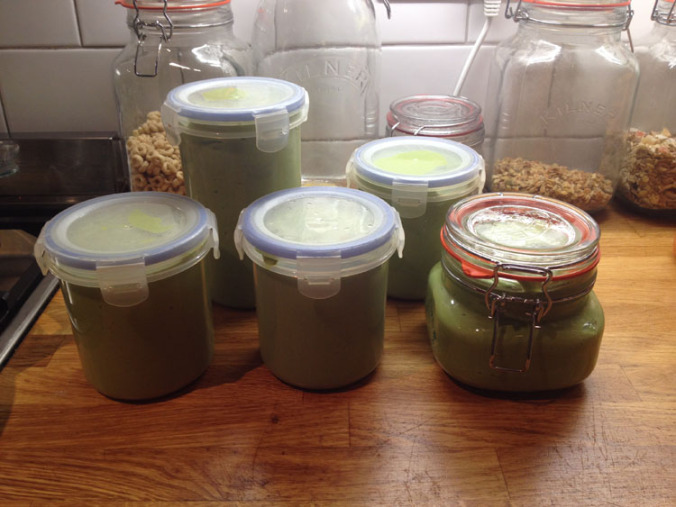
Ben is now fed entirely puree. Instead of being pumped full of high calorie milk with a 12-month shelf life he is fed a bespoke recipe of roast chicken, homemade chicken stock, tahini and avocado whizzed up in a high-speed, super-powered (obscenely expensive) blender. Since we have been doing this he vomits less, has fewer reflux symptoms and has been putting on weight (albeit slowly, but that’s always been the case). We add calorie and vitamin supplements to the blends. Doctors comment on how well he looks and how sensible an idea this is.

Through this process, I have rediscovered some of the mothering instinct that should be part of feeding your child. There is no pleasure in hooking up milk to a pump, but there is real and tangible satisfaction to be gained in roasting a chicken, making stock and feeding it to your child. There is enormous joy to be found in buying blueberries in the morning and giving them to your child in the afternoon; to seeing your child grow as a result of the food you have made with your hands even if it doesn’t arrive in their tummy via their mouth.

Health professionals (mainly dieticians and nurses) are concerned about this method of feeding – they are apparently worried the tube will get blocked (this has never happened to us), that there are problems with food hygiene (which the rest of the population manages when feeding their kids). They are uncomfortable that you can’t be sure how many calories are in blended foods. These concerns are such that our nearest respite centre refuses to give children puree via gastrostomy, and therefore Ben can’t stay there without us being there to feed him (which with the best will in the world, is not exactly respite).

It seems to me that a model of care where children automatically have long-life milk for every meal is better suited to those analysing calorie requirements and setting up pumps than it is to the recipient. I resent the idea that most parents feed their children what they want, with some public health encouragement to maximise vegetables, but us feeding Ben kale and quinoa rather than milk full of maltodextrin is somehow rogue. The world is upside-down when goody-two-shoes-Jess is seen as a rebel.

We all make parenting decisions for our kids. Our choice is to feed our son actual food.

Big Book of Bad Things

To say Ben has a mixed relationship with theatre would be generous. There are numerous examples of him hating theatrical outings and our success ratio is pitifully low.

We have had reasonable success with productions by Oily Cart, who produce theatre specifically for disabled children which is inventive, imaginative and brilliant. They often adapt their shows for mainstream audiences, and even when we have taken Ben to these more hectic performances he has enjoyed them (or at least bits!).

In March this year I took Ben to a production of Not Now, Bernard at the Unicorn Theatre. We had been to productions there before – it is a lovely theatre with accommodating staff. We had a wheelchair seat at the front of the theatre space – right next to the stage with its bright lights and in front of about 60 excitable (noisy) children.

Ben struggles with this kind of thing – he is nervous in unfamiliar environments with bright lights. He still has a startle reflex so loud noises make him physically jump. The sensory overload of unexpected music and people leaping about onstage can be a bit much. And so it proved: the show started, a man came on to the stage just in front of us and there were some loud noises and that was it – Ben in tears and me unable to bring him back from the brink. I decided we had to leave.

Unfortunately our proximity to the ‘stage’ (white painted floor) meant this involved me carrying a long, sobbing 4 year old while carrying two coats and a bag – and pushing a wheelchair ON to the stage thereby causing maximum fuss and creating some inadvertent audience participation. We had lasted five minutes in the theatre and then went home. During a tearful phone call with my husband in the car, we agreed I wouldn’t take Ben to the theatre on my own again.

Of course one solution would be to not take Ben to the theatre, but this seems too depressing a conclusion. It would be to give up on something that I though I would do with my children. Broadening horizons and facilitating new experiences is stressful and often a disaster, but we have to keep trying. Ben loves stories and melodramatic performance in familiar places so there must be shows he would enjoy. Surely!

One of Ben’s most favourite things to do is to watch videos on YouTube of Michael Rosen reading poems and stories from his books. He’s enjoyed these videos for over a year and we must be responsible for hundreds, if not thousands, of views. He particularly likes this one about bending a toothbrush which is from the book Michael Rosen’s Big Book of Bad Things. There are many reasons why one might be a fan of Rosen, he has written loads of books. We have a family tradition of singing Ben a song based on his book, Little Rabbit Foo Foo, which last Christmas was staged as a play by his granny and uncle.

I found out that Michael Rosen would be reading/performing from this book in London. I booked for us to go.

We were nervous and excited, really hoping Ben would enjoy it but ready for the moment when he lost it halfway through and we all had to leave. In order to maximise the likelihood of success, we arranged to drop Max off with his uncle down the road and spent a lot of time telling Ben where we were going. So much in fact, that on anyone saying ‘Big Book of …’ Max would shout, ‘BAD THINGS!’ at us all. Ben thought that was amusing.

Our seats were right at the back of theatre (good) and at some distance from the stage (good) and we were let in to the auditorium first so we watched everyone else come in (mainly kids older than Ben) and Ben had time to get used to his surroundings. James read him poems from the book while we were waiting.

img_8365Then Michael Rosen came on stage. As he spoke loudly into microphone for the first time, we held our breath. But Ben was fine. More than fine, in fact. He smiled, he listened. Michael (is that too familiar?) told lots of stories – many with loud noises and audience participation – and Ben was happy. James and I sat on tenterhooks, laughing at the jokes but poised for the moment that Ben wasn’t enjoying himself any more. But it never came. Ben just watched over an hour of performance – smiling a lot, giggling occasionally, totally focused for 60 minutes. It was totally bloody brilliant. The boy loves a story, and Michael Rosen is really good at stories. And apparently if Michael Rosen makes sudden, startling noises in a theatre, that’s okay.

When it finished we queued up with loads of other kids to get our book signed. In the crush of us all pursuing the author, Michael walked past us and stopped to say hello to Ben. As we queued, Ben was squashed between loads of older kids and he was unperturbed and patient (occasionally accidentally kicking some kids but that’s inevitable when you can’t really control your legs; they were very tolerant). Our book was signed: ‘Michael Rosen was here’, and off we went. Everyone on Facebook was jealous.

IMG_8373

So that’s what it’s like to take your child to the theatre and them enjoy it. It’s fun! Ben loves hearing language and words and rhymes. I am fascinated by how that really works – when a typical child learns to speak they learn the sound of letters by saying them. How does a child who can’t speak learn sounds? Who knows. But for now, we’ll do our best to stalk Michael Rosen.

A tale of two flu vaccines

Bridget Christie is a comedian that I love and earlier this year we went to her show about feminism, ‘A Bic For Her’. She did a bit about how people criticise feminists for having no sense of humour, but that actually the lack of equality for women is really serious and no-one ever says Amnesty International isn’t funny enough; it’s okay to be serious about stuff sometimes. Ironic that Bridget was being funny about feminists not being funny, but anyway…. I love to laugh but sometimes stuff is just annoying and there’s not much to find amusing. This post is a bit negative. I’ll chirp up next week (hopefully).

[Aside: I wrote Bridget Christie an email afterwards and she replied saying ‘it made me laugh SO MUCH’ which made really very, very happy. If you know me in real life, I will have told you this story. I tell everyone this story.]

The NHS is offering the nasal flu vaccine (Fluenz) to all 2 year olds this year. I made an appointment for Max to see the nurse at our GP surgery, she sprayed it up his nostrils, he said it tickled, we left. Done.

Ben has a flu vaccine every winter because he is vulnerable, even minor illnesses will affect him badly and it takes him a long time to recover from bugs. Ben starts vomiting at the first hint of a fever, he struggles to manage secretions at the back of his nose and throat and loses weight quickly. The vaccine won’t necessarily stop Ben getting flu, but it will hopefully reduce how sick he gets with it.

So I made an appointment for Ben to see the nurse at our GP surgery.

She looked at his computer record and noted he was allergic to eggs. This is problematic because Fluenz is made using egg. I explained that he had Fluenz last year and had no reaction, that he has never had a reaction to egg, but has routine skin prick tests because he had a cows milk protein allergy when he was younger. According to these tests he is mildly allergic to egg white.

The nurse phoned a GP in the practice (unfamiliar to me) who was unwilling to agree to Ben receiving the vaccine right then so I suggested I get in touch with Ben’s allergy consultant (based at a hospital) to see if she could advise. Off we went.

I had an email exchange with the allergy consultant and she agreed to write a letter to our GP saying that in her view there was no reason for Ben not to have Fluenz this year since he had it last year with no reaction. The letter took a couple of weeks to arrive. The consultant offered to give the vaccine to Ben in hospital but that would mean Ben missing school.

In the meantime I got a letter from Ben’s school saying nurses would be visiting the school on Friday to give children the flu vaccine. Brilliant news! A rare opportunity for things to come to us rather than us trundling around to various clinics! I filled in the consent form explaining the egg/Fluenz issue and then forwarded the letter from the consultant when it arrived.

Yesterday the nurse in charge of the school vaccination programme called me. I launched in to a historical monologue involving much mention of eggs, noses and doctors, concluding with the fact that surely, therefore, Ben can go ahead and have Fluenz on Friday.

Apparently not. The nurses going in to schools are unable to give the vaccine to any children with an egg allergy, mild or not. She suggested I make an appointment with our GP (not a nurse) to discuss it and see if the GP is willing to approve Ben having the vaccine.

This lady was friendly, chatty, warm. Everyone we have interacted with about this so far has been helpful within their realm of power. Obviously they are being cautious because it would be awful for a child to have a serious reaction to the vaccine because they’re allergic to egg.

But I found myself crying on the phone to this nurse, trying to talk as little as possible so she didn’t realise, because why do these things always have to be so bloody time consuming? Why are our lives filled which such a huge amount of crap, involving multiple calls and trips, when time is already limited? It’s no-one’s fault but it’s exhausting.

When I called the GP surgery to explain this saga, the receptionist was great and found us an appointment later this week after school with a GP who I have known for over twenty years, who can give the vaccine himself if he’s happy to proceed. I am hopeful about that being the end of it. I saw this GP last year when I needed a ‘Fit to Fly’ letter for Ben. I had written the letter in advance to minimise his workload – the GP took this letter from me, scanned it with some magical software which converted it to text, put in on his letterhead, printed and signed it within five minutes. Anyone who has interacted with NHS bureaucracy will know that is miraculous!